Top Five pCAM Industry Trends in 2025

In recent years, the pCAM industry has undergone several rapidly evolving trends which mostly includes China’s big four scaling up production capacities, innovating on product specficiations, and becoming more sustainable and regionally integrated to meet the demands of overseas clean energy cathode and gigafactory customers.
1. Rapid Production Capacity Expansion
The pCAM industry is experiencing a significant surge in production capacity, driven by the exponential growth of EVs and energy storage systems.
Companies like CNGR are building large-scale and highly automated production facilities. This expansion is supported by substantial shareholder investments, recognising the strategic importance of overseas (Indonesia/Finland) pCAM production for supply chain security and economic growth. Outside of China, major European players such as Umicore are also scaling up capacity in multiple regions to serve local markets and complete integrated battery value chains.
The competitive landscape is further shaped by partnerships, joint ventures, and mergers aimed at securing raw materials and expanding geographic reach.
2. Shift Toward High-Nickel Chemistries
The pCAM industry is rapidly moving toward high-nickel (such as NCM 811, NCM 901, and NCA), which offer superior energy density and longer battery life (key attributes for next-generation EVs and grid storage).
Research and development is focused on optimising the synthesis and morphology of these high-nickel precursors to enhance performance, stability, and safety. The trend is reinforced by end-user demand for longer-range EVs and regulatory pressures to increase battery efficiency. Leading pCAM manufacturers are investing heavily in advanced material science to push the boundaries of nickel content while managing challenges such as raw material volatility and the need for robust supply chains.
3. Localisation (onshoring) of Supply Chains
To mitigate geopolitical risks and comply with regional content regulations (such as the US Inflation Reduction Act and EU Battery Regulation), the pCAM sector is prioritising the development of local and regional supply chains. Companies are building new plants in strategic locations such as North America, Europe, and Australia to ensure proximity to battery manufacturing hubs and end markets.
This localisation (onshoring) supports traceability, ethical sourcing, and the ability to meet unique regulatory requirements in each region. It also reduces transportation emissions and strengthens the resilience of the overall battery materials supply chain.
4. Sustainability and Recycling Initiatives
Sustainability is now central to the pCAM industry, with a strong focus on reducing carbon emissions, minimizing waste, and closing the loop through recycling. Innovative processes like Ascend Elements’ Hydro-to-Cathode® technology enable direct synthesis of pCAM from recycled battery materials, significantly lowering the environmental footprint compared to traditional methods, achieving nearly 50% reduction in CO₂ emissions and substantial cuts in particulate matter.
Leading companies are integrating recycled content into new pCAM, establishing closed-loop supply chains that recover valuable metals from end-of-life batteries and manufacturing scrap. These efforts are further motivated by regulatory and consumer demands for greener, ethically sourced battery materials.
5. Technological Innovation and Customisation
The industry is witnessing rapid innovation in pCAM formulation and production technology. Advances include single-crystal and gradient-coated precursors, doped materials, and process optimizations that improve battery performance, cycle life, and safety.
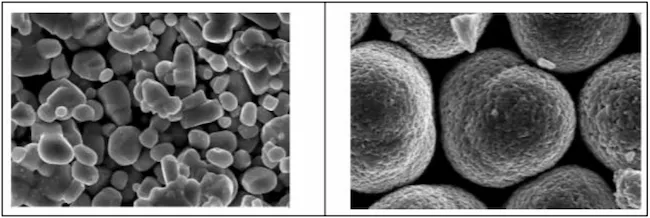
Customization is increasingly important, as battery manufacturers seek tailored solutions for specific applications, ranging from high-power EVs to long-duration grid storage.
New reactor designs and synthesis techniques are enabling more precise control over particle size, morphology, and composition, directly impacting the quality and efficiency of the final cathode materials.
This ongoing innovation is essential for maintaining competitiveness and meeting the evolving needs of the global battery market.
To view GDC pCAM market research report click here
For more blog articles click here
To view GDC market research reports click here
About us
GDNM provides commentary on how energy transition minerals contribute towards the decarbonisation and electrification of the global economy, with a particular focus on the lithium-ion battery and rare earths supply chains.
GDNM founder, Mr Brendan Jephcott is an Australian who has worked in the global mining sector for more than 13 years, of which his experience covers precious metals, nonferrous metals, ferrous metals, base metals, bulk commodities, rare earths, and the lithium-ion battery industry.
For the last 9 years Mr Jephcott has focused on the burgeoning new energy industry, participating in cross-border transactions in buy-side and sell side roles, cultivating a global business network ranging from upstream resource companies, midstream intermediate product producers, and downstream consumers such as gigafactories and auto companies.