Ternary Cathode Material Product Comparison
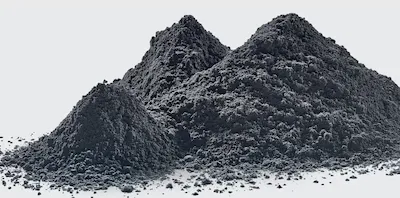
The proportions of nickel, cobalt and manganese or aluminium in the ternary cathode material are adjusted according to different lithium-ion battery performance requirements and usage conditions.
- Nickel: increases the battery capacity.
- Cobalt: maintains the layer stable and improves the electronic conductivity, providing low internal resistance.
- Manganese: improves structural stability and safety.
The physical and chemical properties of the ternary cathode material, namely its morphology, particle size, particle size distribution, specific surface area, impurity content, and tap density, determines the performance indicators of the final product, which in turn determines whether the ternary cathode material can meet the requirements of its end users such as high specific capacity, long cycle life, and high safety.
Ternary Cathode Material Processing Methods
Several processing methods have been used to synthesize Ni-rich ternary cathode materials. Different synthesis methods have important effects on the morphology and structure properties of final products. The most common synthesis methods for NCM cathode materials are solid state, co-precipitation, sol-gel, hydrothermal, combustion and spray drying.
The co-precipitation method has become the mainstream synthesis method of layered Ni-based cathode materials due to its advantages of easy control of element proportion, uniform element distribution, regular particle morphology, and suitability for large-scale production.
The hydroxide co-precipitation method is one of the earliest established co-precipitation techniques and remains the preferred choice for nickel cobalt manganese hydroxide.
- Low-medium nickel materials: use pCAM, lithium carbonate and additives as raw materials, and the main processes include: “feeding, mixing, loading, calcination, crushing, screening, classification, batching and iron removal” to produce ternary cathode materials.
- High-nickel materials: use pCAM, lithium hydroxide and additives as raw materials, and their processing flowsheet is basically the same as that of low-medium nickel materials except calcination requires pure oxygen and water washing is required at the end of processing to remove excess lithium from the material.
In terms of material properties, as the nickel content in ultra-high nickel ternary cathode material further increases, Ni2+ and Li+ in the material lattice are prone to mixed arrangement, resulting in a decrease in the specific capacity of the material and a weakening of the rate performance.
At the same time, the increase in nickel content will further reduce the stability of the material surface, which is easy to cause safety problems.
In order to solve and alleviate these problems, companies often modify the materials through technical methods such as element doping, surface coating, core shell structure and single crystallization.
Ternary Cathode Material Market Trends
The ternary cathode material industry product development trend is showing an iterative process in the numbering system, where there is increasing nickel content and a decreasing cobalt content.
This structural shift towards higher nickel content is driven by several reasons including increased energy density as higher nickel content generally leads to higher specific capacity and energy density in the battery, cost reductions as nickel is less expensive than cobalt, therefore, increasing nickel content while reducing cobalt helps lower material costs, and performance improvements as higher nickel content can contribute to better battery performance in terms of capacity and power output.
However, it’s important to note that as the nickel content increases (especially in high-nickel compositions like NCM811), new challenges arise, such as reduced cycle stability as high-nickel content can lead to faster capacity degradation over multiple charge-discharge cycles, safety concerns as higher nickel content can result in decreased thermal stability, potentially leading to safety issues, and manufacturing difficulties as high-nickel materials are more sensitive to moisture and air, making production more challenging.
Moreover, there are many specific performance indicators of ternary cathode materials, where battery gigafactories will customise parameters according to their own specific battery applications.
Ternary Cathode Material Product Comparison
Ternary cathode material companies need to rely on technology and experience accumulation to conduct timely response research and development, and seek a balance between performance parameters by adjusting various reaction variables.
| Ternary Cathode Material | Abbreviation | Classification | Molar Fraction of Ni Element | Molar Fraction of Co Element | Molar Fraction of Mn Element | Molar Fraction of Al Element |
| LiNi0.33Co0.33Mn0.33O2 | NCM333 | Low Nickel | 0.33 | 0.33 | 0.33 | – |
| LiNi0.5Co0.2Mn0.3O2 | NCM523 | Medium Nickel | 0.5 | 0.2 | 0.3 | – |
| LiNi0.6Co0.2Mn0.2O2 | NCM622 | Medium High Nickel | 0.6 | 0.2 | 0.2 | – |
| LiNi0.8Co0.1Mn0.1O2 | NCM811 | High Nickel | 0.8 | 0.1 | 0.1 | – |
| LiNi0.9Co0.05Mn0.05O2 | NCM90 | High Nickel | 0.9 | 0.05 | 0.05 | – |
| LiNi0.8Co0.15Al0.05O2 | NCA | High Nickel | 0.8 | 0.15 | – | 0.05 |
| NCM333 | NCM523 | NCM622 | NCM811 | NCA | |
| Theoretical specific capacity (mAh/g) | 278 | 278 | 278 | 278 | 279 |
| Actual specific capacity (mAh/g) | 150-170 | 160-180 | 170-190 | 180-210 | 200-220 |
| Battery energy density (Wh/kg) | 170-190 | 180-210 | 210-230 | 230-270 | 240-270 |
| Cycle life (times) | 1,500-2,000 | 1,500-2,000 | 1,500-2,000 | 1,500-2,000 | 1,500-2,000 |
| Cash cost | High | High | High | Medium | Medium |
| Safety | Medium | Medium | Medium | Medium | Medium |
| Advantages | Good power and rate performance, good safety | Good overall performance, mature technology, good high voltage performance | Relatively balanced in capacity, cycle, storage, safety, etc. | High capacity, good cycle performance | High capacity, good rate performance |
| Disadvantages | High cost, low energy density | Low energy density at 4.2V | Relatively high cost | Complex processing, high cost, poor safety | Production cost |
| Application | 3C | Electric vehicles and bicycles, 3C | Electric vehicles and high-end laptops | Electric vehicles, 3C | Electric vehicles |
For more blog articles click here
To view GDC market research reports click here
About us
GDNM provides commentary on how energy transition minerals contribute towards the decarbonisation and electrification of the global economy, with a particular focus on the lithium-ion battery and rare earths supply chains.
GDNM founder, Mr Brendan Jephcott is an Australian who has worked in the global mining sector for more than 13 years, of which his experience covers precious metals, nonferrous metals, ferrous metals, base metals, bulk commodities, rare earths, and the lithium-ion battery industry.
For the last 9 years Mr Jephcott has focused on the burgeoning new energy industry, participating in cross-border transactions in buy-side and sell side roles, cultivating a global business network ranging from upstream resource companies, midstream intermediate product producers, and downstream consumers such as gigafactories and auto companies.