Synthetic Graphite Anode Material vs Natural Graphite Anode Material
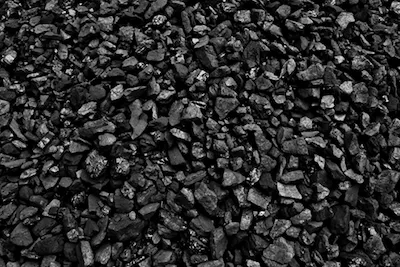
Synthetic graphite anode material and natural graphite anode material are the two predominant types used in lithium-ion batteries, each with distinct advantages and disadvantages.
These anode materials serve as the negative electrode in high-performance rechargeable batteries, facilitating lithium-ion intercalation and deintercalation during charge and discharge cycles.
The choice between synthetic anode material and natural graphite anode material often depends on specific application needs, such as energy density, cycle life, and cost considerations.
Today around 87% of global anode production is made from Synthetic Graphite. The remaining 10% is made from natural graphite and 3% is from silicon based material.
This blog explores at a high-level the arguments for and against each anode material, focusing on performance metrics, production processes, and market dynamics as detailed from the Golden Dragon Capital Limited – Anode Material Research Report.
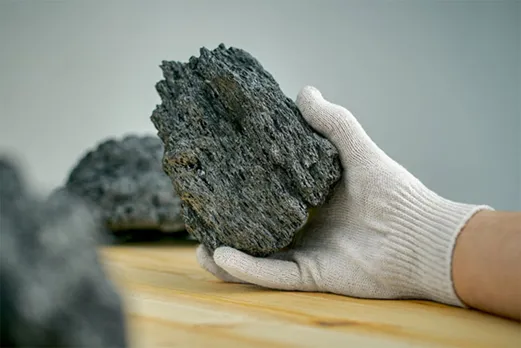
Arguments For Synthetic Graphite Anode Material
Synthetic graphite anode material is favored for its superior cycle performance and safety profile, making it particularly suitable for power batteries in electric vehicles (EVs) and high-end consumer electronics
Synthetic graphite anode materialoffers a cycle life exceeding 1,500 cycles, significantly higher than natural graphite’s over 1,000 cycles, due to better particle consistency and fewer surface defects that reduce reactions with electrolytes.
Additionally, synthetic graphite anode material demonstrates excellent rate performance, meaning it can handle faster charge and discharge rates, which is critical for applications requiring quick charging and high power delivery .
Another advantage of synthetic graphite anode material is its mature supporting technology, which ensures consistent quality and reliability in production.
The material is produced from petroleum coke or needle coke through processes like crushing, granulation, carbonization, and graphitization, allowing for tailored particle morphology and enhanced performance characteristics such as lower expansion rates during lithium intercalation compared to natural graphite.
This reduced expansion contributes to longer battery life and structural stability, a key factor for EV manufacturers who require batteries to retain at least 80% capacity over extended periods .
Arguments Against Synthetic Graphite Anode Material
Despite its benefits, synthetic graphite anode material has notable drawbacks, primarily its lower specific capacity compared to natural graphite, ranging from 310-370 mAh/g versus 340-370 mAh/g for natural graphite.
This limitation means that synthetic graphite may not store as much energy per gram, impacting the overall energy density of the battery, which is a critical parameter for applications where maximizing range or runtime is essential.
Additionally, the report notes that synthetic graphite anode material suffers from low specific energy and poor safety performance in certain contexts, which can be a concern for high-demand applications .
The production process for synthetic graphite anode material is also more complex and energy-intensive, particularly due to the graphitization step, which requires heating to temperatures above 2,800°C.
This process significantly increases production costs, with graphitization alone accounting for a large proportion of the overall cost of synthetic graphite anode material.
As a result, despite its performance advantages, the higher cost can be a barrier, especially in markets sensitive to price fluctuations or where cost reduction is a priority .
Arguments For Natural Graphite Anode Material
Natural graphite anode material is widely used due to its cost-effectiveness and higher specific capacity, making it an attractive option for consumer electronics and some EV applications.
With a specific capacity of 340-370 mAh/g, it generally outperforms synthetic graphite in energy storage per unit weight, which is advantageous for devices where maximizing battery life is crucial.
Moreover, natural graphite anode material benefits from mature technology and supporting processes, contributing to lower production costs compared to synthetic graphite .
The production of natural graphite anode material involves simpler processes such as milling, spheroidization, purification, and coating, using natural flake graphite as the raw material, which avoids the energy-intensive graphitization step required for synthetic graphite.
This results in a more environmentally and economically favorable production footprint, particularly in regions like China, where most spherical graphite processing occurs due to less stringent environmental regulations on purification methods.
Additionally, natural graphite anode material high compaction density allows for efficient packing in battery designs, enhancing overall energy density .
Arguments Against Natural Graphite Anode Material
However, natural graphite has significant limitations, particularly in terms of cycle performance and rate performance, which are inferior to synthetic graphite anode material. Natural graphiten anode material’s cycle life, while over 1,000 cycles, is shorter due to inconsistent particle sizes and surface defects that lead to reactions with electrolytes, reducing battery longevity.
Its poor rate performance also means it struggles with fast charging and discharging, a critical drawback for modern EV applications where rapid charging is increasingly demanded .
Furthermore, natural graphite exhibits a higher expansion rate during lithium intercalation and deintercalation, attributed to its flake structure and high crystallinity, leading to larger volume changes that can compromise battery stability over time .
The specific energy of natural graphite anode material has reached its limit, suggesting limited potential for further improvements in energy density compared to emerging materials or synthetic alternatives.
These factors make natural graphite anode material less ideal for high-performance applications despite its cost advantages.
Concluding Thoughts on Synthetic Graphite Anode Material vs Natural Graphite Anode Material
In conclusion, both synthetic graphite anode material and natural graphite anode material present compelling cases depending on the intended application within the lithium-ion battery market.
Synthetic graphite anode material excels in cycle life, rate performance, and safety, making it suitable for demanding EV and high-end electronic applications, though it is hindered by lower specific capacity and higher production costs.
Conversely, natural graphite anode material offers higher capacity and lower costs, ideal for consumer electronics, but falls short in cycle stability and rate performance, limiting its use in high-performance scenarios.
The choice between these anode materials ultimately hinges on balancing performance requirements with economic considerations, as detailed in the comprehensive analysis provided by the report.
View the GDC anode material market research report click here
For more blog articles click here
To view GDC market research reports click here
Golden Dragon Capital Limited | Comprehensive Market Research Reports
About us
GDNM provides commentary on how energy transition minerals contribute towards the decarbonisation and electrification of the global economy, with a particular focus on the lithium-ion battery and rare earths supply chains.
GDNM founder, Mr Brendan Jephcott is an Australian who has worked in the global mining sector for more than 13 years, of which his experience covers precious metals, nonferrous metals, ferrous metals, base metals, bulk commodities, rare earths, and the lithium-ion battery industry.
For the last 9 years Mr Jephcott has focused on the burgeoning new energy industry, participating in cross-border transactions in buy-side and sell side roles, cultivating a global business network ranging from upstream resource companies, midstream intermediate product producers, and downstream consumers such as gigafactories and auto companies.