Sodium-ion Battery, a Lithium Disruptor
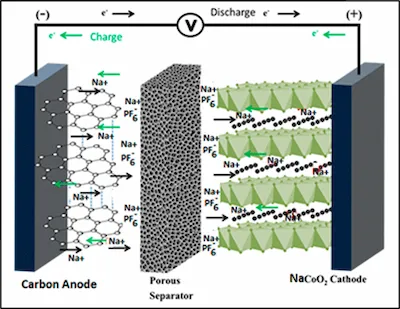
Genesis of the sodium-ion battery originated in 1976 when Professor Michael Stanley Whittingham reported the reversible lithium intercalation mechanism of titanium disulfide (TiS2) and produced Li-TiS2 batteries, while at the same time the reversible deintercalation mechanism of Na+ in TiS2 was also discovered.
In the 1980s, Professors Claude Delmas and John B. Goodenough discovered that the layered oxide material NaMeO2 (Me = transitional metals i.e. Co, Ni, Cr, Mn, or Fe) could be used as cathode material for sodium-ion batteries.
Subsequently, Professors Daniel Stevens, Jeff Dahn found that hard carbon materials have excellent sodium ion intercalation performance. It was the discovery of these two key materials in the late 1980s which led to a major turning point in sodium-ion battery research which laid the foundation for commercialisation.
The working principle of a sodium-ion battery is similar to that of the lithium-ion battery following an intercalation-based “rocking chair” mechanism, whereby the embedding (intercalation) and stripping (deintercalation) process of sodium-ion between positive (cathode) and negative (anode) electrodes, which are parted by the separator soaked in electrolyte, realises charge and discharge.
Sodium-ion Battery Component Materials
In terms of the material system, except for the separator, all other base materials used in conventional sodium-ion batteries are different, especially the cathode material and anode material.
- Cathode: since sodium ions have a larger radius than lithium ions, it is difficult for them to intercalate making for poor energy density, therefore the cathode material types used today in sodium-ion batteries are namely layered transition metal oxides, polyanionic compounds or Prussian blue compounds.
- Anode: graphite-based anode material used in lithium-ion batteries cannot effectively intercalate sodium ions, therefore, the anode material used in sodium-ion batteries today is generally amorphous carbon-based material products such as hard carbon or soft carbon.
- Electrolyte: the molar conductivity of sodium ions is higher, which makes the concentration of electrolyte required for sodium-ion batteries lower, and the requirements for additives also lower. Today sodium hexafluorophosphate is used in sodium ion batteries.
- Separator: sodium-ion batteries use polyethylene (“PE”) or polypropylene (“PP”) as separator material, which is the same as lithium-ion batteries, there is no difference.
- Current collectors: both the cathode current collector and anode current collector of sodium-ion batteries use aluminium foil, while lithium-ion batteries use aluminium foil for cathode current collector and copper foil for anode current collector.
In terms of product performance, sodium-ion batteries advantages include good safety, rate performance, and low temperature performance, but have the disadvantages of poor cycle life and its energy density is comparable to only that of conventional lithium iron phosphate batteries.
Cathode Materials
According to the mainstream sodium-ion battery cathode material companies, there are three cathode material types currently being promoted in the market today namely:
1) transition metal oxides
2) polyanionic compounds
3) Prussian blue compounds
Of which transition metal oxides is further divided into layered transition metal oxides and tunnel-type transition metal oxides according to their microstructure. However, due to low initial sodium ion content in tunnel oxides, the market has paid less attention to this type.
| Transitional Metal Oxides | Prussian Blue Compounds | Polyanionic Compounds | |
| Chemical description | NaxMO2 where M is transition metal element (Ni, Co, Mn, Fe etc) | NaxMa[Mb(CN)6] (Ma, Mb are mainly transition metal elements) | NaxMy[(XOm)n-]z (M is variable valence metal ion, X is phosphorus sulfur silicon) |
| Specific capacity (mAh/g) | 100~220 | 100~200 | 90~140 |
| Operating voltage (V) | 3.1 | 3.0~3.5 | 3.0~4.0 |
| Cycle life (times) | 3,000 | 2,000 | > 5,000 |
| Advantages | High specific capacity High energy density Good rate performance Mature production route | High working voltage High specific capacity High energy density Good rate performance | High working voltage Good thermal stability Good cycle life Good air stability |
| Disadvantages | Cycle life is poor Poor stability in humid air | Poor conductivity Poor cycle life Contains crystal water (low coulombic efficiency) Cyanide is toxic | Reversible specific capacity is low Poor conductivity Low energy density Contains dangerous elements |
| Related companies | Zhongke Haina, Natrium Energy | CATL | Tiamat, Penghui Energy |
Anode Materials
The anode material used in conventional lithium-ion batteries typically use a graphite-based material system. Since molar mass of sodium ion is 3 times that of lithium ion and its diameter is 1.3 times that of lithium ion, sodium ions cannot be effectively intercalated and extracted in graphite. Today, there are four main types of anode material for sodium-ion batteries, carbonaceous materials, transition metal oxides (or sulfides) and intermetallic and organic compounds.
Sodium-ion battery anode material companies currently use carbon-based anode material, and the main reason is that, on the one hand, carbon resources are abundant, and on the other hand the production cash cost is lower than that of other resources.
The carbon-based anode material has a large interlayer spacing, which can be used for the storage and reversible intercalation and deintercalation of sodium ions. Hard carbon material, due to the advantages of high specific capacity, low sodium storage voltage, and stable cycling, is currently the most preferred anode material product used in commercial sodium-ion batteries.
| Anode Material | Advantages | Disadvantages | Representative material | Specific capacity (mAh/g) | Voltage (V) | Voltage window (V) |
| Carbon based material | High sodium storage specific capacity, low sodium storage voltage, stable cycle | Low first coulomb efficiency and slightly poor rate performance | Hard carbon | 400 | 0.3 | 0.01-2.0 |
| Titanium based material | Good stability in air and good cycle performance | Low specific capacity and low conductivity | Na2Ti2O7 | 120 | 0.5 | 0.01-2.0 |
| Na0.6(Cr0.6Ti0.4)O2 | 105 | 0.8 | 0.5-1.5 | |||
| Metal compounds | higher specific capacity | Poor self-conductivity, irreversible problems of agglomeration and conversion reaction, easy volume expansion | MoS2 | 370 | 1.3 | 0.01-2.5 |
| Alloys | High theoretical specific capacity, low sodium storage potential, good electrical conductivity, no dendrites | Large volume change (powdering), fast capacity decay (poor cycle stability) | Si0.07Sb0.93 | 420 | 0.8 | 0.1-1.5 |
| Organic compounds | Wide source of raw materials, adjustable voltage window | Low electronic conductivity, easily soluble in electrolyte | Na4C5H2O6 | 180 | – | 0.1-1.8 |
Currently commonly used hard carbon precursors are mainly bio-based polymer materials, such as mōsō bamboo, coconut shell, starch, and walnut shells. Chemical raw materials such as anthracite, asphalt, and phenolic resin are also be used. Hard carbon products obtained from different precursors have significant performance differences, and the sources of raw materials are different, and the cost structure is also significantly different.
Hard carbon anode has disadvantages such as low first Coulombic efficiency, cycle life and structural consistency issues, especially the low initial coulombic efficiency which restricts improvement in the energy density when using hard carbon. It is currently resolved by pre-sodiumisation, structure regulation, and interface structure.
To view GDC sodium-ion battery industry market research reports click here
Electrolyte Materials
According to their physical property, electrolytes are divided into liquid electrolyte and solid electrolyte, and it can also be classified into organic electrolyte and inorganic electrolyte as the main chemical composition of electrolytes.
Electrolytes are mainly composed of salts and solvents. In addition, additives which act on formation of surface passivation layers, namely, the solid-electrolyte interphase (SEI), are also added into the electrolytes.
Due to the similarity between sodium-ion batteries and lithium-ion batteries, the performance of the former is usually consistent with the performance requirements of the latter, including:
- Chemical stability, no chemical reaction with cathodes and anodes
- Electrochemical stability, no decomposition occurs during charging and discharging
- Thermal stability, the electrolyte state remains stable when the temperature increases
- Ion conduction and electronic insulation, the electrolytes can transport ions, but cannot conduct electrons
- Low toxicity, low production cost.
Commercialised Electrolytes used in Sodium-ion Batteries
At present, the common electrolyte chemical salts used in sodium-ion batteries include the following:
- NaPF6 (sodium hexafluorophosphate) electrochemical stability is better than lithium hexafluorophosphate, and the conductivity is the highest in the PC-based (propylene carbonate) electrolyte, but has a high price and slight toxicity. Sodium hexafluorophosphate is mainly used today.
- NaClO4 (sodium perchlorate) has the advantages of fast ion migration, good compatibility, and low cash cost, but has high water content, easiness to explode, and high toxicity affect which is affecting its commercialisation.
| Electrolyte Salt Material | Molecular Mass (g/mol) | Decomposition Temperature (Sodium Salt) | Decomposition Temperature (Lithium Salt) | Mass Loss (%) | Conductivity (Sodium Salt) | Conductivity (Lithium Salt) |
| NaPF6 (sodium hexafluorophosphate) | 167.9 | 302 | 200 | 400 (8.14%) | 7.98 | 5.8 |
| NaClO4 (sodium perchlorate) | 122.4 | 472 | 236 | 500 (0.09%) | 6.4 | 5.6 |
| NaTFSI sodium bis(trifluoromethylsulfonyl)imide | 303.1 | 262 | 234 | 400 (3.21%) | 6.2 | 5.1 |
| NaFSI (Sodium Bisfluorosulfonimide) | 203.1 | 122 | 130 | 300 (16.15%) | – | – |
At present, the most used electrolyte solvents can be divided into ether electrolytes and ester electrolytes:
- Ester electrolytes are highly safe and have good conductivity. The main components of the ester electrolyte are: PC (propylene carbonate), EC (ethylene carbonate), DEC (diethyl carbonate). The ester electrolyte has a good solubility for sodium salt, and can provide good ion transmission ability. Moreover, the structure of the ester electrolyte is relatively stable, resistant to oxidation, and high in safety.
- Ether electrolyte can increase the energy density of the battery, but its stability is poor. The main components of ether electrolyte are DME (ethylene glycol dimethyl ether) and DOL (dioxane). The ether electrolyte can promote the insertion of sodium ions between the layers of the carbon material and help to increase the capacity ratio of the material, first effect, and rate performance. However, the ether electrolyte is easy to generate peroxide, has poor oxidation resistance, is easy to catch fire during application, and has poor safety.
| Electrolyte Solvent | Advantages | Disadvantages | Applications |
| Ester solvent | High dielectric constant, good conductivity and oxidation resistance, low cost | High viscosity (poor rate capability) | Most common application |
| Ether solvent | High viscosity (good rate capability) | Low dielectric constant, easy to oxidize, poor safety | Often used with lipids |
Electrolyte (Additives)
The use of additives can make up for some shortcomings of solvents or sodium salts. Additives are used in functional electrolyte formulations for stable SEI formation and to enhance its electrochemical stability, and are also required for battery safety issues such as reducing flammability and preventing overcharging processes. Adding a small amount of additive, such as fluoroethylene carbonate (FEC), to the electrolyte can form a protective film on the surface of the electrode material, reduce the flammability of the organic electrolyte, and prevent overcharging.
Current Collector
The current collector works as electrical conductor between the electrode and external circuits as well as a support for the coating of the electrode materials. In lithium-ion batteries, the potential of the anode is low and the aluminium foil is more likely to undergo an alloying reaction with lithium, so aluminium foil cannot be used as the anode current collector, and only copper foil can be used. Conversely, sodium does not react with aluminium at a low potential, and aluminium foil can be used for both the cathode and anode current collectors of sodium-ion batteries.
The main advantages are that the price of aluminium metal is lower than that of copper metal, and the use of aluminium foil can reduce the material cash cost, and the mass of aluminium is lighter than that of copper and the current collector made of aluminium foil is lighter which can reduce overall battery weight, effectively reducing transportation costs. Compared with traditional aluminium foil, battery aluminium foil has higher requirements on cleanliness, uniformity of plate shape, mechanical properties, and its surface wetting ability.
Sodium-ion Battery Principal Production Method
Production of a sodium-ion battery is similar to that of lithium-ion battery, which mainly includes pole piece manufacturing (cathode, anode, stirring, slurry-drying-coating) and battery assembly (rolling-die-cutting-winding/stacking).
The main difference is that sodium-ion batteries can use aluminium foil as the anode current collector, so the cathode and anode can use the same aluminium tabs and related processes such as tab welding. The packaging form of sodium-ion batteries is similar to that of lithium-ion batteries, and can be divided into three categories: cylinder, soft package, and square hard case.
On the whole, an existing lithium-ion battery assembly line can be used to produce sodium-ion batteries with a slight modification, and the replacement cost of developing a sodium-ion battery production line is very low.
Sodium-ion Battery Commercialisation
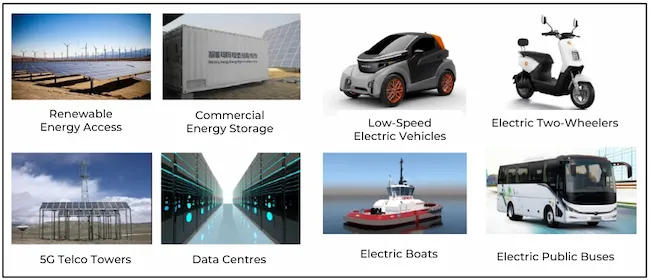
Due to the comparable energy density, excellent rate performance and cost advantages of sodium-ion batteries, they are considered cost-effective and will be applied to large-scale energy storage systems, two-wheeler electric vehicles and low-speed electric vehicles and are expected to complement and eventually replace lithium-ion batteries in the future.
Large-scale energy storage systems mainly include wind power plants, solar power plants and household energy storage systems while low-speed electric vehicles mainly include logistics vehicles, agricultural vehicles, electric vehicles, electric buses and electric boats.
For more blog articles click here
To view GDC market research reports click here
Golden Dragon Capital Limited | Comprehensive Market Research Reports
About us
GDNM provides commentary on how energy transition minerals contribute towards the decarbonisation and electrification of the global economy, with a particular focus on the lithium-ion battery and rare earths supply chains.
GDNM founder, Mr Brendan Jephcott is an Australian who has worked in the global mining sector for more than 13 years, of which his experience covers precious metals, nonferrous metals, ferrous metals, base metals, bulk commodities, rare earths, and the lithium-ion battery industry.
For the last 9 years Mr Jephcott has focused on the burgeoning new energy industry, participating in cross-border transactions in buy-side and sell side roles, cultivating a global business network ranging from upstream resource companies, midstream intermediate product producers, and downstream consumers such as gigafactories and auto companies.