Rise of TNO Anode Material
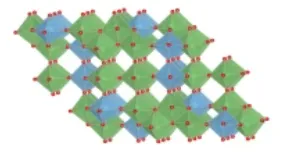
TNO anode material, (titanium niobium oxide, TiNb₂O₇) has emerged as a promising next-generation anode material for lithium-ion batteries due to its high safety, high theoretical capacity, and superior cycling stability.
As the demand for high-performance lithium-ion batteries continues to grow, particularly for electric vehicles, TNO anode material has attracted significant attention as a alternative to conventional graphite-based anode materials.
While challenges remain, particularly regarding electronic conductivity and cost-effectiveness, significant progress has been made through various modification strategies and advanced synthesis techniques. As research continues to address these limitations, TNO has the potential to play a crucial role in the development of high-performance energy storage systems. The ongoing exploration of TNO’s properties and applications underscores its importance in the evolving landscape of energy storage technologies.
TNO Anode Material Composition
TNO anode material belongs to a family of compounds known as Wadsley-Roth phases, which are characterised by crystallographic shear structures. The material crystallises in a monoclinic structure with the Cm space group.
Its three-dimensional framework consists of blocks that are three octahedra wide and three octahedra long, infinitely connected in each plane. This unique block structure creates channels that facilitate lithium-ion diffusion.
The crystal structure contains:
- Three inequivalent Ti⁴⁺ sites, with Ti-O bond distances ranging from 1.77-2.40 Å
- Six inequivalent Nb⁵⁺ sites, with Nb-O bond distances ranging from 1.80-2.42 Å
- Corner-sharing and edge-sharing octahedra with tilt angles ranging from 1-35°
This structure provides multiple sites for lithium intercalation, contributing to TNO’s high theoretical capacity.
The lithium storage mechanism in TNO anode material involves multiple redox couples, including Ti⁴⁺/Ti³⁺, Nb⁵⁺/Nb⁴⁺, and Nb⁴⁺/Nb³⁺. This multi-electron redox capability enables TNO to accommodate up to five lithium ions per formula unit, resulting in a high theoretical capacity of 387.6 mAh/g. The lithium intercalation process in TNO can be described as follows:
- TiNb₂O₇ + xLi⁺ + xe⁻ → LixTiNb₂O₇ (0 ≤ x ≤ 5)
During lithiation, the material undergoes several phase transitions, with voltage plateaus observed in the range of 1.5-2.0 V vs. Li⁺/Li. This operating voltage is significantly higher than that of graphite anode material (0.1-0.2 V vs. Li⁺/Li), which effectively prevents lithium plating and enhances safety.
TNO Anode Material Principal Production Methods
Various production methods have been developed to produce TNO anode material with controlled morphology and improved electrochemical performance. The most common approaches include:
- Solid-State Reaction: Traditional solid-state synthesis involves high-temperature calcination of titanium and niobium precursors, typically requiring long sintering times at temperatures ranging from 700-1200°C. While this method is simple, it often results in large particles with limited surface area and poor rate capability.
- Mechanochemical Method: This approach combines mechanical milling of precursors under an inert atmosphere followed by post-annealing treatment. The annealing atmosphere (oxygen or argon) affects the electrochemical properties of the resulting material.
- Sol-Gel Method: uses titanium and niobium alkoxides or chlorides as precursors, with organic additives serving as structure-directing agents. This method allows for better control over particle size and morphology, resulting in improved electrochemical performance.
- Hydrothermal Method: produces TNO anode material with various nanostructures, including nanosheets, nanofibers, and hierarchical microspheres. These nanostructured materials typically exhibit enhanced rate capability due to shortened lithium diffusion paths.
TNO Anode Material – Product Modification Methods
Despite its promising characteristics, pristine TNO suffers from low electronic conductivity (approximately 10⁻¹¹ S/cm) and sluggish lithium-ion diffusion kinetics. Several strategies have been developed to address these limitations:
- Carbon Coating: enhances the electronic conductivity of TNO. Various carbon sources, including dopamine, glucose, and carbon nanotubes, have been used to create conductive networks around TNO particles. Carbon-coated TNO anode material typically exhibits improved rate capability and cycling stability.
- Nanostructure Engineering: Reducing the particle size and creating nanostructured morphologies shorten the lithium-ion diffusion paths and increase the electrode/electrolyte contact area. Ultrathin carbon-coated porous TNO nanosheets have excellent rate performance and cycling stability.
- Element Doping: Doping TNO anode material with various elements (V, F, La, N, etc.) can modify its electronic structure and improve both ionic and electronic conductivity. For instance, V/F co-doped TNO anode material demonstrates excellent electrochemical performance, with a reversible capacity of 322.8 mAh/g at 0.1C and 78.2% capacity retention after 1500 cycles at 10C.
- Compounding Structures: Combining TNO anode material with other conductive materials such as reduced graphene oxide creates hierarchical composite structures with synergistic effects. These composites benefit from both the high capacity of TNO and the excellent conductivity of the conductive additives.
To view GDC TNO Anode Material Research reports click here
TNO Anode Material – Product Performance
The performance of TNO anode material varies significantly depending on its production method, morphology, and modification strategy. Some notable performance metrics include:
- Capacity and Rate Capability: TNO anode material typically delivers a reversible capacity of 250-280 mAh/g at low current densities
- Cycling Stability: TNO generally demonstrates excellent cycling stability due to its minimal volume change during lithiation/delithiation
- Low-Temperature Performance: TNO exhibits superior low-temperature performance compared to graphite-based anode materials. For example, at -30°C, optimized TNO materials can maintain 92.9% capacity retention over 250 cycles at 1C. Even at -40°C, a competitive areal capacity of 1.32 mAh/cm² can be achieved
- Cell Performance: TNO-based full cells paired with various cathodes (LiNi₀.₆Mn₀.₂Co₀.₂O₂, LiCoO₂, etc.) have demonstrated stable cycling performance. The cycling performances of TNO-NCM and LTO-NCM full cells show very stable cycling at 0.5C with no significant capacity fading. At a 5C discharge rate, TNO-NCM full cells maintain approximately 85% capacity retention
Advantages of TNO Anode Material
- High Safety: The high operating voltage (1.5-2.0 V vs. Li⁺/Li) prevents lithium plating and dendrite formation, significantly enhancing battery safety.
- Fast-Charging Capability: The open crystal structure and multiple lithium insertion sites enable rapid lithium intercalation/deintercalation, making TNO suitable for fast-charging applications.
- Excellent Cycling Stability: The minimal volume change during cycling (less than 3%) contributes to superior long-term stability.
- High Theoretical Capacity: The multi-electron redox reactions provide a theoretical capacity of 387.6 mAh/g, higher than that of commercial Li₄Ti₅O₁₂ (175 mAh/g).
- Wide Operating Temperature Range: TNO maintains good performance at both high and low temperatures, making it suitable for various applications.
Disadvantages of TNO Anode Material
- Low Electronic Conductivity: The intrinsic electronic conductivity of pristine TNO anode material very low (approximately 10⁻¹¹ S/cm), requiring conductive additives or surface modifications
- Energy Density Trade-off: The high operating voltage reduces the overall cell voltage when paired with conventional cathodes, potentially limiting energy density
- Complex Synthesis: Some advanced TNO anode material require complex and potentially costly synthesis procedures
- Raw Material Cost: Niobium is relatively expensive compared to carbon (graphite-based anodes), which may impact the cost-effectiveness of TNO-based batteries
Commercial Applications
TNO is being explored for various commercial applications, particularly in fast-charging and high-power battery systems.
- Electric Vehicles: TNO anode material fast-charging capability and excellent safety make it particularly attractive for EV applications, especially for vehicles requiring rapid charging. The material’s ability to operate effectively at low temperatures also addresses a significant limitation of conventional graphite anodes in cold climates.
- Grid Energy Storage: The long cycle life and safety characteristics of TNO anode material are advantageous for stationary energy storage systems, where reliability and safety are paramount.
- High-Power Applications: TNO anode material is well-suited for high-power applications requiring rapid charge/discharge capabilities, such as power tools, electric buses, and hybrid electric vehicles.
- All-Solid-State Batteries: Recent research has demonstrated the potential of TNO in all-solid-state batteries. These batteries exhibit superior rate capability and high-capacity retention at various temperatures.
Future Research and Development Areas
- Cost Reduction: Developing more economical production methods and reducing the niobium content while maintaining performance.
- Advanced Nanostructures: Creating novel nanoarchitectures to further enhance rate capability and cycling stability.
- Electrolyte Optimisation: Designing electrolyte systems specifically tailored for TNO anode material to improve interfacial stability and rate performance.
- Mass Production: Transitioning from lab-scale to mass production while maintaining material quality and performance.
Concluding Thoughts
TNO anode material offers several advantages over traditional graphite-based anode materials. TNO boasts a higher theoretical capacity (up to 387.6 mAh/g) and energy density, rapid charge/discharge capability, and enhanced safety due to its higher operating voltage, which suppresses lithium dendrite formation.
TNO anode material open crystal structure supports fast lithium-ion diffusion, resulting in excellent rate performance and long cycle life, with some composites achieving capacity retentions above 90% after hundreds of cycles.
Although its intrinsic electronic and ionic conductivities are moderate, these limitations can be mitigated by engineering approaches such as carbon coating, nanostructuring, or combining with conductive additives, enabling TNO to deliver high capacities and stable cycling even at high rates.
These characteristics and performance attributes makes TNO anode material a promising candidate for use in next-generation high-power, high-safety, and long-life lithium-ion and potentially solid-state batteries.
For more blog articles click here
To view GDC market research reports click here
Golden Dragon Capital Limited | Comprehensive Market Research Reports
About us
GDNM provides commentary on how energy transition minerals contribute towards the decarbonisation and electrification of the global economy, with a particular focus on the lithium-ion battery and rare earths supply chains.
GDNM founder, Mr Brendan Jephcott is an Australian who has worked in the global mining sector for more than 13 years, of which his experience covers precious metals, nonferrous metals, ferrous metals, base metals, bulk commodities, rare earths, and the lithium-ion battery industry.
For the last 9 years Mr Jephcott has focused on the burgeoning new energy industry, participating in cross-border transactions in buy-side and sell side roles, cultivating a global business network ranging from upstream resource companies, midstream intermediate product producers, and downstream consumers such as gigafactories and auto companies.