Rise of Sodium-ion Batteries Continues into 2025
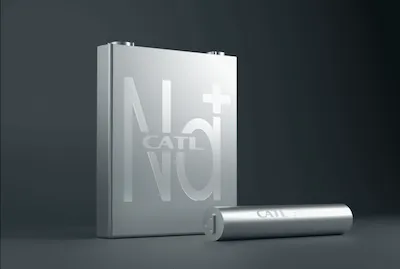
Global lithium-ion battery leader CATL has made significant breakthroughs in the field of sodium-ion batteries in recent years.
In April 2025, the Company announced mass production of its sodium-ion battery brand “Naxtra” has officially commenced with two products brought to market:
- Passenger car power batteries
- 24V heavy truck start-stop integrated batteries
Of which, the passenger car power batteries are expected to be mass-produced in December 2025, and heavy truck batteries are planned to be mass-produced in June 2025, becoming the world’s first mass-produced sodium-ion battery brand.
Second-Generation Sodium-ion Batteries Technology Breakthrough
According to Wu Kai, Chief Scientist of CATL, the second-generation sodium-ion batteries has been developed and is expected to be launched in 2025.
Compared with the first-generation, the second generation technology has significantly improved energy density, cycle life, and low-temperature performance, with an energy density of 175Wh/kg.
Technological innovations include non-expansion anode technology and battery cell design with near-zero strain during charge and discharge, which improves the stability and safety of the battery. Excellent low-temperature performance, through composite antifreeze electrolyte, the capacity retention rate reaches 90% at minus 40°C. With only 10% remaining power, the sodium new passenger car battery can still achieve basically no attenuation of the vehicle power at minus 40 degrees.
In terms of commercialisation, CATL’s Natra sodium-ion batteries have been installed and applied in Chery EV models since 2023 and are now further expanded into Jiangling Yi Chi and other models in 2024.
In 2025, CATL has provided small-scale production of Natra sodium-ion batteries for some auto companies, and the third-generation sodium-ion batteries is about to be launched, with the goal of further improving cost performance.
The new passenger car sodium-ion batteries for electric and hybrid vehicles will start mass production in December 2025, and the sodium-based new 24V heavy-duty truck start-stop integrated storage battery for heavy trucks will start mass production in June 2025.
Production Process Synergies
CATL has emphasised that the production equipment and processes of sodium-ion batteries are highly compatible with conventional lithium-ion batteries, which reduces the threshold for commercialisation and facilitates the transformation of the existing lithium-ion battery industry chain without the need to significantly transform existing production lines. Electrode preparation, stamping, packaging and other processes can be directly used, reducing the cost of commercialisation.
Industry Chain Continuation
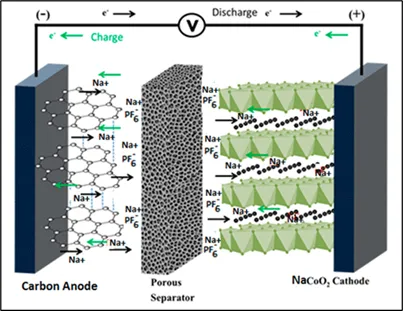
Although the cathode materials (such as Prussian blue and layered oxides) and anode materials (such as hard carbon) of sodium-ion batteries are different from those of conventional lithium-ion batteries, their production processes are similar, and existing suppliers of cathode and anode materials can quickly transform by adjusting formulas. Existing stamping equipment, coating machines, and winding machines can continue to be used, and therefore both component material and equipment manufacturers do not need to fully change their production lines.
In terms of the material system, except for the separator, all other base materials used in conventional sodium-ion batteries are different, especially the cathode material and anode material.
- Cathode: since sodium ions have a larger radius than lithium ions, it is difficult for them to intercalate making for poor energy density, therefore the cathode material types used today in sodium-ion batteries are namely layered transition metal oxides, polyanionic compounds or Prussian blue compounds.
- Anode: graphite-based anode material used in lithium-ion batteries cannot effectively intercalate sodium ions, therefore, the anode material used in sodium-ion batteries today is generally amorphous carbon-based material products such as hard carbon or soft carbon.
- Electrolyte: the molar conductivity of sodium ions is higher, which makes the concentration of electrolyte required for sodium-ion batteries lower, and the requirements for additives also lower. Today sodium hexafluorophosphate is used in sodium ion batteries.
- Separator: sodium-ion batteries use polyethylene (“PE”) or polypropylene (“PP”) as separator material, which is the same as lithium-ion batteries, there is no difference.
- Current collectors: both the cathode current collector and anode current collector of sodium-ion batteries use aluminium foil, while lithium-ion batteries use aluminium foil for cathode current collector and copper foil for anode current collector.
Business Case Analysis
The use of the lithium-ion battery industry chain reduces the investment cost of sodium-ion batteries and will accelerate their commercialisation. Especially under the background of low lithium chemical salt prices, sodium-ion batteries have become a strategic choice for companies to diversify risks.
| Lead-acid Batteries | Sodium-ion Batteries | LFP batteries | Ternary Batteries | |
| Energy density (Wh/kg) | 30-50 | 100-150 | 120-180 | 200-250 |
| Cycle life (times) | 300-500 | >2000 | >3000 | >3000 |
| Operating voltage (V) | 2.0 | 2.8-3.5 | 3-4.5 | 3-4.5 |
| Safety rating | High | Very High | Very High | Poor |
| High temperature performance | Poor | Excellent | Awful | Poor |
| Low temperature performance | <60% | <88% | <70% | <70% |
| Environmental friendliness | Poor | Excellent | Poor | Poor |
| Commercial applications | Energy storage systems, and low speed electric vehicles | High-end electric vehicles and energy storage systems | ||
Advantages and Disadvantages Sodium-ion Batteries and Lithium-ion Batteries
Advantages of Sodium-ion Batteries
- Rich resources and low cost: Sodium mineral reserves far exceed lithium (the sodium content in the earth’s crust is about 2.36%, while lithium mineral reserves is only 0.0065%), and are widely distributed and have low acquisition costs. Sodium-ion batteries do not need to rely on scarce metals such as lithium, cobalt, and nickel, and therefore raw material costs can be reduced by up to 30% to 40%.
- High safety: Sodium-ion batteries have stable chemical properties, low risk of thermal runaway, and built-in “firewall” characteristics. They are not easy to catch fire or explode, and are suitable for scenarios with high safety requirements. Sodium-ion batteries can be subjected to experiments such as multi-faceted extrusion, needle penetration, electric drill penetration, and battery sawing without catching fire or exploding.
- Excellent low-temperature performance: Sodium-ion batteries can still maintain 90% of their capacity at minus 40°C, which is better than lithium-ion batteries (especially LFP batteries) and is suitable for operating in cold climates.
- Environmentally friendly: Sodium-ion batteries avoid the use of heavy metals such as cobalt, and the production and recycling process is more environmentally friendly meeting the requirements of sustainable development.
Disadvantages of Sodium-ion Batteries
- Low energy density: The current energy density of sodium-ion batteries is 175Wh/kg, which is lower than that of ternary batteries (about 250-300Wh/kg) and LFP batteries (about 180-200Wh/kg), limiting their application in long-range electric vehicles.
- Cycle life needs to be improved: Although the second-generation sodium-ion batteries have been improved with a cycle life of around 2000-3000 times, they are still inferior to that of LFP batteries which have around 4000-6000 times.
- High cost of commercialisation: Although the cost of raw materials is low, the sodium-ion battery industry chain is not yet fully mature, and the initial equipment investment and large-scale production costs are relatively high.
Advantages of Lithium-ion Batteries
- Mature production technology: The lithium-ion battery industry chain is complete, the production process and supply chain are highly optimised, and the production cost continues to decline with economics of scale.
- High energy density: Ternary batteries have high energy density and are suitable for long-range electric vehicles, while LFP batteries have a balanced advantage in cost and safety.
- Fast-charging performance: ternary batteries support higher charging rates and are suitable for super-charging technology, such as CATL’s second-generation Shenxing super-charging battery (520km charging in 5 minutes).
Disadvantages of Lithium-ion Batteries
- Resource dependence: Lithium, cobalt, nickel and other mineral resources are scarce, prices fluctuate greatly, and geopolitical risks are high.
- Safety issues: Ternary batteries have a high risk of thermal runaway and require complex thermal management, whereas, although LFP batteries are safer, they are still inferior to sodium-ion batteries.
- Poor low-temperature performance: LFP batteries have clear capacity decay at low temperatures. Although ternary batteries are better, they are still not as good as sodium-ion batteries.
Potential for Sodium-ion Batteries to Replace Lithium-ion batteries
Lithium-ion batteries (ternary and LFP) currently dominate the electric vehicles and energy storage system markets due to their mature technology and high energy density. However, they rely on liquid electrolytes, and there are problems such as leakage, thermal runaway and energy density bottlenecks, which have prompted the industry to explore alternative technologies.
Sodium-ion Battery Substitution Potential
The advantages of sodium-ion batteries in safety, low-temperature performance and cost make them competitive in low-range passenger cars (such as urban commuter cars), heavy trucks, energy storage systems and other fields. CATL expects sodium-ion batteries to replace half of the market share of LFP batteries.
- Application scenarios: small electric vehicles, energy storage power stations, and FAW Jiefang heavy trucks.
- Co-exist with liquid batteries: Due to their low energy density, sodium-ion batteries are unlikely to completely replace ternary batteries in the short term. They are expected to complement LFP batteries and jointly meet diversified market needs.
For more blog articles click here
To view other GDC lithium-ion battery component materials market research reports click here
Golden Dragon Capital Limited | Comprehensive Market Research Reports
About us
GDNM provides commentary on how energy transition minerals contribute towards the decarbonisation and electrification of the global economy, with a particular focus on the lithium-ion battery and rare earths supply chains.
GDNM founder, Mr Brendan Jephcott is an Australian who has worked in the global mining sector for more than 13 years, of which his experience covers precious metals, nonferrous metals, ferrous metals, base metals, bulk commodities, rare earths, and the lithium-ion battery industry.