Rise of High-Density LFP Cathode Material
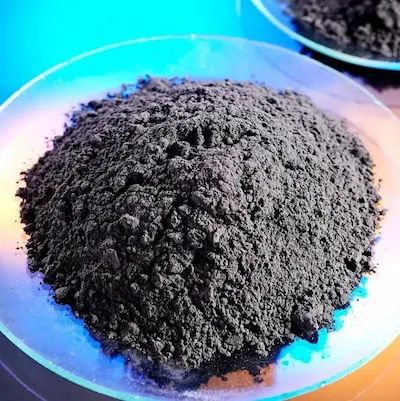
High-performance LFP cathode material with higher compaction density can produce high-end LFP batteries high energy density.
Compaction density refers to the mass of material contained in a unit volume of a battery electrode under a certain pressure, which is closely related to the electrode specific capacity, efficiency, internal resistance, and battery cycle performance. To increase the energy density of the battery while keeping the volume unchanged, it is necessary to increase the electrode compaction density of the lithium iron phosphate cathode material.
High-density LFP cathode material refers to materials with a compaction density of more than 2.6g/cm3. Due to its high compaction density and continuous conductive path, it can significantly improve the energy density and charging speed of the battery. The current process routes for high-pressure compacted lithium iron phosphate are mainly the ferrous oxalate method and iron phosphate method.
Ferrous oxalate method
The technical route for synthesizing lithium iron phosphate from ferrous oxalate is to evenly mix ferrous oxalate (FeC2O4·2H2O), lithium source (Li2CO3 or LiOH·H2O), and phosphorus source (NH4H2PO4 or LiH2PO4) and then introduce a protective atmosphere into a sintering furnace for sintering to synthesize lithium iron phosphate. The advantages of preparing high-density lithium iron phosphate by ferrous oxalate method are:
- Oxalate is not easily introduced into the impurity phase during the synthesis process. The prepared LFP/C sample has a pure olivine structure. The high-purity material has better charge transfer characteristics and ion diffusion rate, thereby improving the capacity of the battery.
- The lithium iron phosphate cathode material synthesized from ferrous oxalate has a high degree of crystallinity and a strong bonding force, which is conducive to stabilizing the skeleton structure of the sample. High crystallinity also means that the material has a more ordered crystal structure, which can provide more active sites and more efficient electron transfer pathways.
- Ferrous oxalate decomposes and releases gas during the reaction, which can inhibit the agglomeration of particles and the growth of grains, and help to obtain finer and more uniform particles, thereby increasing the compaction density of the material. Fine particles can increase the specific surface area of the material and increase the diffusion rate of lithium ions, thereby improving the rate performance and charge and discharge efficiency of the battery.
Iron Phosphate method
The ferric phosphate process generally uses trivalent iron as the iron source, phosphoric acid or monoammonium phosphate as the phosphorus source, lithium carbonate as the lithium source, carbon black as the carbon source, and organic matter such as glucose, sucrose, starch, etc. as auxiliary materials. The precursor ferric phosphate is evenly mixed with the organic matter and carbon black, and the reducing property of the carbon source under high temperature environment is used to reduce the trivalent iron to divalent iron. At the same time, the pyrolyzed carbon is coated on the lithium iron phosphate to enhance the conductivity.
Iron phosphate powder has a stable and controllable Fe/P ratio, purity, particle size and morphology, which can ensure product consistency and production repeatability which are important factors that determine the electrochemical performance of LFP. There are many suppliers in China who can provide iron phosphate with sufficient output, low price, stable quality and rich variety. In this process route, the raw materials are highly reliable, with fewer varieties and less gas production, which simplifies the steps of weighing, batching, mixing, etc. At the same time, it has no special requirements for process flow and production equipment, and balances the cost, quality and output of the product, so it has become the mainstream process route.
The compaction density of lithium iron phosphate can be increased through the secondary sintering process. The process refers to preparing lithium iron phosphate, using two sintering steps at different temperatures and/or different atmospheres to optimise the material’s microstructure, improve the material’s crystallinity, density, compaction density and improve its electrochemical properties. The time of each sintering needs to be precisely controlled to ensure that the material is fully reacted and densified, but at the same time avoid grain growth caused by excessive sintering. Adding a second sintering step significantly improves the compaction density of LFP material powder.
When the sintering temperature is increased to more than 700°C, small particles will bond with each other. If the temperature is kept at high temperature for a long enough time, these bonding points will expand and become sintering necks. A large amount of solid phase diffusion will occur during this period, so that two or more small particles will fuse to form a large particle, which will increase the overall powder compaction density.
| Step | Process | Purpose |
| Ingredients | Mix lithium salt, iron compound, phosphorus compound, molar ratio (0.98-1.02): 1:1, particle size 1-20 microns | |
| First sintering | Heat to 350℃-550℃ at a heating rate of 1-5℃/min, keep warm for 5-15 hours, cool and crush to form lithium iron phosphate powder | The first sintering is carried out at a lower temperature, usually in a protective atmosphere (such as nitrogen or argon) to avoid oxidation of the material. The purpose is to remove moisture and volatile substances in the precursor and initially form the crystal structure of lithium iron phosphate, but the crystal structure may not be complete and dense enough at this time. |
| Second sintering | Mix lithium iron phosphate powder with carbon source and solvent, dry and heat to 650℃-850℃ at 2-8℃/min, keep warm for 10-20 hours, cool and crush | The second sintering is carried out at a higher temperature to promote crystal growth and further densification of grains. The second sintering helps to improve the crystallinity of the material, reduce grain boundaries and defects, and thus improve the material’s electrical conductivity and lithium ion diffusion coefficient. |
| Final | Crush, sieve, grade, the screened material is the final lithium iron phosphate product |
The problems of high compaction in production are the particle distribution cannot be accurately controlled, and the high sintering temperature will produce magnetic impurities Fe2P, which are usually mixed with another impurity Fe metal particles, interfering with the battery factory’s evaluation of LFP products, and may pierce the separator and cause battery short circuit. In addition, the gas production is large, which damages the carbon coating structure, resulting in large specific surface and impedance, and increased iron dissolution.
| Barriers | Specific Case |
| Complexity of material preparation process | The material requires strict process control, such as precise ratio, particle morphology control, sintering temperature and time, etc. The process requirements are high and difficult to master quickly. |
| Stable electrochemical performance | Long-term stable cycle life and high-rate performance require a lot of experiments and long-term accumulation of data models. |
| Balance between high energy density and safety | Involves the optimisation of material structure design, conductivity and ion transport |
High-Density LFP Cathode Material – Adding a second sintering process
Adding a second sintering process increases the requirements for the control of the granular morphology of the precursor and the application of grading theory (particle size distribution). Grading grinding is a multi-stage grinding process that controls the size distribution of particles to form a reasonable grading system, thereby increasing the compaction density. By applying different sand milling times, lithium iron phosphate of different particle sizes can be obtained.
Grading of large and small particles or mixing lithium iron phosphate particles of different particle sizes in a certain proportion increases the compaction density of the powder and improve the electrochemical performance of the battery:
- Increase compaction density: Through the grading of large and small particles, small particles can be filled into the gaps between large particles, thereby significantly improving the compaction density of the overall powder.
- Improve electrochemical performance: The electronic conductivity and lithium-ion diffusion coefficient of small particles are usually higher than those of large particles, while large particles provide higher powder compaction density.
- Particle synergy: During the sintering process, iron phosphate with a larger total mass of doped elements tends to generate small particles of lithium iron phosphate, while iron phosphate with a smaller total mass of doped elements generates large particles of lithium iron phosphate. This kind of lithium iron phosphate material with large and small particle grading has both high powder compaction density and discharge specific capacity.
LFP Cathode Grading Ratio
The grading ratio is the core. Factors affecting the final compaction density of the material include the particle size and particle size distribution of large and small particles, and their own fluidity and stacking state.
Some manufacturers try to mix large and small particles after spray drying, which requires adding a process and corresponding mixing equipment to the production line while others manufacturers grade the large and small particle slurries of different nanoparticle sizes after grinding, taking advantage of the fact that liquid phase mixing is more uniform than solid phase mixing.
However, the small particles in the slurry in this way may agglomerate and grow into large particles during the subsequent sintering process, that is, the amount of small particles added is less than the content in the final product. It is necessary to optimise the grading ratio and the corresponding sintering system based on experimental results.
Increasing the particle size of iron phosphate particles after sand milling, reducing the specific surface area and surface activity, can reduce the amount of Fe2P generated; but the particle size of iron phosphate particles cannot be too large, because too small a specific surface area will lead to too low surface activity, and the effect of surface Fe element catalysis CVD will be greatly reduced, resulting in a serious lack of graphitized carbon coating in the product, affecting the conductivity of the material. By applying different sand milling times, lithium iron phosphate of different particle sizes can be obtained.
In China, the companies that have deployed the high-density LFP cathode material are Hunan Yuneng New Energy Battery Material Co Ltd, Mianyang Fulin Precision Co., Ltd, Shenzhen Dynanonic Co., Ltd, Longpan Technology Co., Ltd, Hubei Wanrun New Energy Technology Co., Ltd, Guizhou Anda Technology Co., Ltd and other companies. Except for Hunan Yuneng and Fulin Precision, most companies are still in the process of testing and verification.
For more blog articles click here
To view GDC market research reports click here
About us
GDNM provides commentary on how energy transition minerals contribute towards the decarbonisation and electrification of the global economy, with a particular focus on the lithium-ion battery and rare earths supply chains.
GDNM founder, Mr Brendan Jephcott is an Australian who has worked in the global mining sector for more than 13 years, of which his experience covers precious metals, nonferrous metals, ferrous metals, base metals, bulk commodities, rare earths, and the lithium-ion battery industry.
For the last 9 years Mr Jephcott has focused on the burgeoning new energy industry, participating in cross-border transactions in buy-side and sell side roles, cultivating a global business network ranging from upstream resource companies, midstream intermediate product producers, and downstream consumers such as gigafactories and auto companies.