LFP Battery Rapid Technology Advancements
The rapid advancement of LFP battery technology represents a transformative moment in energy storage development, with CATL and BYD leading innovations that fundamentally challenge previous assumptions about battery performance limitations.
The achievement of 1,000+ kilometer ranges, ultra-fast charging capabilities, and unprecedented safety standards positions LFP technology as the foundation for mass-market electric vehicle adoption and grid-scale energy storage deployment.
The combination of cost advantages, material abundance, and superior safety characteristics creates compelling economic and technical arguments for continued LFP adoption across diverse applications.
The global expansion of LFP manufacturing capacity, coupled with major automotive manufacturers’ strategic commitments to the technology, suggests that LFP batteries will dominate future electric vehicle, energy storage systems, and consumer electronics markets.
As next-generation technologies including LMFP and dual-power systems mature, the performance gap between LFP and premium nickel-based batteries continues to narrow while maintaining substantial cost and safety advantages.
These developments collectively indicate that LFP technology will serve as the cornerstone for the global energy transition, enabling widespread electrification across transportation and stationary storage applications while supporting sustainability objectives through abundant, ethically sourced raw materials.
LFP Battery Technology is Transforming the EV and ESS Landscape
The LFP battery sector is undergoing unprecedented technological evolution, with industry leaders CATL and BYD spearheading innovations that are reshaping energy storage capabilities.
These advancements represent a paradigm shift in battery technology, addressing longstanding limitations while establishing new performance benchmarks that challenge traditional assumptions about LFP capabilities.
The convergence of enhanced energy density, ultra-fast charging capabilities, and superior safety profiles positions LFP technology as a cornerstone of the global energy transition, with implications extending far beyond the automotive sector into grid-scale energy storage and industrial applications.
CATL Shenxing LFP Battery Series
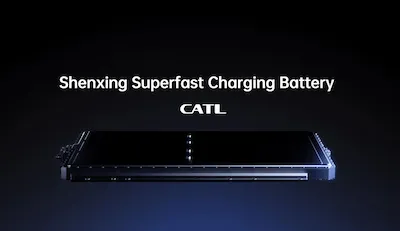
CATL has achieved remarkable breakthroughs with its Shenxing battery technology, culminating in the groundbreaking Shenxing PLUS that represents the world’s first LFP battery to achieve over 1,000 kilometers of range coupled with 4C superfast charging capabilities.
This technological milestone enables electric vehicles to travel distances equivalent to Beijing to Nanjing without requiring intermediate charging, fundamentally addressing range anxiety concerns that have historically limited EV adoption. The Shenxing PLUS achieves an unprecedented energy density of 205 Wh/kg, surpassing the critical 200 Wh/kg threshold for the first time in LFP technology.
The technical innovations underlying this achievement are multifaceted and sophisticated. The cathode utilises granular gradation technology that positions every nanometer particle in optimal configurations to achieve ultra-high compact density, while the anode incorporates a proprietary 3D honeycomb-shaped material that enhances energy density while effectively controlling volume expansion during charge and discharge cycles. The revolutionary single-piece casing design, an industry first, optimizes internal space utilization to unprecedented levels, enabling cells to reach unparalleled energy density achievements.
CATL’s latest innovation represents an even more dramatic leap forward with the second-generation Shenxing battery, featuring extraordinary 12C peak charging capabilities and 1.3MW charging power.
This advancement enables the addition of 520 kilometers of range in just five minutes of charging, translating to an remarkable 2.5 kilometers of range per second of charging. The system achieves total ranges up to 800 kilometers with 5-80 percent charge times of merely 15 minutes, establishing new industry standards that were previously considered technologically impossible.
BYD Blade Battery Series
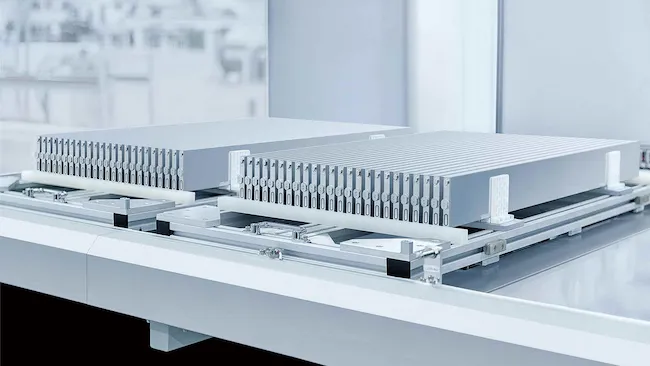
BYD’s Blade Battery technology represents a fundamental reimagining of battery architecture, delivering revolutionary improvements in safety, energy density, and structural integration.
The distinctive blade-shaped design enables 50% more efficient space utilization compared to standard LFP battery packs, significantly boosting driving range without increasing battery size.
This innovative approach transforms individual cells into structural components, creating a honeycomb-like architecture where each cell functions as a structural beam, dramatically enhancing the overall pack strength and crash safety.
The next-generation Blade Battery 2.0 promises substantial performance enhancements, with energy density reaching up to 210 Wh/kg in the long blade format while supporting 8C discharge rates and 3C charge rates.
The short blade format will deliver 160 Wh/kg energy density with exceptional 16C peak discharge capabilities and 8C charge rates, demonstrating the technology’s versatility across different application requirements.
BYD targets a 15% cost reduction for the higher energy density version compared to current generation batteries, while maintaining or slightly increasing prices for the higher performance variants due to manufacturing complexity.
The Blade Battery’s safety credentials are particularly remarkable, having successfully passed the rigorous nail penetration test without emitting smoke or fire, with surface temperatures remaining between 30-60°C compared to over 500°C for ternary lithium batteries.
Additional extreme testing including crushing, bending, furnace heating to 300°C, and 260% overcharging resulted in no fires or explosions, establishing unprecedented safety standards for the industry.
Automotive Industry Adoption of LFP
The automotive sector’s embrace of LFP technology spans major manufacturers globally, with Tesla leading the transition by incorporating LFP batteries in standard-range Model 3 vehicles since 2021. The 2023 Model 3 with rear-wheel drive features LFP batteries capable of 272-mile range, while Tesla plans to extend LFP adoption to additional models including the Model Y in North American markets.
Ford has similarly integrated LFP technology into the Mustang Mach-E standard range variants, utilizing 72.6 kWh LFP packs for both all-wheel drive and rear-wheel drive configurations.
Volkswagen represents perhaps the most significant commitment to LFP technology among traditional automotive manufacturers, announcing plans to transition its entire ID series to LFP batteries starting with the 2026 ID.2 supermini. The company will implement its MEB Plus platform across the ID.3, ID.4, and ID.7 models, all featuring LFP batteries manufactured at Volkswagen’s new Salzgitter facility in Germany.
Cost Advantages and Economic Drivers
LFP batteries have achieved remarkable cost competitiveness, with industry data indicating dramatic price reductions over recent years.
CATL has reduced VDA-specification LFP battery prices from 0.9 CNY per Wh two years ago to 0.35 CNY per Wh for standard 2C charging batteries intended for entry-level EVs around 150,000 CNY (USD$20,000). This represents a greater than 60% cost reduction, fundamentally altering the economics of EV production and enabling manufacturers to offer competitive pricing against ICE vehicles.
The elimination of costly and supply-constrained materials represents a crucial economic advantage for LFP technology. Unlike NCM ternary batteries that rely on cobalt, LFP chemistry uses abundant iron and phosphate materials, creating more stable and predictable supply chains.
This material advantage becomes increasingly significant as battery demand scales globally and manufacturers seek to reduce exposure to volatile commodity markets and geopolitical supply risks.
BYD’s vertical integration strategy exemplifies the cost optimisation potential inherent in LFP technology. The company’s parallel development of battery packs and cells, combined with extensive design simulation and optimization, maximises battery performance while minimizing costs. The Blade Battery’s elimination of traditional module designs reduces secondary battery components by 40%, contributing significantly to overall cost reductions.
Enhanced Safety and Thermal Stability
LFP batteries demonstrate exceptional thermal stability compared to nickel-based alternatives, with scientific research confirming substantially lower thermal runaway risks. Studies comparing different battery chemistries found that LFP cells exhibit superior thermal stability, while NCM cells show “terrible temperature tolerance” with maximum temperature differences exceeding 400°C between the two technologies. This fundamental safety advantage makes LFP batteries particularly suitable for applications requiring high safety standards, including public transportation and grid-scale energy storage systems.
The Blade Battery’s thermal management capabilities are particularly noteworthy, with the elongated cell design providing larger heat dissipation surfaces and reduced thickness enabling superior thermal performance. Patent data from BYD demonstrates that as cell thickness decreases, temperature rise during fast charging diminishes significantly, with heat dissipation performance improving proportionally. This design optimization enables faster charging speeds while maintaining safe operating temperatures across varying environmental conditions.
CATL’s Freevoy hybrid battery technology showcases advanced cold-weather performance capabilities, incorporating sodium-ion battery technology that enables discharge at temperatures as low as -40°C and charging at -30°C.
The system maintains smooth performance down to -20°C, addressing one of the traditional limitations of battery technology in extreme climate conditions. These developments are crucial for global adoption in regions with harsh winter climates where battery performance degradation has historically limited EV practicality.
Next-Generation Battery Technologies
The evolution toward LMFP represents the next frontier in LFP technology advancement, offering higher energy density while maintaining the safety and cost advantages of traditional LFP chemistry.
LMFP technology delivers improved performance at reduced costs, positioning it as a strategic choice for manufacturers seeking to balance affordability with enhanced range capabilities.
China’s dominance in LFP production, accounting for 99% of global LFP cathode production in 2024, provides significant advantages in scaling LMFP commercialization.
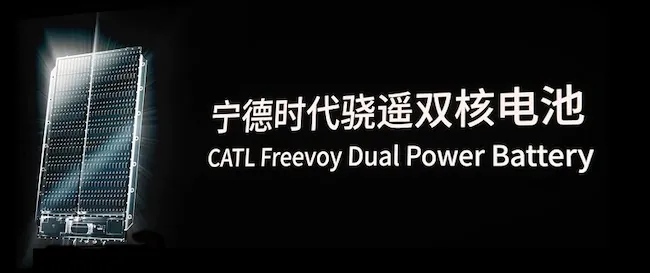
CATL Freevoy Dual-Power Battery introduces revolutionary battery architecture concepts, combining different battery chemistries within single systems to optimize performance characteristics.
The Sodium-LFP Dual-Power Battery integrates sodium-ion technology with LFP self-forming anode technology, enhancing cold-weather performance and range capabilities.
The LFP-LFP Dual-Power Battery combines second-generation Shenxing fast-charging batteries with LFP self-forming anode batteries, achieving up to 800 kilometers of range.
Advanced Charging Infrastructure Integration
The development of ultra-fast charging capabilities necessitates corresponding infrastructure investments to realize the full potential of next-generation LFP technology. CATL’s 12C charging system requires 1.3MW charging infrastructure, representing a significant leap beyond current fast-charging capabilities. The company’s partnership with Sinopec to develop battery exchange stations demonstrates alternative approaches to rapid energy replenishment, with plans for 10,000 stations nationwide targeting commercial vehicle applications.
CATL’s AI polarization model represents sophisticated software integration that predicts and controls charging current in real-time, enabling faster and more intelligent energy replenishment while optimizing battery longevity. These technological advances require comprehensive ecosystem development including charging infrastructure, grid capacity upgrades, and sophisticated battery management systems to fully capitalize on the performance capabilities of advanced LFP technology.
For more blog articles click here
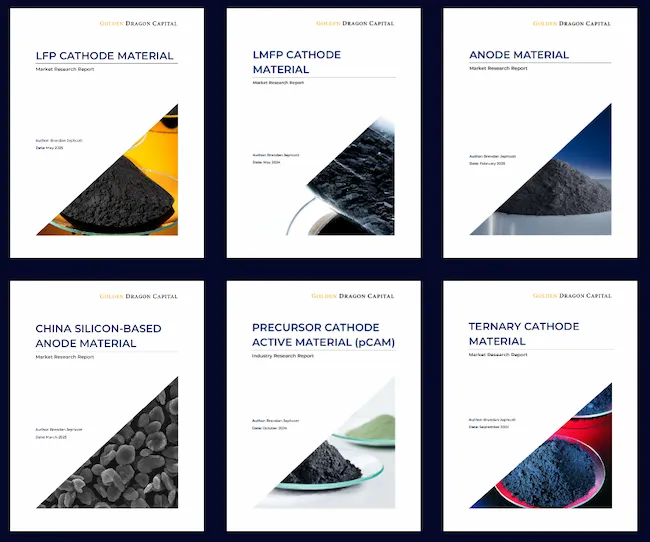
To view GDC market research reports click here
About us
GDNM provides commentary on how energy transition minerals contribute towards the decarbonisation and electrification of the global economy, with a particular focus on the lithium-ion battery and rare earths supply chains.
GDNM founder, Mr Brendan Jephcott is an Australian who has worked in the global mining sector for more than 13 years, of which his experience covers precious metals, nonferrous metals, ferrous metals, base metals, bulk commodities, rare earths, and the lithium-ion battery industry.
For the last 9 years Mr Jephcott has focused on the burgeoning new energy industry, participating in cross-border transactions in buy-side and sell side roles, cultivating a global business network ranging from upstream resource companies, midstream intermediate product producers, and downstream consumers such as gigafactories and auto companies.