Mainstream Cathode Material Product Comparisons
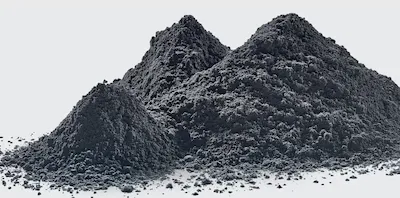
The cathode material serves as the positive electrode in lithium-ion batteries and plays a fundamental role in determining overall battery performance. During the discharge cycle, the cathode accepts lithium ions while releasing them during charging, making it a critical component in the electrochemical reactions that enable energy storage and release.
Role of the cathode material
The cathode functions as part of a coupled system where lithium ions constantly flow between electrodes through the electrolyte, while electrons move through the external circuit connected to the battery terminals. This ion intercalation and deintercalation process is what enables the reversible energy storage that makes lithium-ion batteries rechargeable.
The cathode material accounts for more than 40% of the total cost of lithium batteries, and its performance directly affects key battery characteristics including energy density, safety, cycle life, and thermal stability. Today, mainstream cathode materials include:
- Lithium Cobalt Oxide (LCO)
- Lithium Manganese Oxide (LMO)
- Lithium Iron Phosphate (LFP)
- Lithium Nickel Manganese Cobalt Oxide (NMC)
- Lithium Nickel Cobalt Aluminum Oxide (NCA)
Lithium Cobalt Oxide (LCO)
Lithium cobalt oxide (LiCoO₂) was historically significant as the first commercially produced lithium battery cathode material. LCO features a layered crystal structure with high theoretical capacity of 274 mAh/g, though actual capacity is limited to approximately 140 mAh/g due to structural stability constraints. The material offers high discharge voltage around 3.7V when paired with graphite anodes, excellent electrochemical performance, and high volumetric energy density.
However, LCO faces significant limitations including high material costs due to expensive cobalt, toxicity concerns, and safety challenges when scaling to larger battery applications. The cycle life is relatively short at around 250 cycles with average capacity decay of 0.445 mAh per charge/discharge cycle.
Lithium Manganese Oxide (LMO)
Lithium manganese oxide (LiMn₂O₄) features a three-dimensional spinel crystal structure that enables excellent high-rate charge and discharge performance. LMO offers advantages including low cost due to abundant manganese, simple synthesis methods, and good rate capability due to its cubic crystal system structure.
However, LMO suffers from structural instability at elevated temperatures due to manganese ion dissolution and disproportionation reactions, leading to rapid capacity fade and shorter cycle life. The operating voltage is approximately 3.0V, which is lower than other mainstream cathode materials.
Lithium Iron Phosphate (LFP)
Lithium iron phosphate (LiFePO₄) represents a safer and more cost-effective alternative with an olivine crystal structure. LFP offers theoretical capacity of 170 mAh/g with operating voltage around 3.2V. The material demonstrates exceptional thermal stability due to strong P-O covalent bonds in the (PO₄)³⁻ polyanion structure, making it inherently safer than other cathode chemistries.
LFP excels in cycle life performance, with some advanced formulations achieving up to 25,000 cycles with 70% capacity retention. The material benefits from abundant and low-cost raw materials like iron and phosphate, significantly reducing manufacturing costs compared to cobalt-based alternatives. However, LFP suffers from lower energy density (90-160 Wh/kg) and poor performance at high discharge rates due to limited lithium-ion diffusion pathways.
To view GDC LFP cathode material industry market research report click here
Lithium Nickel Manganese Cobalt Oxide (NMC)
NMC cathodes, with the general formula Li(NiCoMn)O₂, represent a balanced approach combining advantages of multiple transition metals. The synergistic effects of nickel (increasing capacity), cobalt (providing structural stability), and manganese (reducing costs and improving safety) create versatile materials with tunable performance characteristics.
NMC materials achieve energy densities of 150-250 Wh/kg, offering longer driving ranges for electric vehicles compared to LFP. The layered α-NaFeO₂ structure enables stable operation at high states of delithiation, though this comes with higher material costs due to nickel and cobalt content. Different NMC ratios (such as NMC 333, 622, or 811) allow optimization for specific applications.
Lithium Nickel Cobalt Aluminum Oxide (NCA)
NCA cathodes, typically with composition Li(Ni₀.₈₄Co₀.₁₂Al₀.₀₄)O₂, offer high energy density and excellent fast-charging capabilities. The material achieves practical capacity of 180-200 mAh/g with operating voltage between 3.6-4.0V, enabling batteries with high energy density suitable for demanding applications like electric vehicles.
The aluminium addition provides structural stability while reducing cobalt content compared to pure lithium cobalt oxide, though NCA still faces challenges with high raw material costs and limited cobalt resources. NCA demonstrates superior rate capability and cycle life compared to many alternatives, making it popular in high-performance applications.
Cathode Material Competitive Analysis
- Energy Density: Energy density represents a critical performance metric directly impacting battery range and capacity. NMC and NCA materials lead in this category, with NMC achieving 150-250 Wh/kg and NCA reaching 180-200 mAh/g practical capacity. LCO provides high volumetric energy density but lower gravimetric performance, while LFP offers the lowest energy density at 90-160 Wh/kg.
- Safety: Thermal stability varies significantly among cathode materials, with LFP demonstrating superior safety characteristics due to its strong phosphate bonds that resist thermal decomposition. LMO also shows good thermal stability, while NCA, NMC, and LCO exhibit lower thermal stability and higher reactivity, particularly at elevated temperatures.
- Cycle Life: LFP excels in cycle life performance, with advanced formulations achieving 25,000 cycles for stationary storage applications. NMC materials typically provide moderate cycle life with good capacity retention, while LCO shows limited cycle life around 250 cycles. LMO suffers from the shortest cycle life due to manganese dissolution issues.
- Cash Cost: Material costs vary dramatically based on raw material availability and processing requirements. LFP offers the lowest cost due to abundant iron and phosphate resources, while cobalt-containing materials like LCO and NCA face higher costs due to limited cobalt supply and ethical sourcing concerns. NMC materials provide intermediate costs depending on the specific composition ratios.
- Applications: Different cathode materials serve distinct market segments based on their performance characteristics. LCO remains dominant in consumer electronics due to high volumetric energy density. LFP has gained significant market share in electric vehicles and stationary storage where safety and cost are prioritized over energy density. NMC and NCA materials are preferred for high-performance electric vehicles requiring long range and fast charging capabilities.
| Cathode Material | Lithium Cobalt Oxide (LCO) | Lithium Manganese Oxide (LMO) | Lithium Iron Phosphate (LFP) | Ternary Material | |
| (NMC) | (NCA) | ||||
| Chemical formula | LiCoO2 | LiMn2O4 | LiFePO4 | Li (Ni, Co, Mn) O2 | |
| Structure type | Layered | Spinel | Olivine | Layered | |
| Theoretical capacity (ah/kg) | 274 | 148 | 170 | 273-285 | 273-285 |
| Actual capacity (ah/kg) | 135-150 | 110-120 | 130-140 | 155-220 | 210-220 |
| Tap density (g/cm3) | 2.8-3.0 | 2.2-2.4 | 0.8-1.1 | 2.6-2.8 | |
| Compaction density (g/cm3) | 3.64-4.20 | 2.80-3.20 | 2.20-2.60 | 3.40-3.80 | |
| Cycle life (times) | 500-1,000 | 500-2,000 | 2,000-6,000 | 800-2,000 | |
| Operating voltage (v) | 3.0-4.5 | 3.0-4.3 | 3.2-3.7 | 2.8-4.5 | 3.40-3.80 |
| Thermal stability | Poor | Excellent | Superior | Poor | |
| Material cost | Very high | Low | Low | Moderate | |
| Energy density (Wh/kg) | 180-240 | 130-180 | 130-160 | 180-240 | |
| Safety performance | Low | Quite High | High | Moderate | Moderate |
| Environmental friendlessness | Highly-toxic | Non-toxic | Non-toxic | Ni-Co is pollutive | Ni-Co is pollutive |
| Advantages | Stable discharge, production process is easy | Resource rich, price is low, easy to manufacture | Safety is good, price is low, cycle life is good | Stable high density from power generation, good cycle life | |
| Disadvantages | Price is costly, cycle life is poor | Energy density is low, cycle life is poor | Energy density is low, product consistency is poor | All metal prices are expensive | All metal prices are expensive |
| Commercial Applications | Consumer electronics | Two-wheelers and power tools | New energy vehicles and energy storage | Consumer electronics, power tools, new energy vehicles and energy storage | |
Future Development Trends in the Cathode Material Industry
Research continues to focus on developing next-generation cathode materials that address current limitations while maintaining performance advantages.
High-nickel NMC formulations (like NMC 811) aim to reduce cobalt content while maintaining energy density. Advanced LFP formulations with co-substituted elements show promise for extended cycle life exceeding 25,000 cycles.
Emerging cathode technologies include conversion-type materials that could potentially exceed the energy characteristics of current intercalation compounds, though they face challenges related to voltage hysteresis and cycle stability.
The development of advanced cathode materials remains essential for meeting growing demands for high-energy, long-life, and cost-effective lithium-ion batteries across diverse applications.
The selection of appropriate cathode material ultimately depends on the specific application requirements, balancing factors such as energy density, safety, cycle life, cost, and performance characteristics to optimize overall battery system performance.
For more blog articles click here
To view GDC market research reports click here
Golden Dragon Capital Limited | Comprehensive Market Research Reports
About us
GDNM provides commentary on how energy transition minerals contribute towards the decarbonisation and electrification of the global economy, with a particular focus on the lithium-ion battery and rare earths supply chains.
GDNM founder, Mr Brendan Jephcott is an Australian who has worked in the global mining sector for more than 13 years, of which his experience covers precious metals, nonferrous metals, ferrous metals, base metals, bulk commodities, rare earths, and the lithium-ion battery industry.
For the last 9 years Mr Jephcott has focused on the burgeoning new energy industry, participating in cross-border transactions in buy-side and sell side roles, cultivating a global business network ranging from upstream resource companies, midstream intermediate product producers, and downstream consumers such as gigafactories and auto companies.