Reasons why LFP cathode is driving the energy transition
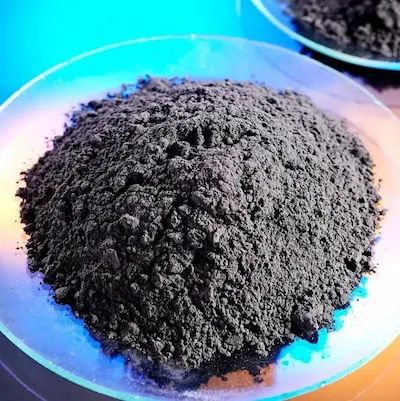
LFP cathode material is the back bone of the new energy transition.
Cathode material provides a lithium source for battery charging and discharging. Offering a higher electrode potential to ensure high output voltage, and maintains a stable voltage platform for consistent output potential.
Cathode material should have a small electrochemical equivalent to ensure high energy density, and high diffusion coefficient of lithium ions. This enables high power density, and good reversibility for optimal battery cycle performance.
Furthermore, cathode material should possess higher electronic and ionic conductivity, as well as good chemical stability.
Lastly, it should be derived from abundant industrial resources and have a low production cost to ensure long-term economic viability.
LFP CATHODE INDUSTRY CHAIN
The industry chain begins with companies processing raw minerals into concentrates which chemical salt converters refine into high-purity chemical salts.
These chemical salts are then used to produce active cathode materials, sold to gigafactories for integration into battery packs. Today lithium-ion batteries are used in the fields of new energy vehicles, energy storage systems, and consumer electronics.
While vertical integration is the practice of owning upstream mining and midstream facilities for cathode production or chemical processing. Most firms specialise in specific segments of the supply chain and collaborate across the battery industry.
ADVANTAGES AND DISADVANTAGES
Advantages of LFP cathode material includes flat voltage profile, long cycle life, thermal stability, environmentally friendly and low cost.
Disadvantages include achieving the theoretical value capacity of 170mAh/g because of its low lithium-ion diffusion and poor electrical conductivity. Also, LFP batteries perform poorly in the cold.
Manufacturers of LFP cathode have mostly solved the issues with slow diffusion rate and poor electrical conductivity. They do this by making the LFP particles smaller, adding a carbon coating and doping it with elements like magnesium.
The solution to the problem of poor low-temperature performance is to keep the battery pack warm in colder temperatures. This is achieved by using thermal management systems or heat pump air conditioners.
LFP Cathode Processing Methods
LiFePO4 cathode material can be prepared by both solid phase synthesis and liquid phase synthesis methods.
Solid phase synthesis methods:
- High temperature solid phase
- Carbon thermal reduction
- Mechano-chemical
- Microwave heating methods
Liquid phase synthesis methods:
- Hydrothermal
- Autothermal evaporation
- Spray pyrolysis
- Co-precipitation
- Sol-gel
| Preparation Method | Advantages | Disadvantages | |
| Solid-phase method | High-temperature solid-state method | Lower cost and simple operation | Time-consuming, high energy consumption, requires inert and reduced atmosphere protection |
| Good cycling and low-temperature performance | Product prone to Fe³⁺ | ||
| Easily industrialised | Larger product particles, serious agglomeration, uneven size distribution, and low purity | ||
| Carbothermal reduction | Cheap raw materials and good chemical stability | Complicated operation, long production cycle, high energy consumption, and exhaust gas production | |
| Simple preparation process and low energy consumption | High requirements for raw materials and the homogeneity of the mix has a remarkably high impact | ||
| Microwave method | High energy efficiency | Rapid response | |
| Good cycle performance and regular morphology | Easily reunited | ||
| Lower synthesis temperature and shorter reaction time | Difficult to industrialise | ||
| No inert gas protection required | |||
| Liquid-phase method | Hydrothermal synthesis | Synthetic simplicity | Diversified product structure, low bulk density, and compaction density |
| Easily controlled morphology and uniformity of particle size | Under high temperature and pressure, high equipment requirements | ||
| Technological maturity | Products prone to substitution mismatch | ||
| Requires high-temperature sintered carbon coating | |||
| High cost | |||
| Sol-gel method | High purity, small particle size, and good uniformity | Long synthesis cycle | |
| Simple operation and easy control | Uneasily industrialised | ||
| Possibility of simultaneous carbon cladding | |||
| Coprecipitation method | Low cost and simple operation | Various factors affect the preparation process: pH not easy to control and prone to segregation | |
| Short synthesis cycle and low energy consumption | Unstable performance of synthetic materials | ||
| Small particle size and uniform distribution | |||
China’s LFP cathode material industry, mostly adopts the solid-phase synthesis method-carbothermal reduction method, accounting for 80%~90% of production.
The solid-phase method involves mixing raw materials, ball milling for homogeneity, and calcination. This is followed by crushing and sieving to desired particle sizes.
The liquid-phase synthesis autothermal evaporation method, developed independently by Shenzhen Dynanonic Co., Ltd, is another processing method in the LFP cathode material market. The LFP cathode material prepared by this method accounts for about 10%~20%.
The liquid-state method, involves dissolving and mixing raw materials to form a uniform solution with small and uniform particle size, use self-heating to prepare a gel precursor, sintering to prepare LFP, grinding to obtain a powder that meets particle size requirements and washing and filtering to remove impurities.
RISE OF HIGH-DENSITY LFP CATHODE MATERIAL PRODUCTS
High-density LFP refers to materials with a compaction density of more than 2.6g/cm3. Due to its high compaction density and continuous conductive path, this significantly improves energy density and charging speed of the battery.
The current process routes for high-pressure compacted lithium iron phosphate are mainly the ferrous oxalate method and iron phosphate method. The compaction density of lithium iron phosphate is increased through a second sintering step and the control of the granular morphology of the precursor and the application of grading theory (particle size distribution).
LFP CATHODE MATERIAL | MODIFICATION METHODS
The low intrinsic electronic conductivity of LiFePO4 and the low diffusion coefficient of Li+ are the main performance disadvantages. LFP cathode material manufacturers can improve product performance through modification processes such as nanoization, carbon coating surface treatment, and doping.
LFP cathode material is prepared as nanoparticles. Reducing particle size increases the specific surface area, diffusion path of lithium ions is shortened, and diffusion rate of lithium ions is increased. Thereby enhancing the rate and cycle performance, and improving the charge and discharge of lithium-ion batteries efficiency and service life.
Using a carbon coating layer to cover the LiFePO4 particles with a uniform layer of coating can effectively improve the electrochemical performance of the material. Carbon is the most commonly used material for coating LFP cathodes, for its high electronic conductivity and stability, as well as low cost.
By doping a small amount of metal ions with good conductivity in lithium iron phosphate materials, the electronic conductivity is improved, thereby improving the rate and cycle performance. Doping at iron-site will facilitate Li-ion diffusion along the 1D pathway, so increase both electronic and ionic conductivity of LFP cathodes. Dopants such as magnesium have been used to increase the conductivity within the LFP crystal not just the surface. Metal ions can be doped before and after the sintering process of the LFP cathode material precursor.
The upstream materials of lithium iron phosphate are lithium sources, iron sources, and phosphorus sources.
LFP CATHODE MATERIAL PRODUCT INDICATORS
- The particle size distribution of LFP crystals has a great influence on the rate performance of cathode material. Smaller the particle size distribution, the shorter the lithium ion transmission path, and better rate performance of the battery. That is, the faster the charging and discharging speed of the battery.
- The specific capacity of LFP cathode material has a great influence on the mass energy density of LFP batteries. Under the same conditions, the higher the specific capacity, the higher the mass energy density of lithium-ion batteries, that is, compared with batteries of the same quality, the battery capacity is larger.
- The compaction density of LFP cathode material has a great influence on the volumetric energy density of LFP batteries. Under the same conditions, the higher the compaction density, the higher the volume energy density of the battery, that is, the larger the capacity compared with the battery of the same volume size.
- The specific surface area of LFP cathode material has a great influence on the rate performance and low temperature performance. Under the same conditions, the larger the specific surface area, the larger the reaction area between the cathode material and the electrolyte, and the better the conductivity, so the rate characteristics are better, that is, the lithium-ion battery charges and discharges faster.
REMOVAL OF IMPURITIES
The impurity content of LFP cathode material has an impact on the electrochemical performance and safety of LFP batteries. Most common impurity elements include calcium, sodium, copper, chromium, zinc and other elements. Excessive impurity content will increase the self-discharge rate of lithium-ion batteries and shorten battery life. Excessive impurities will increase the probability of damage to the internal separator of the battery and reduce the safety of the battery.
The moisture content of LFP cathode material has an impact on the electrochemical performance, safety and life of LFP batteries. If the moisture content is too high, the electrolyte is easy to react with water to generate gas and hydrofluoric acid, which will cause internal expansion and corrosion of the battery, and reduce battery safety and electrochemical performance.
Other important indicators of LFP cathode material include the particle shape and size, tap density, carbon content, pH, and other electrochemical properties of the material.
LFP CATHODE COST ANALYSIS
The cost difference between the solid-phase method and the liquid-phase method of LFP cathode material is small. If the liquid-phase method uses industrial carbon, the cost is equivalent to the solid-phase method routes of ammonia method and sodium method. The ferrous oxalate method is more than 2,000 CNY per tonne higher in cost when compared the ferrous phosphate methods. The ferrous oxalate method requires an increase in the amount of oxalic acid, and the cost of raw materials is about 3,000 CNY per tonne higher.
The actual cost difference of LFP cathode manufacturers comes more from differences in operating rate, quality control, and production management. However, the ferrous oxalate method is suited for high density LFP as it requires no significant modifications to the production line.
The iron phosphate method is expected to increase the cost of power consumption due to the second sintering and increased sand milling requirements. The manufacturing cost will increase by 2,000 CNY per tonne, corresponding to the cost of the ferrous oxalate method.
Commercialisation of LFP Cathode has been rapid since the claw back of subsidies
Early patent disputes drastically affected the commercial application and promotion of LFP cathode material. However, overseas patents were not defended in China.
The consortium managing LFP’s IP rights reached an agreement with the Chinese battery industry whereby, as long as LFP was produced and used within China, the consortium would not charge Chinese manufacturers a licensing fee.
Therefore, in China the initial development of the new energy vehicles industry promoted commercialization of LFP cathode material. Chinese firms favored LFP batteries since they have a local established supply chain and are perceived to be safer than ternary NCM and NCA chemistries.
In China battery companies have successively iterated advanced LFP battery products such as CATL’s Shenxing batteries and BYD’s blade batteries, putting forward higher performance requirements for LFP cathode material for the mileage per charge and the need for an increased fast-charging rate of LFP batteries. Improving product compaction density has become a new demand from customers.
How China dominates the global LFP cathode landscape putting the energy transition at risk
Early patent disputes greatly affected the commercial application and promotion of LFP cathode material. However, overseas patents were not defended in China. The consortium managing LFP’s IP rights reached an agreement with the Chinese battery industry whereby, as long as LFP was produced and used within China, the consortium would not charge Chinese manufacturers a licensing fee.
Therefore, in China the initial development of the new energy vehicles industry promoted commercialization of LFP cathode material. Chinese firms favored LFP batteries since they have a local established supply chain and are perceived to be safer than ternary NCM and NCA chemistries.
From 2018 to 2023, China’s LFP cathode shipments increased from 66,000 tonnes to 1.638 million tonnes, with a year-on-year growth rate in 2023 of 43.4%. By comparison in 2023 the shipment of ternary cathode material was 650,000 tonnes, up 1.8% year-on-year.
For more blog articles click here
To view GDC market research reports click here
About us
GDNM provides commentary on how energy transition minerals contribute towards the decarbonisation and electrification of the global economy, with a particular focus on the lithium-ion battery and rare earths supply chains.
GDNM founder, Mr Brendan Jephcott is an Australian who has worked in the global mining sector for more than 13 years, of which his experience covers precious metals, nonferrous metals, ferrous metals, base metals, bulk commodities, rare earths, and the lithium-ion battery industry.
For the last 9 years Mr Jephcott has focused on the burgeoning new energy industry, participating in cross-border transactions in buy-side and sell side roles, cultivating a global business network ranging from upstream resource companies, midstream intermediate product producers, and downstream consumers such as gigafactories and auto companies.