Lithium Slag Processing Treatment
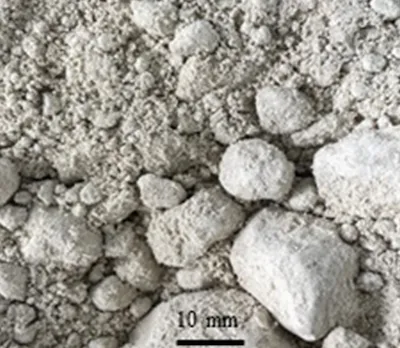
Lithium slag is the main industrial solid waste generated in the process of lithium extraction from spodumene and lepidolite, which contains a large amount of salt substances such as sodium sulfate.
Using the sulfuric acid processing method to produc lithium spodumene concentrate and lithium chemical salts is currently one of the most mature and widely used methods in commercial practice today, however a large number of by-products and waste residues, in particular sodium sulfate will be produced when using this method.
The treatment of lithium slag has become an important issue for the sustainable development of the lithium industry.
With the rapid development of the lithium-ion battery industry, the amount of lithium slag produced has increased sharply. For every tonne of lithium salt produced, about 8-10 tonnes of lithium slag is produced, of which sodium sulfate is one of the important components in lithium slag. The effective treatment and recycling of sodium sulfate in lithium slag can not only reduce environmental pollution but also achieves an efficient disposal of waste.
Lithium Spodumene Processing Flowsheet
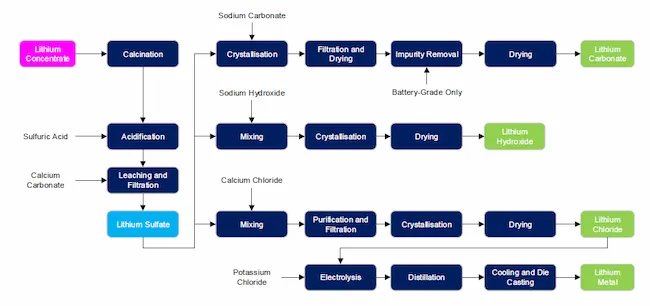
The main processing flowsheet of lithium spodumene extraction from using the sulfuric acid includes α-spodumene being calcined at 950-1100℃ to be converted into β-spodumene, and then mixed with sulfuric acid and acidified and calcined at 250-300℃ to convert lithium into soluble lithium sulfate, and then lithium carbonate or lithium hydroxide products are finally obtained through water leaching, impurity removal, evaporation and concentration.
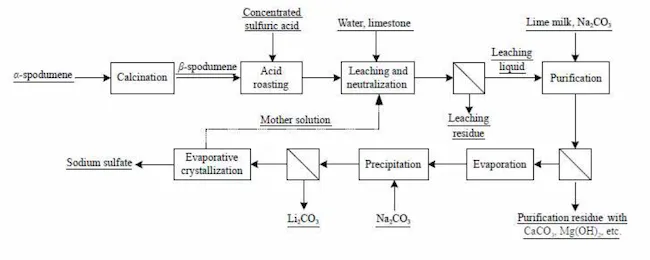
Using this process, the consumption of sulfuric acid is large, usually 1.5 times the theoretical amount. Sulfur-containing waste gas will be generated during the acidification and roasting process. A large amount of silicon-aluminum waste residue will remain after lithium leaching. At the same time, a large amount of calcium sulfate and other waste residues containing sodium sulfate will be generated during the neutralization of residual acid.
In the purification and impurity removal process of lithium extraction from spodumene sulfuric acid, lime powder needs to be added to neutralise excess sulfuric acid and adjust the pH to near neutrality (6.0-6.5) to remove impurities such as Fe and Al in the leaching solution. Subsequently, lime milk is added to remove most of the Mg, and finally sodium carbonate is used to deeply remove Mg and Ca at pH=11-13. These processes will produce waste slag containing sodium sulfate.
In the process of extracting lithium hydroxide by sulfuric acid, a freezing and sodium precipitation step is required after evaporation and concentration, and sodium sulfate decahydrate is frozen and precipitated by freezing crystallizer at -5 to -10℃. The amount of sodium sulfate by-products produced in this link is huge and difficult to handle.
Sodium Sulfate in Lithium Slag
Sodium sulfate in lithium slag mainly comes from sulfate additives used in the production process of lithium chemical salts.
In the lithium extraction process of lepidolite, the lithium slag after high temperature roasting is converted into lithium sulfate by sulfates such as Na₂SO₄ and K₂SO₄.
In the lithium extraction process of spodumene, concentrated sulfuric acid is directly used, resulting in the Na₂O and K₂O content in spodumene lithium slag being much lower than that in lepidolite lithium slag.
Chemical composition of lithium slag generally consists of the following:
- LiO₂: 0.18%~0.30%
- K₂O: 0.05%~0.16%
- Na₂O: 0.10~0.20%
- CaO: 54%~58%
- SiO₂: 20%~25%
- Al₂O₃: 8%~10%
- SO₃: 12-13% (mainly in the form of sodium sulfate)
There are significant differences in the content of sodium sulfate in different types of lithium slag. The Na₂O content in lepidolite lithium slag is about 3.01%, while that in spodumene slag is only 0.28%.
Difficulties in handling Sodium Sulfate
Each tonne of lithium carbonate produced will discharge around 8-10 tonnes of lithium slag, and the amount of waste is huge and contains a large amount of sodium sulfate. As the demand for lithium chemical salts continues to increase, the output of sodium sulfate is also continuing to expand and existing treatment methods cannot fully handle it.
At present, there are no relevant standards for the handling of sodium sulfate. The market for sodium sulfate is small so it is difficult to be industrially consumed, and it is also of low economic value.
Although sodium sulfate does have limiting economic value as it can be used in many industries such as chemicals, pharmaceuticals, dyes, and pesticides, the sodium sulfate produced from lithium extraction processes often contains impurities and needs to be further purified to meet industrial-grade product requirements, which is an added cost to the producer.
To view the GDC Lithium Slag Treatment Industry Research Report click here
Lithium Slag Treatment Methods
Water washing separation: Water washing separation is a common method for treating sodium sulfate in lithium slag. The principle method is based on that sodium sulfate has a high solubility in water and a difference in solubility with other components. This method can effectively reduce the proportion of harmful components such as sodium chloride in lithium slag and produce building materials with good performance. Typical processing flowsheet is as follows:
- Grind the lithium slag to 100-180 mesh
- Wash at 80-120℃
- Separate sodium sulfate through precipitation, filtration and other steps
- Dry to obtain desalted lithium slag
Acid leaching: is able to recover high-value metals separated from sodium sulfate in lithium slag. Through this process, more than 88% of lithium, rubidium, cesium, potassium, aluminum and sodium in lithium slag can be dissolved into the leachate. Typical process flowsheet is as follows:
- Use 30-70% sulfuric acid solution
- Leach at 50-90℃
- Liquid-to-solid ratio controlled at 2:1-4:1
- Leaching time 1-3 hours
Evaporation crystallisation: For the treatment of sodium sulfate-containing wastewater, evaporation crystallisation technology is currently the mainstream treatment method: Technical features include:
- Adopt MVR/multi-effect evaporation crystallization process
- Combined with membrane concentration technology, efficient separation of sodium sulfate is achieved
- Anhydrous sodium sulfate crystal products can be obtained
- Significant energy saving and consumption reduction effect
Potential Commercial Uses for Lithium Slag
- Processing with other waste residues: Studies have shown that sodium sulfate waste residue can be processed with other industrial waste residues such as copper slag. Sodium sulfate waste slag is used as a roasting additive to form sodium sulfide under reducing conditions. It can be used as a fixing agent for valuable metals and react with silicates in the waste slag to form sodium silicate, which is used as a raw material for preparing white carbon black.
- Building materials industry: Sodium sulfate waste slag demonstrates strong cementitious properties and, after treatment, it can be used in cement production as well as a key raw material for road base and steel manufacturing. When used as a high-quality filler or admixture, it enhances the bearing capacity and durability of highways, lowers construction costs by 15-40%, and reduces carbon emissions by over 20%. However, the lack of industry standards has led many cement and building materials companies to prohibit its use as a raw material.
Other Development Areas for Lithium Slag
- Technological innovation: Carry out research on finding economic uses for lithium slag, developing efficient separation and purification technologies which are low-cost, high-efficiency treatment processing methods and environmentally friendly treatment solutions
- Industrial policy support: Policies should be introduced to support large-scale use of lithium smelting slag, integrate supply chain resources, and break through technical bottlenecks, and establish a complete industrial framework.
Concluding Thoughts
The treatment of lithium slag is an important technical challenge facing the sustainable development of the lithium-ion battery industry. Sodium sulfate can be effectively separated and recycled through water washing separation, acid leaching extraction, evaporation crystallisation and other technical means.
At the same time, the treated lithium slag has wide application potential in the fields of building materials and road construction. With continuous advancement of technology and increased policy support, the treatment of lithium slag will gradually achieve large-scale and mass adoption, providing strong support for the energy transition and sustainable development of the lithium-ion battery industry.
For more blog articles click here
To view GDC market research reports click here
Golden Dragon Capital Limited | Comprehensive Market Research Reports
About us
GDNM provides commentary on how energy transition minerals contribute towards the decarbonisation and electrification of the global economy, with a particular focus on the lithium-ion battery and rare earths supply chains.
GDNM founder, Mr Brendan Jephcott is an Australian who has worked in the global mining sector for more than 13 years, of which his experience covers precious metals, nonferrous metals, ferrous metals, base metals, bulk commodities, rare earths, and the lithium-ion battery industry.
For the last 9 years Mr Jephcott has focused on the burgeoning new energy industry, participating in cross-border transactions in buy-side and sell side roles, cultivating a global business network ranging from upstream resource companies, midstream intermediate product producers, and downstream consumers such as gigafactories and auto companies.