Lithium Hexafluorophosphate, Lifeblood of Lithium Batteries
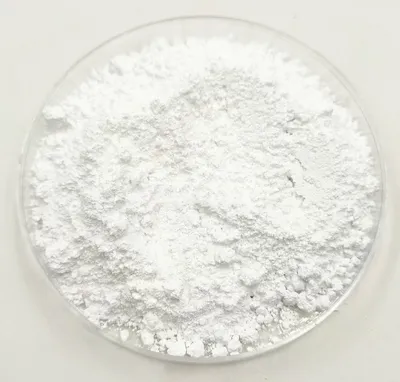
Lithium hexafluorophosphate is an inorganic compound with chemical formula LiPF6. It is a white crystalline powder with strong deliquescence properties. The main use of lithium hexafluorophosphate is as the salt used in the electrolyte in lithium-ion batteries which are used in used in new energy vehicles, energy storage, and consumer electronics.
The non-aqueous solutions of lithium hexafluorophosphate in carbonate solvents (e.g., ethylene carbonate (EC), dimethyl carbonate (DMC), diethyl carbonate (DEC) and/or ethyl methyl carbonate (EMC), with a small amount of one or many additives such as fluoroethylene carbonate and vinylene carbonate, serve as electrolytes in lithium-ion batteries.
Role of Electrolyte
Lithium salt provides free shuttle ions for lithium-ion batteries and plays the role of transporting ions inside the battery. Lithium ions should be easily dissolved or dissociated in a solvent, and those dissociated ions move smoothly.
A protective layer is formed on the surface of electrode materials by the lithium salts, which has great impact on the capacity and cycle performance of lithium-ion batteries. The lithium chemical salt also influences power density, energy density, and other product indicators.
Lithium hexafluorophosphate is the lithium salt with the best comprehensive performance, and it is the most widely used commercial lithium salt. The performance requirements of the lithium salt include:
- The salt has high solubility in organic solvents, and the degree of association is small and easy to dissociate, so as to ensure that the electrolyte has a high ionic conductivity. The ionic conductivity of the electrolyte can reach 7.2-11.5 ms/cm.
- Wide electrochemical window, the maximum voltage can reach 5V, which is higher than the 4.5V requirement of lithium-ion batteries.
- Facilitates the formation of SEI film on the anode.
- High stability, and no chemical reaction with electrode active materials and current collectors. Excellent anti-corrosion nature toward aluminium current collector of the cathode.
- Thermal stability, the best stable temperature range is -40 to 60oC, ensuring the safety of the electrolyte.
- Environmentally friendly, decomposition products.
- It is scalable and has cost-effective preparative processes developed in industry.
Principal Production Method
Today, the main production methods of lithium hexafluorophosphate are the hydrogen fluoride solvent method, organic solvent method, gas-solid reaction method and ion exchange method.
a. Hydrogen fluoride solvent method
The advantage of the hydrogen fluoride solvent method is that in the synthesis and preparation process of lithium hexafluorophosphate, it is prepared by reacting liquid lithium hydrogen fluoride and gaseous phosphorus pentafluoride.
During the reaction process, the gas and liquid can react in a homogeneous phase, playing the role of airflow stirring, speeding up the reaction rate and improve the conversion rate of elements.
The disadvantage is that the corrosive medium hydrogen fluoride and toxic gas phosphorus pentafluoride are used in the reaction process.
Impurities such as hydrogen fluoride, lithium fluoride and metal ions are easy to remain, and the product has low purity, which must be further purified, which increases the cost.
In addition, the reaction requires a strong oxidant, fluorine gas, to be carried out under cryogenic and high-clean conditions. The conditions are harsh, the capital investment and energy consumption are high, so the costs are high.
b. Organic fluoride solvent method
The organic fluoride solvent method used to produce lithium hexafluorophosphate was pioneered by Guangzhou Tinci Materials Technology Co., Ltd. The method reacts phosphorus pentafluoride and lithium fluoride with organic solvents to produce the electrolyte solution with lithium hexafluorophosphate as lithium salt, and does not prepare crystal lithium hexafluorophosphate. The electrolyte produced can be directly used in lithium-ion batteries.
Advantages of using the organic solvent method is to avoid using corrosive hydrogen fluoride and the reaction can be carried out at normal temperature and pressure, which reduces energy consumption.
The lithium hexafluorophosphate generated in the reaction is continuously dissolved in the organic solvent, so that the reaction interface is continuously updated, and the yield is high.
Disadvantages is that phosphorus pentafluoride is easy to react with organic solvents to cause polymerisation and decomposition difficult to produce high-purity lithium hexafluorophosphate. For companies that do not produce electrolyte, the transportation of liquid lithium hexafluorophosphate is difficult and the cash cost is high.
c. Gas-solid reaction method
The gas-solid reaction method lithium fluoride with anhydrous hydrogen fluoride to form porous lithium fluoride, and then introduces phosphorus pentafluoride gas to react with porous lithium fluoride to form lithium hexafluorophosphate. The gas-solid reaction method has not been applied on a large scale.
The ion exchange method produces lithium hexafluorophosphate through an ion exchange reaction between hexafluorophosphate and lithium-containing compounds in an organic solvent. It is generally only used in the preparation of lithium hexafluorophosphate in the laboratory.
China Lithium Hexafluorophosphate Standards
On 29 July 2015, the Ministry of Industry and Information Technology issued the chemical industry standard lithium hexafluorophosphate HG/T4066-2015 to replace HG/T4066-2008, which was officially implemented from 1 January 2016. This standard puts forward clear requirements for the purity, insoluble matter, moisture, free acid and metal impurities of lithium hexafluorophosphate. The purity requirement has reached more than 99.95%, and the metal impurities content has reached the PPM level.
| Item | Requirements of HG/T4066-2015 |
| Lithium hexafluorophosphate purity (w/%) | >=99.95 |
| DMC insoluble matter (w/%) | <=0.02 |
| Moisture (w/%) | <=0.002 |
| Free acid (HF) / (w/%) | <=0.009 |
| Sulfate (SO4) / (mg/kg) | <=5 |
| Chloride (Cl) / (mg/kg) | <=2 |
| Iron (Fe) / (mg/kg) | <=2 |
| Potassium (K) / (mg/kg) | <=1 |
| Sodium (Na) / (mg/kg) | <=2 |
| Calcium (Ca) / (mg/kg) | <=2 |
| Cadmium (Cd) / (mg/kg) | <=1 |
| Chromium (Cr) / (mg/kg) | <=1 |
| Copper (Cu) / (mg/kg) | <=1 |
| Magnesium (Mg) / (mg/kg) | <=1 |
| Nickel (Ni) / (mg/kg) | <=1 |
| Lead (Pb) / (mg/kg) | <=1 |
| Zinc ((Zn) / (mg/kg) | <=1 |
| Arsenic (As) / (mg/kg) | <=1 |
On 14 July 2015, the Ministry of Industry and Information Technology issued the chemical industry standard lithium hexafluorophosphate electrolyte HG/T4066-2015 to replace HG/T4067-2008, which was officially implemented from 1 January 2016. This standard specifies the classification, requirements, test methods, inspection rules, marks, labels, packaging, transportation and storage of lithium hexafluorophosphate electrolyte. This standard applies to electrolytes containing lithium hexafluorophosphate in different solvent systems. This product is used in the production of lithium-ion batteries and lithium-ion supercapacitors.
| Item | Indicators | |
| Grade I | Grade II | |
| Sulfate (SO4) / (mg/kg) | ≤5 | |
| Chloride (Cl) / (mg/kg) | ≤1 | |
| Aluminium (Al) / (mg/kg) | ≤1 | |
| Iron (Fe) / (mg/kg) | ≤1 | |
| Potassium (K) / (mg/kg) | ≤1 | |
| Sodium (Na) / (mg/kg) | ≤2 | |
| Calcium (Ca) / (mg/kg) | ≤1 | |
| Cadmium (Cd) / (mg/kg) | ≤1 | |
| Chrome (Cr) / (mg/kg) | ≤1 | |
| Copper (Cu) / (mg/kg) | ≤1 | |
| Mercury (Hg) / (mg/kg) | ≤1 | |
| Magnesium (Mg) / (mg/kg) | ≤1 | |
| Nickel (Ni) / (mg/kg) | ≤1 | |
| Lead (Pb) / (mg/kg) | ≤1 | |
| Zinc (Zn) / (mg/kg) | ≤1 | |
| Arsenic (As) / (mg/kg) | ≤1 | |
| Chroma/Hazen | ≤50 | Negotiate with supplier and buyer |
| Density (20°C) / (g/cm3) | Negotiate with supplier and buyer | |
| Conductivity (25°C) / (mS/cm) | ||
| Moisture wt./% | ≤0.0020 | |
| Free acid (HF) wt./% | ≤0.0050 | |
Commercialisation
Before 2011, the global lithium hexafluorophosphate was mainly dominated by three Japanese companies, Morita Chemical Industries Co., Ltd, Rising Chemicals (Stella Chemifa Corporation), and Kanto Denka Kogyo Co., Ltd. Tianjin Chemical Research and Design Institute was the first to develop lithium hexafluorophosphate in China. It started research on lithium hexafluorophosphate electrolyte in China in 1996. By 2013, Chinese domestic manufacturers, like Tinci Materials and Do-Fluoride, achieved technological breakthroughs and rapidly expanded lithium hexafluorophosphate production capacity.
In 2023, global lithium hexafluorophosphate production capacity reached 360,000 tonnes per annum, the output was 159,000 tonnes and the actual demand was only about 159,000 tonnes. The global overall capacity utilization rate was 44%. In China in 2023 the total lithium hexafluorophosphate production capacity reached 339,000 tonnes per annum, accounting for a 94% of global share. However, the actual output in China was around 137,000 tonnes per annum, an overall capacity utilisation rate around 41%.
In 2023, global shipments of lithium-ion battery electrolytes reached 1.31 million tonnes. China’s shipments reached 1.13 million tonnes. It is expected that the scale of expansion of the electrolyte industry will slow down significantly in 2025. Due to the current serious overcapacity of electrolytes, many companies have chosen to suspend production or delay production due to the mismatch with industry supply. The capacity deployment of small manufacturers is also facing a slowdown or termination.
Future Development Trends
The new lithium bis(fluorosulfonyl)imide (LiFSI) is considered the future direction as its product performance is significantly better than that of lithium hexafluorophosphate which is easy to decompose at high temperatures and is sensitive to water. The high-nickel ternary system with higher system activity has higher safety requirements for the electrolyte, so a new lithium salt that is compatible with it needs to be selected. However, compared with lithium hexafluorophosphate, lithium bis(fluorosulfonyl)imide has higher thermal stability, electrochemical stability and conductivity, and can better cooperate with high-voltage, high-nickel, and high-rate batteries to cope with the future trends of high battery life, wide operating temperature, and high safety in battery development.
For more blog articles click here
To view GDC market research reports click here
Golden Dragon Capital Limited | Comprehensive Market Research Reports
About us
GDNM provides commentary on how energy transition minerals contribute towards the decarbonisation and electrification of the global economy, with a particular focus on the lithium-ion battery and rare earths supply chains.
GDNM founder, Mr Brendan Jephcott is an Australian who has worked in the global mining sector for more than 13 years, of which his experience covers precious metals, nonferrous metals, ferrous metals, base metals, bulk commodities, rare earths, and the lithium-ion battery industry.
For the last 9 years Mr Jephcott has focused on the burgeoning new energy industry, participating in cross-border transactions in buy-side and sell side roles, cultivating a global business network ranging from upstream resource companies, midstream intermediate product producers, and downstream consumers such as gigafactories and auto companies.