LiBOB Electrolyte Additive
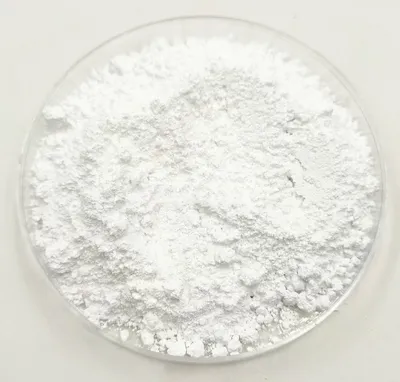
LiBOB Electrolyte Additive – Lithium bis(oxalate borate) (LiBOB) is used primarily as an electrolyte additive in LMO and NCM batteries.
LiBOB with the chemical formula LiB(C₂O₄)₂, is an advanced lithium salt that has emerged as one of the most important electrolyte additives for lithium-ion batteries.
This white crystalline solid represents a significant advancement in battery technology, offering superior properties compared to conventional electrolyte systems.
LiBOB has gained considerable attention due to its unique combination of thermal stability, electrochemical performance, and safety characteristics that address critical challenges in modern battery applications.
It can form a very stable and tough protective film on the surface of the battery cathode material thereby inhibiting the reaction of the cathode material with the active components of the electrolyte during charging and discharging, avoiding the collapse of the cathode material structure caused by the release of metal ions, and improving the cycle performance of lithium-ion batteries.
Jiangsu Huasheng Lithium Battery Materials Co., Ltd (688353.SZ) is a leading producer of LiBOB electrolyte additive with its LiBOB products already having passed certification trials of domestic and overseas lithium-ion battery electrolyte customers by meeting their product specification requirements.
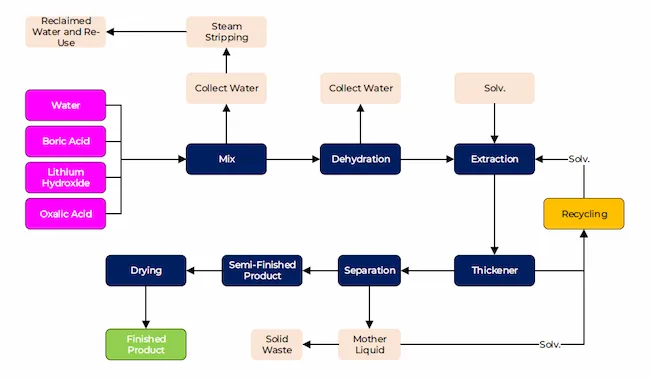
The Company uses the traditional aqueous phase preparation process to produce LiBOB, of which oxalic acid and boric acid are the two main raw materials which neutralise with lithium hydroxide to produce the lithium bis(oxalate borate) (LiBOB) electrolyte additive. The aqueous phase preparation process has the advantages of a simple processing route, low production cost, and less waste generation and can achieve a final product purity of more than 99.9% and a yield of more than 70%.
The Company has also independently developed a variety of new processing methods to improve product quality, including water phase crystallisation and impurity removal technology, evaporation crystallisation and salt determination technology, and decolorisation technology, and has achieved certain results to date.
The 160tpa LiBOB electrolyte additive production line operated by Jiangsu Huasheng Lithium Battery Materials Co., Ltd consumes approximately:
- 403tpa of oxalic acid
- 68.8tpa of boric acid
- 128.6tpa of lithium hydroxide
- 180tpa of acetonitrile
- 50tpa of dimethyl carbonate
You might be interested in purchasing the Lithium Hexafluorophosphate Research Report
Commercial Applications
Leading battery electrolyte companies are focusing extensively on research and development initiatives to improve LiBOB efficacy while simultaneously reducing production costs to address market adoption.
Environmental considerations are prompting increased investments in sustainable battery technologies, with LiBOB’s halide-free composition eliminating toxic hydrogen fluoride generation and providing environmental advantages over conventional systems making it applicable for certain market segments such as:
- High-voltage cathode materials: LiBOB demonstrates exceptional performance with high-voltage cathode materials, providing electrochemical stability up to 5.3 V compared to the 4.5 V limit of LiPF₆. When used as an additive in lithium-rich layered oxides, LiBOB enables stable specific capacity of 202 mAh/g at 0.5C with remarkable capacity retention of 96.4% after 100 cycles.
- High-nickel cathodes: In nickel-rich layered cathode applications, LiBOB addition leads to enhanced cycling stability with capacity retention of 81.7% and virtually no voltage hysteresis after 200 cycles at 1C. This outstanding performance is attributed to suppressed micro-crack generation and reduced superficial structural degradation during cycling.
- Working temperature performance: LiBOB-based electrolytes demonstrate superior performance at elevated temperatures compared to conventional LiPF₆ systems. At 60°C, LiBOB-based electrolytes show better capacity utilization and retention, with improved cycling performance even at discharge rates above 1C. Making them useful for applications in high-temperature environments.
Concluding Thoughts
LiBOB electrolyte additive is strategically positioned to become a standard component in advanced lithium-ion battery formulations as demand for high-performance, safe battery systems continues expanding.
The compound’s unique combination of thermal stability, electrochemical performance, and safety characteristics addresses critical challenges across multiple application domains, from portable electronics to electric vehicles and grid-scale energy storage.
The transition from laboratory-scale research to commercial-scale adoption is accelerating, with LiBOB electrolyte additive now being adopted as a standard additive by electrolyte producers to improve thermal stability and safety characteristics. Enhanced supply capacity from major global manufacturers, combined with falling production costs, indicates strong momentum toward widespread commercial viability.
As next-generation lithium-ion battery technologies continue evolving toward higher energy densities, improved safety profiles, and enhanced sustainability, LiBOB’s superior performance characteristics position it as an essential electrolyte additive for the next generation of lithium-ion battery technologies.
For more blog articles click here
To view GDC market research reports click here
Golden Dragon Capital Limited | Comprehensive Market Research Reports
About us
GDNM provides commentary on how energy transition minerals contribute towards the decarbonisation and electrification of the global economy, with a particular focus on the lithium-ion battery and rare earths supply chains.
GDNM founder, Mr Brendan Jephcott is an Australian who has worked in the global mining sector for more than 13 years, of which his experience covers precious metals, nonferrous metals, ferrous metals, base metals, bulk commodities, rare earths, and the lithium-ion battery industry.
For the last 9 years Mr Jephcott has focused on the burgeoning new energy industry, participating in cross-border transactions in buy-side and sell side roles, cultivating a global business network ranging from upstream resource companies, midstream intermediate product producers, and downstream consumers such as gigafactories and auto companies.