LGES and Samsung SDI Move on LFP Battery Technology, Displacing Ternary
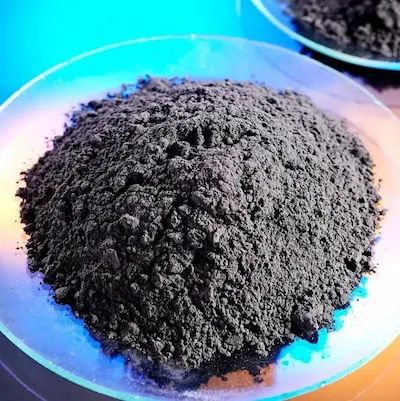
The EV lithium-ion battery landscape in North America is undergoing a significant transformation as South Korea’s two leading gigafactories, LGES and Samsung SDI, have agreed to establish LFP battery production lines in their respective United States facilities at the request of GM.
This strategic pivot represents a fundamental shift from the companies’ traditional focus on NCM batteries to more cost-effective LFP, aimed at making EV more accessible to a wider customer base.
The plan is expected to reduce their in-house lithium-ion battery costs by about 20-30% and lower the per-vehicle costs by at least USD$6,000, while enabling GM to offer both premium NCM-powered EV models and affordable LFP EV models across its product portfolio.
Transitioning away from homestay NCM to embracing LFP battery technology
The decision by LGES and Samsung to incorporate LFP battery production represents a significant departure from their established expertise in nickel-rich battery chemistries.
Both companies have historically concentrated on NCM batteries, which offer higher energy density but come with substantially higher costs due to expensive and rare raw materials like cobalt and nickel.
The transition to LFP technology addresses mounting pressure from their customer GM to reduce EV costs amid a slower-than-expected market penetration rate across North America.
Why choose LFP battery technology?
LFP batteries offer advantages that make them attractive for mass-market EVs. These batteries have high safety, (reduced risk of thermal runaway compared to nickel-rich chemistries) and provide long cycle life, making them cost-effective over the vehicle’s lifetime despite having lower energy density than NCM alternatives.
The LFP material chemistry eliminates the need for cobalt sulfate, one of the most expensive and ethically contentious materials used in moder NCM battery production, as well as no nickel sulfate, another rare and expensive raw material.
How will this transition take place?
LGES plans to convert its existing Ultium Cells joint venture facilities with GM to produce LFP batteries. The company operates two major battery manufacturing plants in the United States, of which one is in Tennessee and the other in Ohio. These facilities currently specialise in producing pouch-type NCM batteries but will undergo significant factory modifications to enable LFP cell manufacturing.
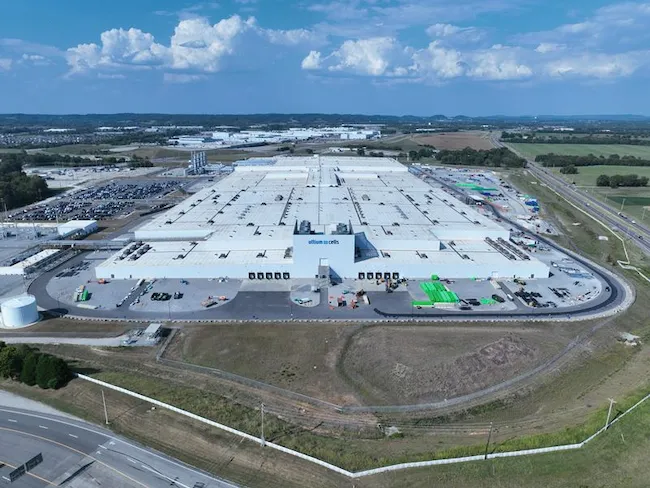
The conversion process not only involves changing the chemistry, but LG and GM are considering changing from pouch-type to prismatic-type cells, which are structurally better suited for LFP chemistry.
Prismatic cells feature a flat, rectangular shape with rigid enclosure, allowing for space-efficient packaging within battery modules and packs while reducing EV weight and costs (think BYD Blade Battery). This design approach can cut module components by 75% and total components by 50%, further enhancing cost savings.
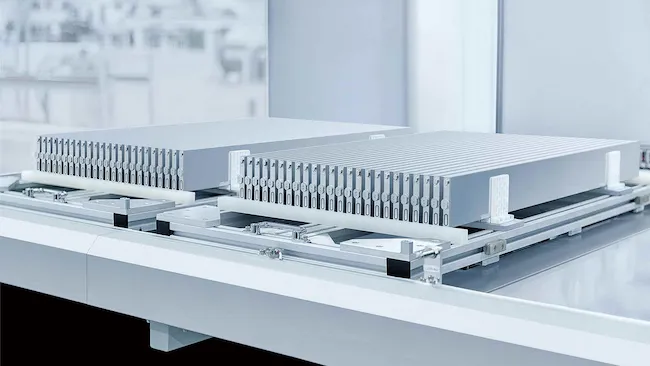
Beyond the existing facilities, LGES has already begun mass production of LFP batteries for energy storage systems at its Holland, Michigan plant, making it the first global battery manufacturer to establish large-scale LFP production for energy storage systems in the United States.
What about Samsung SDI?
In terms of Samsung SDI, it will implement LFP production capabilities at its USD$3.5 billion joint venture facility with GM in New Carlisle, Indiana. This plant, designed exclusively for high-nickel NCM battery production, is scheduled to begin commercial operations in 2027. The facility will now change to accommodate both NCM and LFP production lines, with Samsung SDI coordinating raw material procurement and equipment redesign to support the chemistry diversification.
The plant’s initial annual production capacity is planned at 27GWh, with potential expansion to 36GWh under future development plans. The integration of LFP production capabilities will enable Samsung SDI to serve both premium and mass-market electric vehicle segments from a single facility.
LFP Battery provides better positioning for GM in the EV market
GM’s request for LFP battery production reflects its strategy to make EVs more accessible to mainstream consumers while maintaining premium offerings for luxury market segments.
The auto company plans to implement LFP batteries in five of its seven EV models, including the Chevrolet Bolt, Equinox, Blazer, and Silverado EV. This strategic segmentation allows GM to offer both premium nickel-rich NCM batteries for high-end models and cost-effective LFP batteries for affordable offerings.
The company is also planning to launch EV models priced under USD$30,000 using LFP cells, directly targeting mass-market consumers who have been hesitant to adopt EVs due to cost concerns. This pricing strategy aligns with GM’s goal of achieving cost parity with ICE vehicles, which executives believe is essential for widespread EV market adoption.
Global Market Implications
The transition to LFP battery production by South Korean manufacturers represents a significant shift in the global battery supply chain, traditionally dominated by Chinese companies like CATL and BYD in the LFP battery segment.
This move enables South Korean battery makers to compete more effectively in cost-sensitive market segments while reducing dependence on expensive raw materials which are sometimes subject to supply chain volatility.
The timing of this transition coincides with broader industry trends toward battery chemistry diversification. Major auto companies including Ford and Stellantis are also preparing LFP-compatible EV models, suggesting industry-wide recognition of LFP technology’s advantages for mass-market applications.
Current market projections indicate that over half of EVs delivered in 2027 will use LFP battery chemistry (including LMFP).
For LGES, localised LFP production provides competitive advantages through tariff avoidance and reduced logistics costs. The shift also reflects changing consumer sentiment, while early EV adopters prioritised maximum range and performance, nowdays consumers increasingly emphasising affordability, reliability, and safety (this is where LFP batteries excels).s.
For more blog articles click here
To view GDC market research reports click here
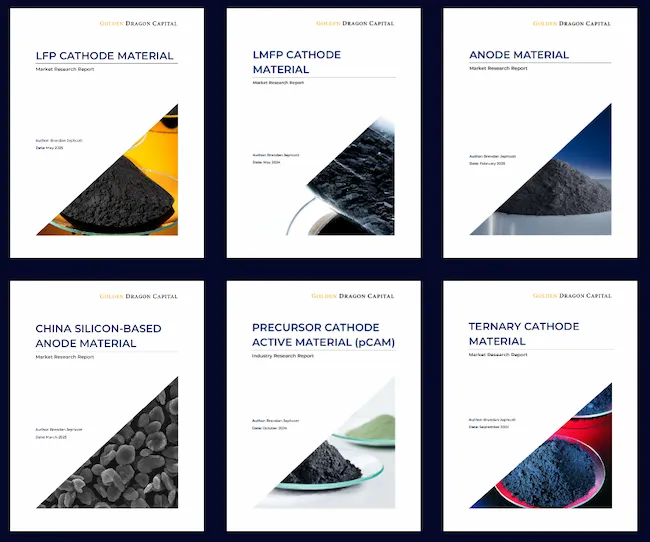
Golden Dragon Capital Limited | Comprehensive Market Research Reports
About us
GDNM provides commentary on how energy transition minerals contribute towards the decarbonisation and electrification of the global economy, with a particular focus on the lithium-ion battery and rare earths supply chains.
GDNM founder, Mr Brendan Jephcott is an Australian who has worked in the global mining sector for more than 13 years, of which his experience covers precious metals, nonferrous metals, ferrous metals, base metals, bulk commodities, rare earths, and the lithium-ion battery industry.
For the last 9 years Mr Jephcott has focused on the burgeoning new energy industry, participating in cross-border transactions in buy-side and sell side roles, cultivating a global business network ranging from upstream resource companies, midstream intermediate product producers, and downstream consumers such as gigafactories and auto companies.