LFP Cathode Material Modification
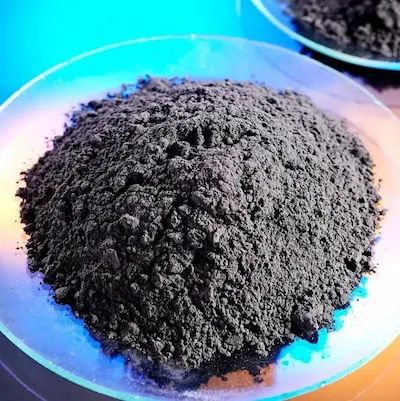
In response LFP cathode material modification methods can improve product performance through such processes as nanoization, carbon coating surface treatment, and doping.
The low intrinsic electronic conductivity of LiFePO4 and the low diffusion coefficient of Li+ are the main performance disadvantages. Bare LiFePO4 is an insulator with an electrical conductivity of about 10−9 to 10−10 S/cm and the chemical diffusion coefficients are in the range of 10−11 to 10−14 cm2/s depending on the Li+ concentration. In response product modification processes such as nanoization, carbon coating surface treatment, and doping can remedy these challenges.
LFP cathode material modification through “nanoization”
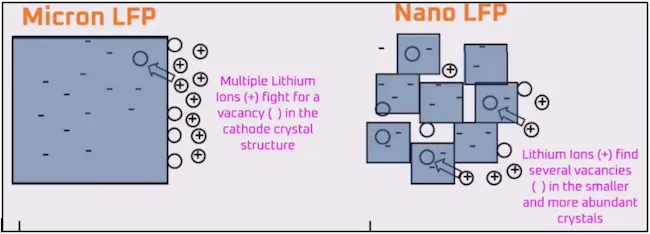
LFP cathode material is prepared as nanoparticles. Reducing the particle size increases the specific surface area of lithium iron phosphate particles, the diffusion path of lithium ions is shortened, and the diffusion rate of lithium ions is increased, thereby enhancing the rate and cycle performance, and improving the charge and discharge of lithium-ion batteries efficiency and service life.
The nanoization method includes mechanical ball milling of particles, controlling the sintering temperature of particles, adding carbon source materials to limit the growth of LFP grains in the sintering furnace. LFP cathode particles are manufactured less than a tenth of a micron in diameter <0.1 to <1micron. Reducing the particle size of LFP increases surface area, which helps solve the ionic conductivity by creating more entry and exit points for a given volume of LFP crystals.
LFP cathode material modification through “carbon coating”
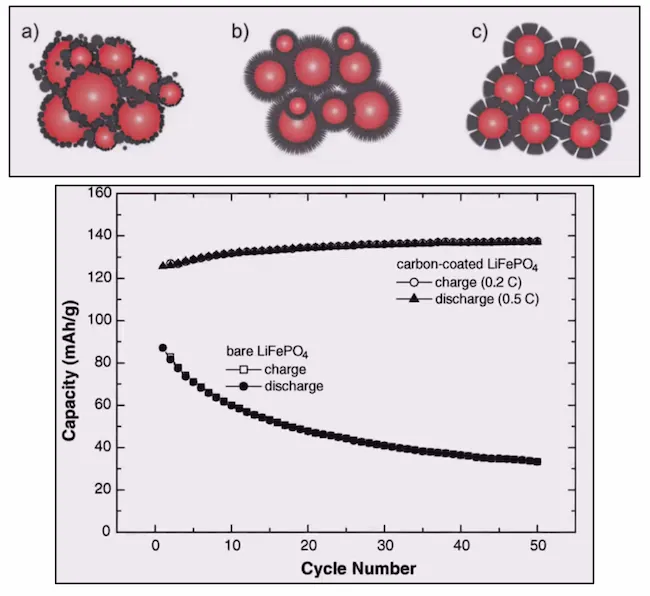
Using a carbon coating layer to cover the LiFePO4 particles with a uniform layer of coating can effectively improve the electrochemical performance of the material. The specific reasons are as follows:
- Uniform carbon coating on the surface of the material can inhibit the excessive growth of LiFePO4 particles during the sintering process, promote the nanomaterials and increase the structural stability of the material, so as to improve the electrochemical performance of the material.
- The carbon structure can improve the electronic conductivity and ion diffusion coefficient of LiFePO4.
- Reducing agents such as carbon can be used to avoid the oxidation of Fe2+ to Fe3+ during the reaction process, which in turn can improve the purity of the product.
Carbon is the most commonly used material for coating LFP cathodes, for its high electronic conductivity and stability, as well as low cost. Carbon coatings can increase the initial battery capacity by around 50%.
The carbon coating method involves mixing the coating material with other raw materials and then sinter or directly mix the coating material with the sintered LFP cathode material product.
LFP cathode material modification through “doping”
By doping a small amount of metal ions with good conductivity in lithium iron phosphate materials, the electronic conductivity is improved, thereby improving the rate and cycle performance. The principle of ion doping modification is to use doped ions to replace some of the Li+ and Fe2+ positions in the LFP lattice, so that favorable defects are generated in the lattice, thereby improving the material’s conductivity and Li+ diffusion capacity.
Researchers have studied the use of high-valent cations (such as Al3+, Mg2+, Ti4+, Nb5+, Zr4+, etc.) to replace the Li sites in the LFP lattice. Studies have shown that only ions with a radius close to that of Li+ can successfully enter the LFP lattice. The higher the valence of the doped ions, the more holes are formed, which is more conducive to the passage of Li+ and the greater its diffusion rate. The amount of doped elements must also be considered. If the amount of doped elements is too much, a large amount of Li sites will be occupied, which will reduce the diffusion rate of Li+.
Doping at the Fe-site will facilitate Li-ion diffusion along the 1D pathway, so increase both electronic and ionic conductivity of LFP cathodes. The main principle is that Fe-site doping will weaken the Li-O bond energy, broaden the diffusion channel of Li+, and increase the diffusion rate and conductivity of Li+.
Dopants such as magnesium have been used to increase the conductivity within the LFP crystal not just the surface. This is mainly because Mg2+ with a smaller radius will occupy the Fe site, resulting in a reduction in the volume of LFP, and the change in bond length affects the diffusion channel in the [010] direction, which increases the Li+ diffusion rate. This raises the capacity from about 120 mAh/g to about 160 mAh/g. Metal ions can be doped before and after the sintering process of the LFP cathode material precursor.
How about ion doping?
Ion doping modification is one of the important means to improve the electrochemical performance of LFP, and the type of doping elements, doping sites, and doping amounts all have a significant impact on the performance of LFP. However, during the doping process, the same element can enter multiple sites, for example, Mg can be doped in both Li and Fe sites. How to better achieve precise doping of target sites is the direction of future research.
For more blog articles click here
To view GDC market research reports click here
About us
GDNM provides commentary on how energy transition minerals contribute towards the decarbonisation and electrification of the global economy, with a particular focus on the lithium-ion battery and rare earths supply chains.
GDNM founder, Mr Brendan Jephcott is an Australian who has worked in the global mining sector for more than 13 years, of which his experience covers precious metals, nonferrous metals, ferrous metals, base metals, bulk commodities, rare earths, and the lithium-ion battery industry.
For the last 9 years Mr Jephcott has focused on the burgeoning new energy industry, participating in cross-border transactions in buy-side and sell side roles, cultivating a global business network ranging from upstream resource companies, midstream intermediate product producers, and downstream consumers such as gigafactories and auto companies.