LCO Cathode Material is being Driven by Consumer Electronics
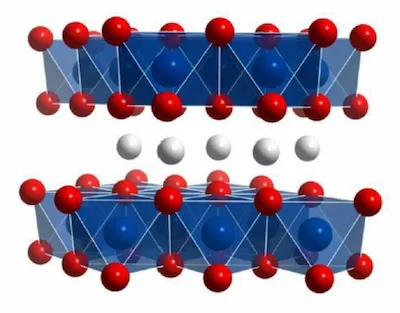
Lithium cobalt oxide (LCO cathode material) was one of the earliest lithium-ion battery cathode materials to achieve commercial mass production and widespread market acceptance.
Due to its high volumetric energy density and excellent compaction density, LCO cathode material is widely used in high-end smartphones, tablets, and laptops, meeting the growing demand for batteries with high energy density, small size, and light weight.
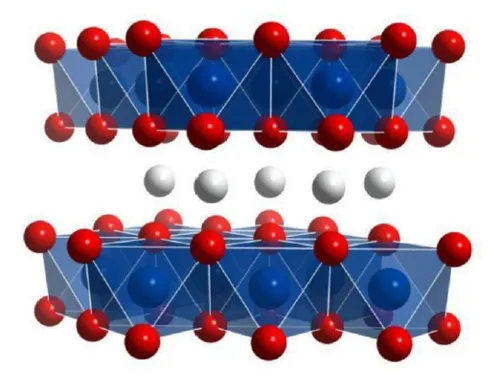
LCO batteries have long dominated the consumer electronics field thanks to their high theoretical specific capacity (274 mAh/g), stable layered structure, and mature processing technology. Over decades of continuous improvement and application, LCO cathode material has become one of the most mature lithium-ion battery cathode materials available.
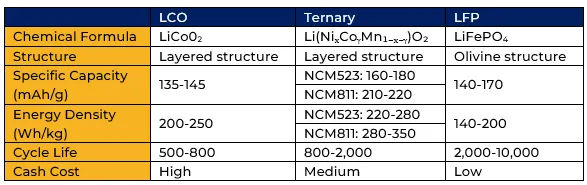
Compared with ternary cathode materials, LCO cathode material offers higher compaction density, a higher voltage platform, good cycle performance, and well-established production technology. For these reasons, it remains the preferred cathode material for consumer lithium-ion batteries.
Commercial Applications
At present, LCO cathode material is the best choice for small lithium-ion batteries. Compared with ternary cathode materials, LCO cathode material have a higher compaction density and is more advantageous in small batteries that emphasise volume utilisation, so it still has strong adaptability in consumer electronics.
As consumer electronics develop towards lightweight and intelligence, especially the rise of new generation products such as AI mobile phones and AI terminals, the market has put forward higher voltage platform and energy density requirements for LCO batteries, pushing the LCO cathode material system to continue to advance in the direction of high voltage.
Global LCO Cathode Material Production
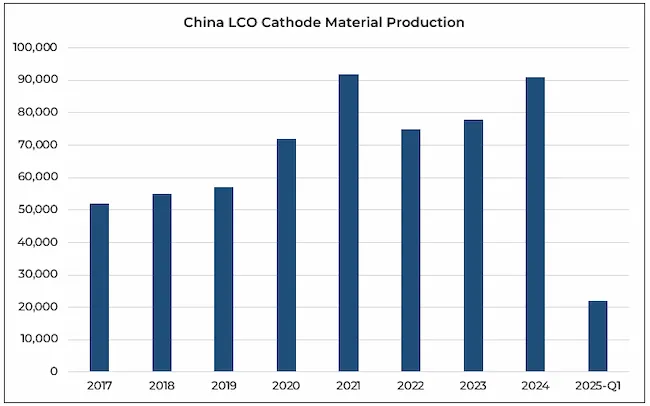
In 2024, China’s LCO cathode material production reached 93,900 tonnes, a year-on-year increase of 18.84%, setting a record high as the high-end consumer electronics market continued its good development momentum. As of 2025-Q1, China’s LCO cathode material production was 22,100 tonnes, a year-on-year increase of 22%.
As of the first quarter of 2025, global smartphone shipments reached 304 million units, a year-on-year increase of 1.5%, and laptop shipments reached 49.4 million units, a year-on-year increase of 10%. Of which, China’s smartphone shipments reached 271.4 million units, a year-on-year increase of 3.7% from 261.7 million units in 2023; tablet shipments reached 29.85 million units in 2024, a year-on-year increase of 4.3%.
At the same time, China’s consumer electronics industry has benefited from policy promotion, such as the implementation of policies such as “trade-in for old”, and the market will be further released in the future, promoting a new round of growth in the consumer electronics market and further driving the demand for LCO cathode material.
Competitive Landscape
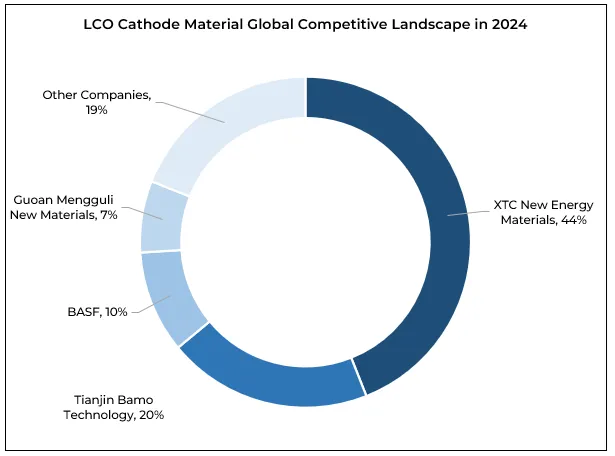
In terms of the competitive landscape, the global market is highly concentrated with the top four companies holding more than 80% market share. Of which, XTC New Energy Materials (Xiamen) Co., Ltd is the world leader with a market share of 44%, with Tianjin Bamo and BASF coming in second and third.
XTC New Energy Materials (Xiamen) Co., Ltd leads the industry to due its focus on on high-voltage LCO cathode material technologies, new innovative products like the NL cathode material product series, and is expansion into next-generation solid-state battery materials.
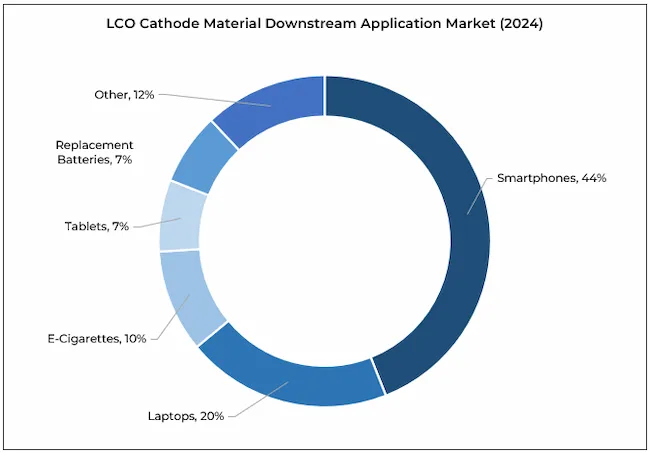
From the perspective of the downstream demand market for LCO cathode material, in 2024, the consumer electronics market will usher in a wave of replacement.
Future LCO Cathode Material R&D Trends
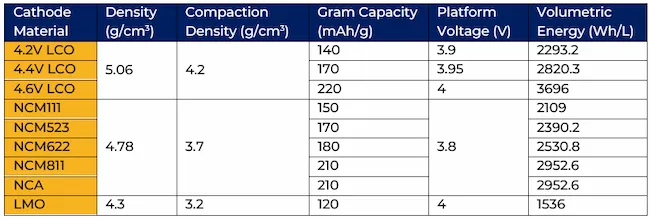
LCO cathode material has high theoretical capacity, long cycle life and excellent rate performance. Increasing the operating voltage can significantly improve the energy density of LiCoO2.
As downstream demand for energy density gradually increases and lithium cobalt oxide technology gradually matures, the voltage of LCO cathode material products will gradually increase from 4.2V to 4.5V or even higher, and the gram capacity can be increased to more than 200mah/g, which is comparable to high-nickel ternary cathode material.
LCO batteries remain the preferred choice for small consumer electronic devices due to several key advantages. The high compaction density of LCO allows more active material to be contained in unit volume compared to ternary cathode materials, making it particularly suitable for applications where volume density is critical. Additionally, LCO batteries offer a very high voltage plateau starting at about 3.9V, which contributes to higher energy density and output power capabilities.
At present, downstream 4.53V LCO cathode material is been widely used, and laboratory tests are purshing for development of 4.55V and higher voltage platform products.
Future LCO Cathode Material Industry Trends
The growth momentum of the LCO cathode material industry mainly comes from:
- The continuous advancement of energy density and performance optimisation, and the high-voltage trend helps it break through the traditional performance bottleneck
- The rapid development of emerging small terminal scenarios such as thin-film batteries, MEMS and wearable devices, giving rise to new demands for small, high-energy and long-life power supplies.
- The continuous increase in global capital in gigafactories towards the direction of LCO batteries, promoting the capacity expansion and technological evolution of a new generation of high-performance LCO cathode materials.
Policies and AI will Drive LCO Cathode Material Demand
The proliferation of AI PCs and AI smartphones is a key factor behind this trend. More than 50 AI PC models from leading brands such as Lenovo, HP, and Huawei have entered the market, while 11 brands launched over 30 AI smartphones in the first quarter of 2024, boosting their sales share to 6%—a 4.7 percentage point increase month-on-month. As generative AI capabilities move from the cloud directly onto devices, there is a growing need for more advanced chips, memory, cooling systems, and, crucially, higher-capacity batteries. This shift is expected to raise the power consumption of AI PCs and AI phones by 10–15%, which will, in turn, drive up consumer battery demand by about 2%.
In China, government policies are further accelerating this trend. The National Development and Reform Commission (NDRC) announced in January 2025 new subsidies and expanded trade-in programs for digital products, including smartphones, tablets, smartwatches, and fitness bands. These initiatives, combined with seasonal sales peaks such as the Spring Festival, have already led to a 3.3% year-on-year increase in smartphone shipments in the first quarter of 2025.
Policies + AI equipment volume increase drive the replacement trend, and LCO cathode material will return to high growth. It is expected the LCO cathode material industry will recover 10%+ growth throughout 2025-2026. In the long run, as wearable devices increase in volume and the proportion of AI devices gradually increases, the LCO cathode material industry can maintain stable growth.
Market Size Potential
Policies and the rapid increase in AI-enabled devices are driving a new wave of device replacement and battery upgrades, positioning the LCO cathode material industry for a strong recovery. Industry forecasts expect LCO cathode material to achieve over 10% growth annually across 2025–2026, reversing previous slowdowns and capitalizing on the surging demand from next-generation consumer electronics.
The LCO cathode material market will continue to maintain a steady growth trend in the future. It is estimated that the global LCO cathode material market size has reached approximately US$5.15 billion in 2023, and is expected to achieve an annual compound growth rate of more than 9.1% between 2024 and 2032.
By 2032, the LCO cathode material market size is expected to exceed US$11.2 billion, and the growth momentum mainly comes from the continued expansion of segments such as high-end consumer electronics, medical equipment and portable energy storage systems. By 2037, battery-grade LCO cathode material is expected to account for 86.7% of the overall market share of LCO cathode material market, and it still occupies a key position in the manufacturing of lithium-ion batteries.
Benefiting from the iteration of downstream smart terminals, the penetration of micro power supplies and the high-energy trend of AI devices, the technological upgrading of LCO cathode material is accelerating simultaneously.
Overall, the future market of LCO cathode material is expected to maintain a moderate and sustainable growth trend supported by high technological barriers and stable demand structure.
For more blog articles click here
To view GDC LCO cathode material industry market research report click here
Golden Dragon Capital Limited | Comprehensive Market Research Reports
About us
GDNM provides commentary on how energy transition minerals contribute towards the decarbonisation and electrification of the global economy, with a particular focus on the lithium-ion battery and rare earths supply chains.
GDNM founder, Mr Brendan Jephcott is an Australian who has worked in the global mining sector for more than 13 years, of which his experience covers precious metals, nonferrous metals, ferrous metals, base metals, bulk commodities, rare earths, and the lithium-ion battery industry.
For the last 9 years Mr Jephcott has focused on the burgeoning new energy industry, participating in cross-border transactions in buy-side and sell side roles, cultivating a global business network ranging from upstream resource companies, midstream intermediate product producers, and downstream consumers such as gigafactories and auto companies.