How LMFP Cathode Material Disrupted the NCM Market
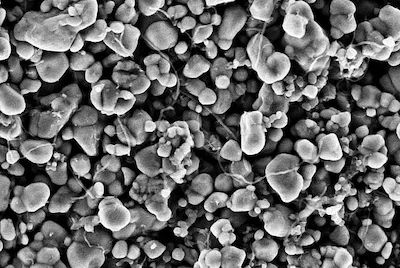
LMFP cathode material (LiMnxFe1-xPO4) combines the high safety and long-life cycle of LiFePO4 and the high energy density of LiMnPO4. Restricting factors for achieving high-rate performance of LMFP include its dual voltage platform, low electronic conductivity and Li+ diffusion coefficient and optimisation of the Fe/Mn ratio.
Although lithium-ion batteries have come a long way in more than 20 years of development, their current energy and power density still cannot meet the demands of electric vehicles (“EV”) for cruising range and charging speed. There is an ongoing requirement to develop lithium-ion batteries with excellent energy density and high-rate capability.
Among various kinds of cathode materials for electric vehicles, the olivine LiFePO4 based material with low cost and high safety is considered to be one of the most competitive materials. Nevertheless, the energy density of LiFePO4 at 90-160 Wh/kg can no longer satisfy the needs, because the working voltage (3.4 V vs. Li/Li+) and theoretical capacity (170 mAh/g) are not satisfactory. Another olivine cathode LiMnPO4 has the same theoretical capacity as LiFePO4, but a higher working voltage of 4.1 V. However, LiMnPO4 has extremely poor conductivity and structural instability during cycling, leading to a low-capacity retention.
Therefore, combining the characteristics of both LiFePO4 and LiMnPO4 by the substitution of Mn2+ at the transition metal Fe2+ site to form LiMnxFe1-xPO4 solid solution has attracted widespread interest and research.
Advantages of LMFP Cathode Material
Only LMFP can match the specific capacity of LiFePO4 (170mAh/g), but the voltage platform of LFP is only 3.4 V, while LMFP can reach 4.1 V due to the higher redox potential of manganese ions Mn3+/Mn2+, which makes the energy density of LMFP increase by 15 to 20% at the same specific capacity.
The low temperature performance of LMFP is better than that of LFP which has poor low temperature performance with a capacity retention rate at 60-70% at -20℃, while the capacity retention rate of LMFP can reach about 75% at -20℃.
LMFP with its olivine structure is more stable and safer than ternary material with a layered structure. Strong covalent P–O bonds in the tetrahedral PO43- anion stabilises the oxygen atom and inhibits oxygen loss which make LMFP more stable during charging and discharging. However, due to the poor high temperature performance of manganese element, the safety performance of LMFP is slightly worse than that of LFP, but both of them are considered safer than ternary material.
Due to the good lattice stability of the olivine structure type, the cycling performance of both LFP and LMFP is better than that of ternary. Strong covalent P–O bonds in the tetrahedral PO43- anion increase the cycle life, inhibit oxygen loss and Li+ can be extracted/embedded in a stable crystal structure.
Disadvantages of LMFP Cathode Material
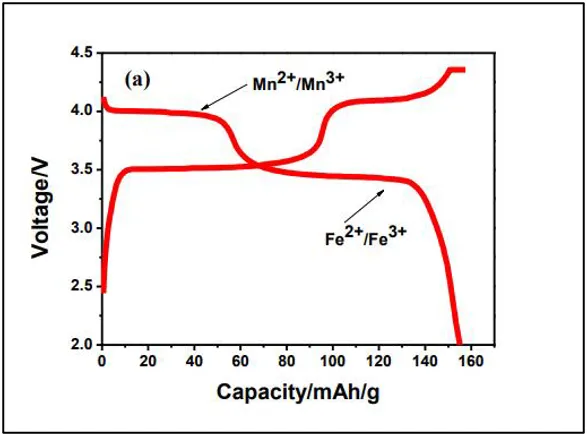
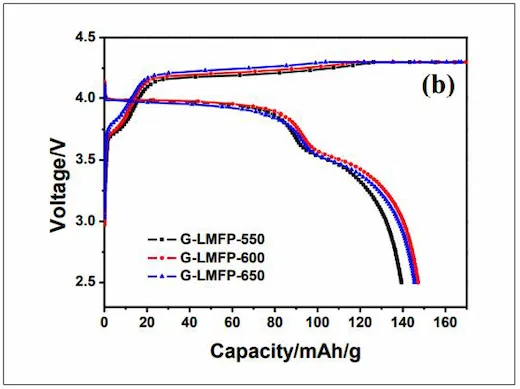
LMFP has dual charge and discharge platforms due to presence of the two elements, iron and manganese. Two different operating voltages are brought about, 4.1V corresponding to the oxidation between Mn2+ and Mn3+ and 3.4V corresponding to the oxidation between Fe2+ and Fe3+, with a 20% drop at about half the discharge time. The problem of dual voltage platforms exposes the battery to a possible power dip during discharge and voltage switching and could lead to problems with operation of the battery management system
Kinetics Behaviour of LMFP
The kinetics behaviour of LMFP cathode materials is the result of the mutual influence of the phase transformation mechanism, lattice distortion and point defects. The rate performance of LMFP is limited by its low electronic conductivity and diffusion and are lower than those of LFP and ternary material.
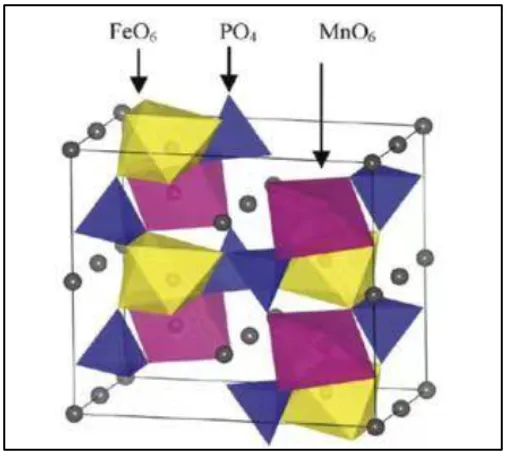
The reason lies in the fact that the M (M = Fe, Mn)–O octahedron is isolated by the P–O tetrahedron, and no continuous M–O network is formed in its crystal structure. Furthermore, the strong P–O covalent bond also prevents Li+ from passing through the PO43- tetrahedron and Li+ transport can only be one-dimensional diffusion along the b-axis, which reduces the diffusion rate of Li+ (low ionic diffusion coefficient) and leads to a poor conductivity.
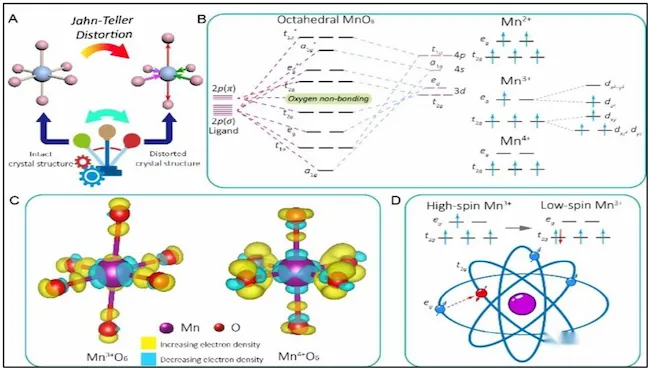
During the delithiation of LMFP, as Mn2+ is oxidised to Mn3+, a severe distortion will be caused in the MnO6 octahedron. Due to the existence of lattice distortion, the activation energy of the ionic diffusion will be increased. It results in a decrease in the ionic diffusion coefficient of LMFP and a drop in the discharge capacity at high rates. This structural distortion caused by Mn3+ can be regarded as the Jahn–Teller effect (Mn3+ is enriched on the surface of the cathode particles, distorting the manganese-oxygen octahedron, which in turn leads to the precipitation of manganese).
The point defects of olivine cathode materials mainly include vacancy defects, cation antisite defects and hole species, depending on the chemical composition and variation of the synthesis conditions. As Li+ in LMFP diffuses along a curve channel parallel to the b-axis direction this one dimensional diffusion character makes Li+ easily blocked by defects in the channel, which seriously affects the kinetic behaviour of the material.
Fe/Mn Ratio
The Fe/Mn ratio can significantly affect the energy density, rate performance and stability of the delithiation phase. The elongation of the equatorial Mn–O3’ bonds (edge-sharing with the PO4 tetrahedron) caused by Jahn–Teller distortion of Mn3+ is responsible for increasing the activation energy of carrier migration, which brings about the sluggish intrinsic kinetics of LMFP with a high Mn content. When the Mn content is too high, the delithiation phase MnPO4 and FePO4 cannot be dissolved well due to the lattice distortion caused by Mn3+.
LMFP Cathode Material Processing Methods
The production process of LMFP cathode material consists of three steps, the ratio of iron to manganese, choice of synthesis route and product modification choice.
In order to improve the energy density and make LMFP have value, the manganese content needs to be ≥50%. Most commercial products produced today are between 64% and 73%, and high manganese is the direction of future research.
The preparation method of LMFP is similar to that of LFP with two categories, being the solid phase methods and the liquid phase methods. Solid-phase methods include the high-temperature solid-phase method and the carbothermic reduction method. Liquid-phase methods include the hydrothermal method, sol-gel method and co-precipitation method.
Each method has its own advantages and disadvantages. Iron and manganese need to form a uniform solid solution to produce high-quality LMFP. Solid phase methods have the advantage that these processes are simple and mature, the cost is low, and it is easy to realise large-scale commercial production, however the disadvantage lies in that the product has poor mixing uniformity and poor quality. Liquid phase methods have the advantage of realising a high-quality product and the disadvantage lies in controlling the processing is quite difficult.
LMFP Cathode Material Product Modification Methods
During the process of manufacturing LMFP cathode material, the electrical conductivity can be improved and the Jahn-Teller effect suppressed with modification methods. The main modification methods are nanometerisation, carbon coating, metal ion doping, compounding with ternary materials.
1. Nanometerisation
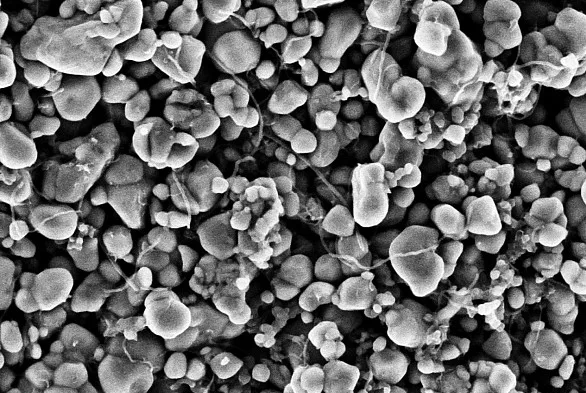
Nanometerisation refers to reducing the size of materials to nano-scale particles by various methods such as mechanical ball milling, control of calcination temperature, and the use of superconducting particles as core promoters. Nanoparticles can shorten the lithium-ion diffusion path, improve the lithium-ion migration efficiency, and reduce electrode polarisation, thereby improving the rate capability and low temperature performance. It also increases the specific surface area of the material so that the degree of infiltration of the electrolyte is higher, electrode interface impedance is reduced, and electronic conductivity is improved.
2. Carbon Coating
The conductivity improvement of LMFP by carbon coating is mainly reflected in the following aspects. Firstly, uniform carbon coating provides a medium for electron transport, which can improve the electronic conductivity at the interface between the particles and the electrolyte and between the particles.
Secondly, carbon coating can prevent particles from growing up and inhibit particle agglomeration, thereby maintaining the nanostructure of the particles and reducing the Li+ transmission distance and improving ion conductivity.
Thirdly, the carbon coating can be used as a protective layer to reduce the contact between particles and the electrolyte, preventing Mn3+ from dissolving into the electrolyte, thereby improving the cycle life of the material.
Lastly, the carbon source can act as a reducing agent to prevent the oxidation of Fe2+ during the calcination process.
3. Element Doping
Element doping is an important method to improve the intrinsic conductivity of the material. Doping changes the electrical conductivity and ion diffusion properties of the material from the inside of the lattice.
The doping of LMFP includes two types, cation doping and anion doping. Cation doping includes transition metal M (Mn and Fe) site substitution and Li site substitution. Anion doping includes polyanion integral substitution (PO43-) and O2- substitution. Doping changes the phase transition mechanism during the charge and discharge process, making the phase transition process more inclined to a solid solution reaction.
On the other hand, alkali metal doping at the Li site expands the space for Li+ insertion and extraction. In addition, there are still controversies about the charge compensation mechanism of aliovalent ion doping, which may introduce Li vacancies, M vacancies or O vacancies.
The research on Mg2+ is the most extensive, and covalent doping has a positive effect on improving the performance of LFMP. Due to the consistent valence state, it will not cause the vacancy of the lattice structure, resulting in the collapse of the structure during cycling.
4. LMFP compounded with NCM
LMFP has high safety and stability, NCM has the advantages of high density and high electrical conductivity, but lacks service life and safety. LMFP can be compounded due to the voltage window of ternary and LMFP being close (LFP voltage window is low) and the median particle size of NCM is twice that of LMFP, and after compounding, the size of particles between cathode materials can be realised.
The diameters are matched with each other (LMFP fills the voids of the NCM to build a more stable conductive network and improves the ion diffusion efficiency), thereby improving the cycle performance of the cathode materials. LMFP compounded with NCM has excellent safety performance.
After adding LMFP, the stable structure and low heat release LMFP is isolated around the ternary material, which can inhibit the chain reaction in the case of thermal runaway of the active material and improve the safety of the material.
During the formation of SEI film on the anode surface, a certain amount of positive active lithium will be irreversibly consumed, resulting in low first cycle efficiency and poor cycle life. Therefore, it is necessary to perform pre-lithiation or add a lithium supplement to improve the first cycle efficiency.
Lithium powder, lithium foil and other products are mostly used for anode supplementation. The cathode lithium supplement can be directly added in the slurry mixing process, the operation is simple and the existing battery system does not need to be improved, so it is expected to achieve rapid mass production. LMFP material has low efficiency in the first cycle and poor cycle life, and the performance can be improved to some extent after adding positive lithium supplement.
LMFP Cathode Material Commercialisation
LMFP cathode material is expected to become an upgraded material for LFP cathode material with the support of new production processes and modification technologies.
In the past, LMFP batteries were limited by low conductivity and cycle performance and failed to be promoted on a large scale. With the continuous innovation of processing technology, the specific capacity of LMFP batteries has been improved, cycle performance has been improved, and its energy density can be close to the current ternary five-series batteries, in addition, its cash cost is lower than that of ternary cathode material.
Furthermore, LMFP cathode material can also be compounded with other cathode materials such as ternary, lithium manganate, and LFP, to meet the requirements of high energy density and high safety performance opening up more commercial applications.
| Electric Vehicles | Two-Wheelers | Energy Storage | ||
| LFP EVs | Medium-Nickel EVs | High-end two-wheelers | ||
| Technology route | Pure LMFP | Composite with ternary | Pure LMFP / Composite with ternary / Composite with LMO | Pure LMFP |
| Advantages | Comprehensive improvement in cost performance BOM cost optimisation. Improved low temperature performance | Market segment coverage. The energy density is further improved, the safety/economics is better than that of low to medium-nickel ternary | Improved user experience. Improved low temperature scene performance | Slight cost reduction. Applicable to freezing cold regions |
| Disadvantages | Mass production problems. Poor consistency and low yield. | LMFP pure-use energy density is lower than medium to high-nickel cathode material | Cash cost is very high | The number of cycles is not up to standard. Manganese dissolution is difficult to solve. The whole life cycle cost is higher. |
For more blog articles click here
To view GDC market research reports click here
Golden Dragon Capital Limited | Comprehensive Market Research Reports
About us
GDNM provides commentary on how energy transition minerals contribute towards the decarbonisation and electrification of the global economy, with a particular focus on the lithium-ion battery and rare earths supply chains.
GDNM founder, Mr Brendan Jephcott is an Australian who has worked in the global mining sector for more than 13 years, of which his experience covers precious metals, nonferrous metals, ferrous metals, base metals, bulk commodities, rare earths, and the lithium-ion battery industry.
For the last 9 years Mr Jephcott has focused on the burgeoning new energy industry, participating in cross-border transactions in buy-side and sell side roles, cultivating a global business network ranging from upstream resource companies, midstream intermediate product producers, and downstream consumers such as gigafactories and auto companies.