How Lithium-ion Battery Recycling Recovers Valuable Metals
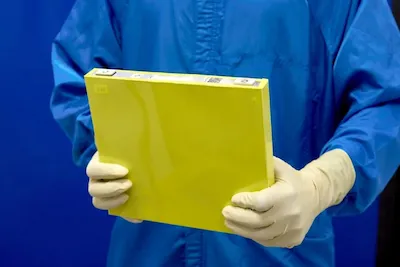
Lithium-ion battery recycling is key to not only recover valuable metals from waste but also minimises the extraction of limited scare natural resources.
The pre-treated lithium-ion batteries are separated using physical methods (mechanical separation, pyrometallurgy method, organic solvents and ultrasonic waves). Existing recycling technologies for valuable metals in waste batteries, recycling research mainly includes physical methods, chemical methods and biological methods; but in practical applications, core recycling technologies are mainly using hydrometallurgy.
Because waste batteries still retain some power during the recycling process, they must be pre-processed, mainly for deep discharge, crushing and physical sorting; secondary processing is to separate the positive and negative active materials from the base. It is mainly realized through heat treatment method, organic solvent dissolution method, alkali solution dissolution method and electrolysis method. Advanced treatment is the key to the treatment process, which mainly includes two processes: leaching and separation and purification, to extract valuable metal materials.
At present, the methods for power battery disassembly and recycling mainly include hydrometallurgy, pyrometallurgy recycling and biological recycling. In addition, some new power battery recycling methods have appeared on the market.
Cathode materials screened out by pre-treatment are further separated to extract lithium, cobalt, nickel and other metals. At present, the mainstream post-separation methods to recover the high value metals use either the pyrometallurgy, hydrometallurgy, or biometallurgy, of which biometallurgy technology has only been applied in batches, and the pyrometallurgy method has the disadvantage of high carbon emissions, therefore, the hydrometallurgy method is commonly used in most commercial practice in China.
The power battery disassembly and recycling process includes pretreatment process, cathode and anode electrode material recovery process and electrolyte recovery process. The pretreatment process includes discharge, disassembly, crushing, sorting, etc. The purpose of pretreatment is to separate the metal casing, electrode materials in the battery. The cathode material recycling process includes physical recycling, chemical recycling and biological recycling. Of which, the recovery process can be further subdivided into pyrometallurgy recovery process and hydrometallurgy recovery process and biological process.
Lithium-ion Battery Recycling Methods
After pre-processing of waste lithium-ion batteries such as discharge and disassembly, the resource treatment process of waste lithium-ion batteries can be divided into three types: physical method, chemical method and biological method according to the main key technologies used in the recycling process.
- Pyrometallurgy: high-temperature incineration removes the organic binder in the electrode material, while causing the metals and their compounds to undergo oxidation-reduction reactions, recovering low-boiling point metals and compounds in the form of condensation, and finally screening the remaining metal residues, pyrolysis, magnetic separation or chemical methods for recycling. Pyrometallurgy method (dry method) recycling: simple operation, high energy consumption, loss of valuable components, and production of toxic gases;
- Hydrometallurgy: Use acid or alkali solution to transfer the solid metal in the electrode material into the liquid. The resulting leachate is then separated and prepared from the metal ions in the solution through solvent extraction, chemical precipitation, adsorption, electrochemistry and other technologies. into metal salts or metal oxides. High recovery rate, less impurities, more complex process, and larger wastewater discharge
- Biometallurgy: Use the metabolism and metabolites of microorganisms to dissolve and enrich metals. Currently, Thiobacillus ferrooxidans is mainly used. Product preparation: Use the separated and extracted metal elements to prepare single metal salts (cobalt sulfate, cobalt chloride, nickel sulfate, nickel carbonate, lithium carbonate, etc.), or further process them into recovered battery materials (PCAM). The recovery cycle is long, the treatment effect of bioleaching is poor, and bacterial culture is difficult.
| Process Route | Principal Theory | Advantages | Disadvantages |
| Crushing Flotation | The difference in physical and chemical properties of the waste surface is used for sorting, that is, the complete waste lithium-ion batteries are first crushed and sorted, and then the obtained electrode material powder is heat treated to remove the organic binder, and finally the electrode material is separated according to the poor hydrophilicity of lithium oxide and graphite surface in the material powder is flotation separated, and the higher the hydrophilicity, the higher the cobalt lithium compound powder can be recovered. | The process is simple and can effectively separate lithium cobalt oxide and carbon cable materials, and the recovery rate of fake and cobalt is high. | Since all the materials are broken and mixed, it is difficult to separate and recycle the subsequent copper foil, aluminium foil and gold shell fragments; and the broken particles easily cause the electrolyte LPF6 to react with H20 to produce HF and other fluorogenic gases, which form into rings. Contamination, need to sell, pay attention to the crushing method |
| Machine Crushing | Utilize the machine-inserted tooth-returning method to reverse the sequence of the electrodes and effectively recycle the used ion battery drills and the damage to the instruments that are relatively separated and easily traced into cobalt. The process is It is relatively simple, so that the lithium compound in the electrode material that originally sticks to the current collector is converted into a salt. | An effective method to recycle waste batteries, cobalt and lithium with a relatively simple process | The machine requirements are high, and it can easily cause cobalt damage and make it difficult to recycle aluminium foil. |
| Pyrometallurgy | By inducing the chemical reactions such as oxidation, reduction, decomposition, and bonding of the natural compounds in the lithium-ion battery materials under high temperature conditions, and then through subsequent processes, the chemical properties of the waste lithium-ion batteries can be achieved. Receive Direct recovery of materials or valuable metals is achieved without the aid of media such as solutions. The most commonly used technical method in dry recycling is high-temperature pyrolysis, which uses high-temperature incineration to decompose the binder and achieve material separation. After high-temperature incineration, the metals and their compounds in the battery will oxidize, reduce, decompose, and volatilize steam. It is collected by condensation method. | The requirements for the composition and classification of raw materials are not high, and it is suitable for large-scale processing and calibration of complex batteries. The principle of using high-temperature pyrolysis to recycle power batteries is simple, so the process is simple, it is widely used, and it can recover a variety of heavy metals such as mercury and zinc. | The amount of slag discharge is large, lithium and manganese mainly enter the waste residue, and part of the lithium volatilizes into the flue gas as Li2O and is difficult to recover, resulting in low resource utilisation . The high-temperature pyrolysis method requires large investment in equipment, high energy consumption, high processing costs, and low recycling efficiency: there are secondary pollution and safety issues such as waste gas; and it mainly deals with ternary batteries. |
| Hydrometallurgy | A method that uses appropriate chemical reagents to selectively dissolve the cathode material in used lithium-ion batteries and separate the metal elements in the leachate. Metal ions are leached from electrode materials through various acid and alkaline solutions, and then metal salts and oxides are separated and extracted through ion exchange, precipitation, adsorption and other means. | It has the characteristics of low energy consumption, small investment, high recovery rate and advanced technology. It is the mainstream technology for the recycling of domestic meat power batteries. It is widely used, the technology is relatively mature and efficient, the recovery rate and purity of valuable metals and rare metals such as lithium, cobalt and nickel are high, and the equipment investment cost is low. | The leaching and separation process is cumbersome and lengthy, resulting in higher costs. The continuous use of chemical reagents produces a large amount of wastewater, and the process is complex and long, which can easily increase the overall cost. |
| Biometallurgy | Utilizing the metabolic process of microorganisms to achieve selective fading of metal elements such as cobalt and lithium Microbial leaching is used to convert useful components of the system into soluble compounds and selectively dissolve them to achieve separation of target components and impurity components, and ultimately recover valuable metals such as lithium, cobalt, and nickel. | Characteristics such as low efficiency, low cost and small amount of resources Simple process, economical cost, environmentally friendly and high recycling rate | The oxidation process is slow and the leaching time is long, making it difficult to meet the needs of fast injection and large-scale continuous chemical industrial production. It is still in its infancy, with complex culture and leaching conditions and many uncertainties. |
At present, lithium-ion battery recycling companies which dismantle and recycle batteries mainly use hydrometallurgy or pyrometallurgy methods to purify valuable metals in used power batteries. The smelting route is relatively clear and the technology is highly mature. Other emerging technologies such as biological methods and supercritical CO2 extraction are still in the early stages of research and development.
At present, the China’s power battery recycling enterprise’s technology is mainly hydrometallurgy method. Biometallurgy technology has not yet been applied in batches. The disadvantage of pyrometallurgy is its high carbon emissions, so hydrometallurgy processes are mostly used in China.
The recovery rate of nickel, cobalt, and manganese metals in during back-end pretreatment processing is relatively high and can reach an average recovery rate of more than 95% starting from the black mass, however the recovery rate of lithium is around 85%. The processing consists of two stages namely (1) acid leaching and (2) extraction.
- Acid leaching: The cathode material is soaked in sulfuric acid to form a mixed ion solution, and all the cathode material is converted into a liquid phase.
- Extract metal chemical salts: First, the extraction is divided into a mixture of nickel and lithium, manganese, and cobalt. Lithium carbonate and nickel sulfate are extracted from the mixture of nickel and lithium. The liquids of cobalt and manganese crystallize and precipitate respectively to obtain cobalt sulfate and manganese sulfate. In summary, lithium carbonate, nickel sulfate, cobalt sulfate and manganese sulfate, can all be obtained from using the hydrometallurgy processing method.
Most mainstream companies in the industry use physical methods for crushing and sorting in the pretreatment stage, and hydrometallurgical processes in the separation and extraction stage.
The high cost and unstable supply caused by the fragmented and chaotic front-end battery recycling channels, and the difficulty in preprocessing caused by the variety of battery pack specifications are the two main difficulties in the disassembly and recycling process. The two key technologies of physical dismantling and raw material purification after pre-treatment of battery packs are relatively mature and can effectively transform waste power batteries into high-purity raw materials for reuse; especially with the current price of lithium metal raw materials. In the event of a sharp increase, you only need a stable supply of waste batteries, large-scale production, and stable customers to obtain considerable economic returns.
Hydrometallurgy Method
The hydrometallurgy process is to dissolve the discarded batteries after crushing them, transfer the valuable metals in the cathode materials of the discarded batteries into the solution through chemical reactions such as acid leaching, and then separate and enrich the metal ions in the solution by methods such as solvent extraction, ion exchange, coprecipitation, and electrolysis to form different metal compounds and recover them. The discarded lithium-ion batteries or nickel-hydrogen batteries are roasted in a high-temperature furnace, and the carbon and organic matter will be removed by high-temperature combustion. The reducing atmosphere generated during combustion plays a certain protective role on the metal elements. Screening produces fine powders containing metals and metal oxides.
The powders are acid-dissolved and filtered, and the pH value of the filtrate is adjusted to precipitate iron, aluminium and rare earth metals and recover them in the form of hydroxides. The filtrate is then subjected to extraction and stripping processes to obtain aqueous solutions containing cobalt and nickel, respectively, and finally high-purity metal cobalt and nickel are extracted by electrolysis. Lithium is precipitated in the form of carbonate precipitation by adding carbonate.
Waste batteries are pretreated to obtain electrode materials and mixtures, and then acid-base treatment is performed to obtain battery raw materials. The main companies using this method are Brunp Cycle, GEM, Guanghua Technology, and Canada’s Li-cycle. The advantages are high recovery rates of valuable metals and relatively mature industrialization. The disadvantages are that there are more than 95% solid waste, which is not environmentally friendly.
According to the latest research progress, hydrometallurgy lithium-ion battery recycling technology is moving towards a greener and more efficient direction. For example, researchers at Xi’an Jiaotong University mentioned in an article published in 2024 that emerging hydrometallurgy recycling technologies for waste lithium-ion battery cathode materials include the use of green leaching agents and reducing agents, as well as low eutectic solvents (DES) and supercritical fluids (SCF).
These lithium-ion battery recycling technologies help improve recycling efficiency, reduce environmental pollution, and reduce costs. In addition, hydrometallurgy recycling has also made progress in standardization. For example, the “Technical Specifications for hydrometallurgy Recovery of Lithium from Waste Lithium-ion Batteries” (T/ATCRR 02-2018) stipulates the terminology and definitions, overall requirements, identification and classification, discharge, crushing and sorting, alkaline solution washing, preparation of lithium-containing solutions, and removal of impurity ions of hydrometallurgy recovery technology for lithium from waste lithium-ion batteries.
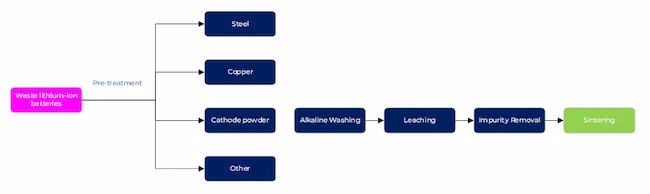
Pyrometallurgy Method
Pyrometallurgy refers to the high-temperature calcination of electrode active materials, which is then screened to obtain fine powder materials containing metals and metal oxides. The process flow of pyrometallurgy recycling is short, with the advantages of simple operation, low raw material requirements, and suitability for processing large quantities of waste batteries. However, the pyrometallurgy process has high energy consumption and low recovery rate, so it is less economical.
The difference between pyrometallurgical treatment and hydrometallurgical treatment is that after obtaining the electrode material mixture, it is subjected to high temperature treatment and then extracted by acid leaching to obtain the raw materials. The main advantage is that the raw material composition is not demanding and it is suitable for large-scale processing of complex batteries.
Although pyrometallurgical recycling has many advantages, it also faces some challenges, such as residual solid reducing agents, equipment corrosion, environmental protection issues, and safety and corrosion issues. The latest research progress shows that pyrometallurgical processes are being continuously optimized to improve efficiency and reduce costs. For example, some studies have focused on extracting valuable metals from a variety of lithium-ion battery black substances and explored the effect of mechanical activation on reduction kinetics. Studies have found that adding hematite to black substances can form Fe-based alloys containing Co and Ni during solid-state reduction reactions, indicating that graphite can be used and Co and Ni can be recovered simultaneously during pyrometallurgical recycling.

For more blog articles click here
To view GDC market research reports click here
About us
GDNM provides commentary on how energy transition minerals contribute towards the decarbonisation and electrification of the global economy, with a particular focus on the lithium-ion battery and rare earths supply chains.
GDNM founder, Mr Brendan Jephcott is an Australian who has worked in the global mining sector for more than 13 years, of which his experience covers precious metals, nonferrous metals, ferrous metals, base metals, bulk commodities, rare earths, and the lithium-ion battery industry.
For the last 9 years Mr Jephcott has focused on the burgeoning new energy industry, participating in cross-border transactions in buy-side and sell side roles, cultivating a global business network ranging from upstream resource companies, midstream intermediate product producers, and downstream consumers such as gigafactories and auto companies.