China’s Rare Earth VAT Weaponisation
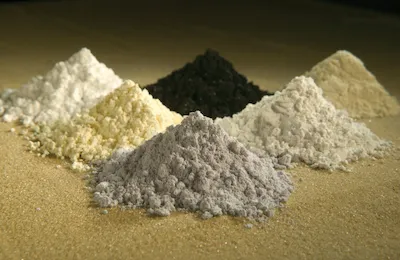
China’s rare earth VAT weaponisation is a sophisticated system of value-added tax (VAT) policies that effectively weaponises its position in the global rare earths industry. This strategic use of taxation creates significant competitive advantages for domestic Chinese companies while at the same time disadvantages overseas competitors across the entire rare earths industry chain.
Use of VAT to weaponise its rare earth industry represents is an ingenious application of economic statecraft which operates within legal international trade rules while at the same time creating decisive competitive advantages. The system effectively locks overseas competitors out of high-value manufacturing while preserving China’s strategic rare earth resources and industrial capabilities.
In combination with export licensing requirements, the VAT rules demonstrate how China has evolved from using crude export restrictions to more nuanced and legally defensible methods of maintaining control over the global rare earths supply chain.
China’s Rare Earth Dominance
China controls a majority share of the global rare earths supply chain, accounting for 65% of global mining production, 85% of processing capacity, and nearly 90% of rare earth permanent magnet manufacturing. This extends beyond resource extraction to encompass the entire value chain from mining to finished rare earth products.
The country’s control is particularly dominant in heavy rare earth elements (HREE), where China processes 99% of global production output. Elements like dysprosium, and terbium are critical for high-performance NdFeB permanent magnets used in electric vehicles, wind turbines, inverter air-conditioners, energy-efficient elevators, industrial robots, and consumer electronics.
China’s Rare Earth VAT Weaponisation Mechanism
China implements a 13% value-added tax on all rare earth products, including oxides, metals, and magnets. However, the application of VAT refunds creates a powerful competitive weapon that favours Chinese manufacturers while penalising foreign competitors.
The weaponisation occurs through China’s selective export VAT refund policy:
- Raw Materials (No Refund): When Chinese companies export rare earth ores, oxides, metals, and alloys, they receive no VAT refund. This effectively adds a 13% cost penalty to raw material exports, discouraging the export of unprocessed materials.
- Finished Products (Full Refund): Conversely, exports of rare earth permanent magnets and motors receive full VAT refunds of 13-16%. This creates a substantial cost advantage for Chinese rare earth permanent magnet manufacturers over their overseas competitors.
Competitive Landscape of China’s Rare Earth VAT Weaponisation
This VAT structure creates a devastating 13% cost disadvantage for non-Chinese rare earth permanent magnet manufacturers. When overseas companies purchase rare earth raw materials from China, they pay the international market price inclusive of the 13% VAT. Since raw materials constitute up to 90% of rare earth magnet alloy costs and 40-45% of final rare earth sintered magnet costs, this represents a massive competitive handicap.
Meanwhile, Chinese rare earth permanent magnet manufacturers can purchase the same raw materials without paying VAT (as only end customers are liable for VAT), giving them a substantial cost advantage in the global market.
Strategic National Objectives
- Value Chain Control: China’s VAT system serves multiple strategic objectives beyond simple revenue generation. The policy encourages overseas companies to sell raw materials to China while making it economically unfeasible for them to compete in higher-value downstream manufacturing. This strategy keeps raw materials artificially cheap within China while creating cost barriers for overseas value-added production. The result is that China imports upstream products from overseas countries and exports value-added products back to them.
- The VAT mechanism aligns with China’s broader industrial policy goals outlined in various Five-Year Plans, which emphasise moving up the value chain from raw material exports to high-end manufacturing. The 2016 Rare Earth Industry Development Plan specifically targeted reducing raw material exports from 57% to 30% while increasing high-end applications from 25% to 50%.
- By discouraging raw material exports through VAT policy, China effectively conserves its domestic rare earth mineral reserves for its own use. This allows China to preserve strategic mineral resources while still benefiting economically from the global rare earth trade through exports of high-value finished products
- Despite its discriminatory effects, China’s VAT system operates within WTO rules. Unlike direct export quotas, which the WTO ruled against in 2014, VAT policies are considered domestic tax measures that are more difficult for international bodies to challenge.
To view GDC market research reports click here
- Sintered NdFeB permanent magnet industry research report
- Bonded NdFeB permanent magnet industry research report
- Hot-pressed NdFeB permanent magnet industry research report
- SmCo permanent magnet industry research report
- Ferrite permanent magnet industry research report
- AlNiCo permanent magnet industry research report
Recent Geopolitical Escalations
- Export Licensing System: In April 2025, China introduced additional export licensing requirements for seven critical rare earth elements, creating further supply chain bottlenecks. This system works in conjunction with the VAT mechanism to provide China with unprecedented visibility into global supply chains while maintaining pricing pressure.
- The combined effect of VAT policies and export controls has created immediate market disruptions. Chinese rare earth exports ground to a halt following the new restrictions, with suppliers invoking force majeure on international contracts. European automotive suppliers have already halted production due to shortages.
Ex-China Industry Response
- Countries around the world are attempting to develop alternative rare earth supply chains to reduce dependence on China. However, the VAT advantage makes it extremely difficult for non-Chinese producers to compete economically, particularly in downstream manufacturing.
- The United States, Europe, Australia, and India have allocated significant resources to onshoring domestic rare earth supply chain, but the Chinese VAT system ensures these efforts face substantial economic headwinds.
Long-term Outlook for China’s Rare Earth VAT Weaponisation
China’s rare earth VAT weaponisation creates powerful incentives for other countries to invest in their own rare earth supply chain while simultaneously making such investments less economically viable. This creates a strategic trap where alternatives are necessary but financially challenging to develop.
The policy also provides China with detailed intelligence on global supply chains, as companies must disclose end-users and applications when seeking export licenses. This market intelligence further strengthens China’s strategic positioning in the global market place.
For more blog articles click here
To view GDC market research reports click here
Golden Dragon Capital Limited | Comprehensive Market Research Reports
About us
GDNM provides commentary on how energy transition minerals contribute towards the decarbonisation and electrification of the global economy, with a particular focus on the lithium-ion battery and rare earths supply chains.
GDNM founder, Mr Brendan Jephcott is an Australian who has worked in the global mining sector for more than 13 years, of which his experience covers precious metals, nonferrous metals, ferrous metals, base metals, bulk commodities, rare earths, and the lithium-ion battery industry.
For the last 9 years Mr Jephcott has focused on the burgeoning new energy industry, participating in cross-border transactions in buy-side and sell side roles, cultivating a global business network ranging from upstream resource companies, midstream intermediate product producers, and downstream consumers such as gigafactories and auto companies.