China’s LFP Cathode Material Industry Top 7 Key R&D Trends
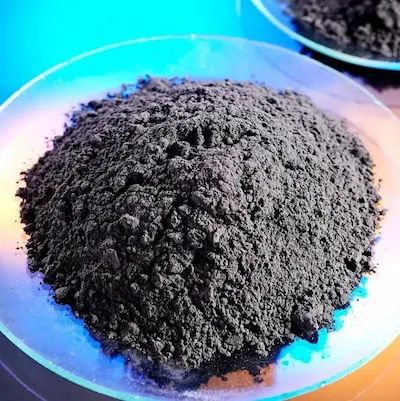
The LFP cathode material industry is evolving towards higher performance materials with improved energy density, better low-temperature performance, good safety characteristics, and cost-effective manufacturing processes.
The LFP cathode material industry is simultaneously pursuing evolutionary improvements to existing LFP cathode material technology while developing next-generation LMFP materials that offer superior energy density characteristics.
Based on the comprehensive R&D project data from multiple companies, China’s LFP (Lithium Iron Phosphate) and LMFP (Lithium Manganese Iron Phosphate) cathode industry is experiencing significant technological advancement across several key areas as follows:
(1) High-Density and High-Capacity Development
The industry is focused on developing fourth and fifth-generation LFP cathode material with enhanced density and capacity characteristics. Multiple leading companies are pursuing the objective but through different processing technology approaches:
- Hunan Yuneng New Energy Battery Material Co., Ltd (301358.SZ) is developing fourth-generation high-density, high-capacity LFP cathode material by optimising material structure and adopting new additives to increase battery energy density while reducing production costs. Their fifth-generation development project aims to achieve compaction density close to theoretical limits through particle grading optimisation and in-situ doping technologies.
- Fulin Precision Co., Ltd (300432.SZ) is working on fourth-generation high-density LFP cathode material through ratio optimisation and doping technology, aiming to improve capacity and compaction while maintaining kinetic performance.
(2) Energy Storage Market Focus
There is a clear trend toward developing specialised LFP cathode material for energy storage system applications emphasising on long cycle life and cost optimisation:
- Hubei Wanrun New Energy Technology Co., Ltd (688275.SZ) is developing high-performance long-cycle energy storage lithium iron phosphate products suitable for different customers, focusing on uniform particles, good cycle performance, and high capacity.
- Fulin Precision Co., Ltd (300432.SZ) is developing high-end energy storage LFP cathode material through coating method improvement and particle size design to enhance long cycle performance.
(3) Bringing LMFP Cathode Material to Mass Production
LMFP technology represents a significant advancement in cathode material industry by offering higher energy density than traditional LFP cathode material products:
- Hubei Wanrun New Energy Technology Co., Ltd (688275.SZ) has an R&D project for high-energy-density, long-life LMFP using a new liquid-solid composite process to achieve atomic-level mixing of manganese and iron ions.
- Shenzhen Dynanonic Co., Ltd (300769.SZ) is developing high-safety, low-cost, high-rate LMFP cathode material using liquid-phase ion doping, morphology control, and in-situ CVD carbon coating technologies.
- Fulin Precision Co., Ltd (300432.SZ) is working on lithium iron manganese phosphate materials through carbon coating, doping technology, and grain control to improve compaction density and reduce manganese dissolution.
(4) Key LFP Cathode Material Processing Technology Trends
- Secondary Sintering and Heat Treatment: Multiple companies are implementing secondary sintering processes to improve crystallinity and compaction density. Hubei Wanrun’s approach involves using primary sintering particle size and temperature to control secondary sintering product characteristics.
- Doping Technologies: Ion doping has emerged as a critical technology across the industry. Companies are exploring single-element, dual-element, and multi-element doping strategies to enhance various material properties.
- Carbon Coating Optimisation: Advanced carbon coating techniques, including in-situ CVD coating and multi-layer coating approaches, are being developed to improve conductivity and performance.
(5) LFP Cathode Material Cost Reductions through Processing Innovations
- Iron Phosphate Precursor Development: Significant R&D effort is being invested in developing high-quality, cost-effective iron phosphate precursors through various methods including co-precipitation, wet chemical processes, and porous structure development.
- Resource Recovery and Recycling: The industry is actively developing technologies for recycling waste LFP batteries. Shenzhen Dynanonic is working on extracting phosphorus, iron, and lithium from waste LFP battery slurry to create precursors for new battery production.
(6) LFP Cathode Material Product Performance Enhancements
- Low Temperature Performance: Multiple companies are addressing the inherent limitation of LFP materials in cold conditions, for example, Fulin Precision is developing low-temperature performance improvement projects through formula design, synthesis process optimization, and particle size design. Shenzhen Dynanonic is researching particle refinement methods to improve low-temperature performance while maintaining other excellent characteristics.
- High-Rate Performance: Rate capability enhancement is a critical focus area, particularly for power battery applications. Hubei Wanrun is improving rate performance through increased metal doping and precursor modification. Shenzhen Dynanonic is developing 3D ordered porous LFP cathode materials with interconnected pore structures to improve conductivity and rate performance.
- Safety and Stability: Safety improvements are being pursued through various approaches including pre-lithiation technologies and structural modifications. Shenzhen Dynanonic is developing high-safety pre-lithiation materials with optimized microstructure and surface passivation to reduce side reactions.
(7) Emerging LFP Cathode Material Technologies
- Sodium-Based Alternatives: Hubei Wanrun is developing high-density NFPP (sodium iron phosphate pyrophosphate) and sodium vanadium fluorophosphate materials. Fulin Precision is working on composite sodium iron phosphate cathode materials for energy storage applications.
- Advanced Manufacturing Equipment: Significant investment is being made in manufacturing equipment development, including magnetic separation technology for iron removal, intelligent temperature-controlled preheating devices, and solid-liquid separation equipment for improved production efficiency.
View the GDC LFP Cathode Material Industry Market Research Report click here
Hunan Yuneng New Energy Battery Material Co., Ltd LFP Cathode Material R&D Projects (Example)
| R&D Project | Project Purpose | Target Goals |
| Development of the fourth generation of high-density, high-capacity lithium iron phosphate | By optimizing the material structure and adopting new additives, the density of the battery can be increased, and the product application performance and market competitiveness can be improved while reducing production costs. | Based on the fourth-generation power lithium iron phosphate products, this project optimises the raw material ratio to take into account both high capacity and high compaction density. |
| Development of the fifth generation of high-density, high-capacity lithium iron phosphate materials | This project will increase the compaction density of the material to close to the theoretical limit by finely optimizing the particle grading. At the same time, it will introduce technologies such as in-situ doping to ensure that the advantage of high capacity can be maintained under high pressure and density, further improving the overall energy density. | Based on the industry’s most advanced 4th generation lithium iron phosphate material, the compaction density is further improved while maintaining excellent electrochemical properties, and the overall energy density is further improved to a higher level. |
| Development and application of high capacity and low viscosity lithium iron phosphate cathode materials | This project aims at different products to explore the factors that affect material viscosity, so as to improve material viscosity and enhance processing performance. | In order to solve the problem of high viscosity during the use of materials, a high-capacity and low-viscosity lithium iron phosphate cathode material was developed. |
| Research on the first generation of phosphate-based materials | This project introduces an acid regeneration system to build a resource recycling system, thereby saving energy, reducing emissions, improving efficiency and reducing consumption. | Energy saving and emission reduction, efficiency improvement and consumption reduction |
| A method for preparing high-capacity lithium iron phosphate by adjusting the iron-phosphorus ratio at low cost (Y7-D) | Based on the existing lithium manganese iron phosphate material, this project explores the optimal iron-phosphorus ratio of the film material to further improve capacity performance and reduce costs. | Improving the capacity performance of lithium iron phosphate |
| Lithium-iron dual-site doped high-performance energy storage lithium iron phosphate material and its preparation method and application | This project develops a higher performance energy storage lithium iron phosphate cathode material by conducting lithium iron dual-site doping development experiments on the original lithium iron phosphate. | Development of a high-performance, long-cycle lithium iron phosphate cathode material |
| Development and application of the third generation of lithium iron phosphate energy storage | Based on the energy storage iron phosphate product, this project optimises the crystal structure or introduces trace doping elements to improve the theoretical capacity and actual releasable energy of the material. | Develop lithium iron phosphate cathode materials with long cycle and high capacity. |
| Study on doping of lithium iron phosphate | Based on the inherent defects of lithium iron phosphate and the urgent need for further modification and upgrading to meet the market’s needs, this project studies the doping modification mechanism of lithium iron phosphate. Based on data demonstration and mechanism, a complete set of element doping modification rules is summarized. | Explore a complete set of element doping modification rules, such as: selection of doping elements; determination of doping position (bulk doping or surface doping); precision of doping amount, etc. Compared with the level before doping, the material rate performance is significantly improved through doping modification. |
| Development and application of high-power lithium iron phosphate materials | This project aims to improve the market competitiveness of products by reducing the primary particle size, improving the carbon coating effect, introducing new conductive agents and other modification methods. | On the basis of reducing production costs, improve product application performance, especially power charging and discharging performance |
| Development and application of high-density energy storage lithium iron phosphate | This project deepens the development experiments of lithium iron phosphate for the energy storage market by adopting a large and small particle ratio. On the basis of reducing production costs, it designs and synthesizes a high-density material with more regular primary particle morphology and more uniform carbon coating | Develop energy storage cathode materials with more regular primary particle morphology, more uniform carbon coating, high compaction and cost advantages. |
| Development of the fourth generation of secondary sintered high pressure dense lithium iron phosphate | This project further optimises the crystal structure, reduces crystal defects, and improves the crystallinity and compaction density of the material by adjusting the temperature and time of secondary sintering. | Improve product processing performance through the second sintering process and develop a high crystallinity, high-density lithium iron phosphate |
| Development and application of high-pressure compaction energy storage lithium iron phosphate with improved low-temperature performance | Based on the original long-cycle lithium iron phosphate products, this project adopts process improvement and doping to improve the low-temperature performance of the product and enhance its market competitiveness. | Improving the electrical performance of lithium iron phosphate at low temperatures |
| Development of the fourth generation of high-density, high-capacity lithium iron phosphate | By optimizing the material structure and adopting new additives, the density of the battery can be increased, and the product application performance and market competitiveness can be improved while reducing production costs. | Based on the fourth-generation power lithium iron phosphate products, this project optimises the raw material ratio to take into account both high capacity and high compaction density. |
| Development and application of the fourth generation of high-pressure dense particle improved lithium iron phosphate | This project optimises the grading of large and small particles, improves the compaction density and capacity of materials, and reduces the production cost of materials. | The development of high-performance, high-density lithium iron phosphate materials will help promote the upgrading of the battery materials industry. |
| Preparation of iron phosphate and research on its application | Using a mixture of iron powder and iron oxide as the iron source can effectively reduce the impurity content of the product. Using phosphoric acid as the phosphorus source ensures the high efficiency of the reaction and the purity of the product. | A new method for preparing ferric phosphate is adopted to achieve the advantages of high drying efficiency and uniform heating |
| Study on a preparation method of porous iron phosphate | A porous iron phosphate and its preparation method studied can prepare iron phosphate materials with porous structures, thereby improving the electrochemical performance of subsequent lithium iron phosphate materials. | A porous iron phosphate material is prepared, thereby improving the electrochemical performance of the subsequent lithium iron phosphate material. |
| Study on the preparation method of high purity ferric phosphate | Through the research on the preparation method of high-purity iron phosphate, the reaction ratio is more accurate and the reaction is more | Improve production efficiency and produce high compaction density and high purity iron phosphate materials |
| Study on high tap density battery grade iron phosphate and its preparation method | By accurately calculating and optimizing the ratio of raw materials (such as iron source, phosphorus source, etc.), the full reaction of each component during the reaction process is ensured, thereby improving the purity and tap density of the product. | Prepare battery-grade iron phosphate with high tap density to improve the stability of product quality indicators. |
| Research on a new technology that can flexibly increase the iron-phosphorus ratio of iron phosphate | Through independent innovation, we have developed new technologies that can flexibly improve the iron-to-phosphorus ratio of iron phosphate. By adjusting the proportions of ferrous sulfate, phosphoric acid, diammonium phosphate and other substances in the raw materials, the iron-to-phosphorus ratio of iron phosphate can be effectively controlled. | Through in-depth research on the impact of different raw material ratios on the iron-phosphorus ratio of iron phosphate, high-quality raw materials are introduced to ensure that the impurity content in the raw materials is low. |
| Research on iron removal device for lithium battery materials based on high gradient magnetic separation technology | High-gradient magnetic fields are used to adsorb and separate ferromagnetic impurities in lithium battery materials. By optimizing the magnetic field strength and gradient, the efficiency and accuracy of iron removal are improved, achieving efficient and accurate iron removal effects. | Develop iron removal equipment with high automation and low energy consumption, and apply it in production to reduce production costs and energy consumption. |
| Study on the Screening and Drying Technology of Hot Air Circulation Wet Ferric Phosphate | The hot air circulates in the drying equipment to exchange heat with the wet materials, causing the moisture in the materials to evaporate, thus achieving the purpose of drying. | Optimizing process flow and equipment design, and improving the degree of automation and intelligence of equipment have significant technical advantages and economic benefits |
| Research on intelligent temperature-controlled preheating device before ferric phosphate mixing reaction | By integrating high-precision temperature sensors, main control chips, display screens and user interaction interfaces, real-time monitoring, precise control and automatic adjustment of preheating temperature can be achieved. | Ensure that the iron phosphate mixed reaction is carried out under optimal temperature conditions to improve reaction efficiency and product quality |
| Research on high-purity wet-process phosphoric acid purification technology | Phosphoric acid and impurities are separated and purified through extraction, impurities are removed from wet-process phosphoric acid, and the purity of phosphoric acid is improved. | The high-purity phosphoric acid products prepared by wet phosphoric acid purification technology can meet the demand for high-quality raw materials and improve the added value and market competitiveness of the products. |
| Study on the precise control technology of structure and morphology of iron phosphate using wet chemical method | By adjusting reaction parameters such as temperature, pH value, reactant concentration, reaction time, etc., precise control of the crystal structure, grain size and distribution of iron phosphate can be achieved, thereby improving the specific capacity, cycle stability and rate performance of iron phosphate. | Through precise control of the structure and morphology of iron phosphate, the needs of high-performance lithium-ion batteries can be met. |
| Study on the preparation technology of iron phosphate precursor by co-precipitation method | In the preparation of the iron phosphate precursor, the process in which soluble salts react in the solution to form insoluble compounds and precipitate is utilized to adjust the reaction conditions such as temperature, pH value, and stirring speed, so that iron ions and phosphate ions combine to form iron phosphate precipitates, thereby achieving precise control of the morphology and structure of the iron phosphate precursor. | By optimizing the co-precipitation preparation process, precise control of the morphology and structure of the iron phosphate precursor can be achieved, thereby improving the purity and performance of the product. |
| Study on the Dehydration Technology of Ferric Phosphate Dihydrate | By controlling reaction temperature, time, atmosphere and other conditions, the crystal structure, morphology and performance of the product can be optimised. | Through innovative pretreatment technologies, such as the preparation and dispersion of nano-sized iron phosphate, the reactivity and dehydration efficiency of raw materials can be improved. |
| Study on the technology of solid phase ferric phosphate | By controlling reaction temperature, time, atmosphere and other conditions, the crystal structure, morphology and performance of the product can be optimised | Through research, we improve the purity and performance of products, and then through technical optimisation, we strengthen environmental protection measures in the production process, reduce the emission of waste gas, wastewater and solid waste, and achieve green production and sustainable development. |
| Research on the reaction device for producing iron solution based on self-thermal evaporation liquid phase synthesis technology | By mixing the raw materials of iron source, phosphorus source and auxiliary materials, and allowing them to react spontaneously at room temperature and pressure, the reaction heat is released to quickly evaporate the water and automatically stop, thereby precisely controlling the reaction conditions. | By optimizing device design and process conditions, we can improve production efficiency, product quality and environmental performance, provide technical support for the development of the battery materials industry, and promote the rapid development of the new energy industry. |
| Study on solid-liquid separation device for dehydration ferric phosphate production | Develop efficient, energy-saving and environmentally friendly dehydration solid-liquid separation equipment for iron phosphate production, and improve solid-liquid separation efficiency and product quality by optimizing equipment design and process flow. | By optimizing the device structure and process flow, the speed and efficiency of solid-liquid separation can be improved and the output of iron phosphate can be increased. |
| Study on the linkage production process of battery grade iron phosphate and refined phosphoric acid | Realize the linked production of iron phosphate and refined phosphoric acid to obtain battery-grade iron phosphate and refined phosphoric acid products with high uniformity between batches and controllable and uniform product quality. | By optimising production processes and parameter control, the utilisation rate of raw materials and the added value of products are improved, the discharge of wastewater, waste gas and solid waste is reduced, and environmental pollution is reduced. |
| Study on the preparation technology of battery-grade iron phosphate using iron-based nickel-containing alloy | Battery-grade iron phosphate products are obtained through wet extraction, which improves the utilisation rate of raw materials. Multi-step precipitation and impurity removal treatment is adopted to effectively remove impurity elements in the raw materials and improve the purity of the product. | Realize comprehensive utilisation of resources, significantly reduce production costs and improve product quality. |
| Research on black mass recovery technology of lithium iron phosphate battery | This project aims to achieve efficient recovery of Fe, Li and P in battery black powder. | Research on lithium iron phosphate battery black powder recovery technology to achieve efficient recovery of Fe, P, and Li in battery black powder. |
| Research on synthesis technology of battery-grade lithium carbonate | The project aims to achieve high-quality lithium carbonate production at a lower cost. | Improve the preparation process and develop a low-cost and high-yield lithium carbonate material. |
| Research on the dismantling and recycling technology of waste lithium-ion batteries | Improve the integration and optimisation of refined battery disassembly technology, strengthen the safe discharge process of single cells, ensure that the battery shell can be safely cut, and efficiently separate the positive and negative electrodes of the bare cells | Form a complete and efficient battery disassembly and recycling process plan and technical route |
For more blog articles click here
To view other GDC lithium-ion battery component materials market research reports click here
Golden Dragon Capital Limited | Comprehensive Market Research Reports
About us
GDNM provides commentary on how energy transition minerals contribute towards the decarbonisation and electrification of the global economy, with a particular focus on the lithium-ion battery and rare earths supply chains.
GDNM founder, Mr Brendan Jephcott is an Australian who has worked in the global mining sector for more than 13 years, of which his experience covers precious metals, nonferrous metals, ferrous metals, base metals, bulk commodities, rare earths, and the lithium-ion battery industry.
For the last 9 years Mr Jephcott has focused on the burgeoning new energy industry, participating in cross-border transactions in buy-side and sell side roles, cultivating a global business network ranging from upstream resource companies, midstream intermediate product producers, and downstream consumers such as gigafactories and auto companies.