3 Key Trends in LFP Cathode Material Industry (2025)
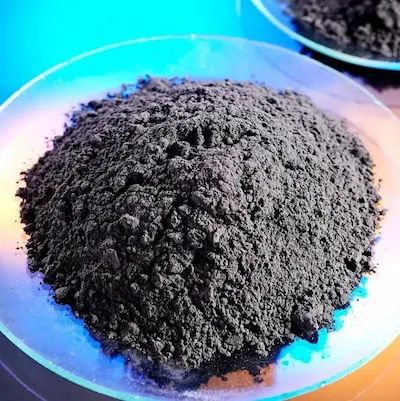
The LFP cathode material industry is being driven by efforts to increase energy density, refine particle uniformity through novel synthesis routes, and secure critical precursor supplies. Three key trends include:
1) Enhancing Final Product Indicators
High-density LFP cathode materials with compaction densities exceeding 2.6 g/cm³ have taken center stage, as auto companies are seeking higher energy density and faster charging capabilities.
Producers are adopting processing routes-such as the ferrous oxalate and iron phosphate methods-combined with a secondary sintering step and precise particle-size grading to increase electrode density and conductivity while maintaining safety standards. Mainstream leaders have already commercialised high-compaction LFP products, and others are upgrading their processing flowsheets to optimize performance.
2) Optimising Processing Flowsheets
Liquid-phase synthesis-particularly the autothermal evaporation process is expanding its market share to roughly 10–20 percent of total LFP cathode output, reflecting its ability to produce nano-sized powders with uniform morphology and consistent batch-to-batch quality.
This method yields LFP cathode particles that exhibit superior rate performance and low-temperature behavior, addressing traditional limitations of solid-phase routes while offering comparable costs when paired with industrial-grade carbon sources.
3) Continued Push into Vertical integration
Vertical integration of raw-material production is intensifying as cathode makers are internalising their manufacturing of precursors (lithium carbonate, ferric nitrate, and ferrous oxalate to secure their self-supply, control impurities, and reduce their cash-cost volatility.
By investing in upstream industry chain, leading companies gain greater control over their final product and can ensure consistency demanded by their gigafactory customers.
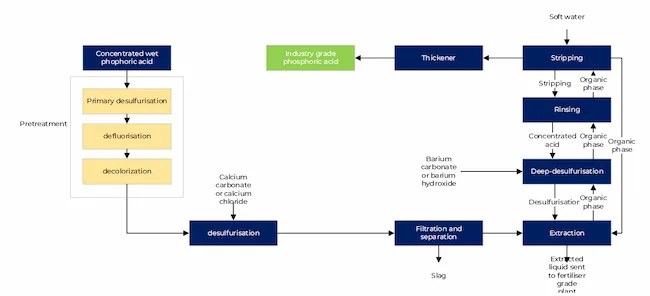
| Method | Characteristics |
| Solvent extraction method | The solvent extraction method is based on the fact that phosphoric acid can be dissolved in organic solvents in molecular form, and the solubility of impurities in organic solvents is low. The extraction process is used to remove most of the impurities in crude phosphoric acid. |
| Crystallization | The phosphoric acid is converted by heating, concentrating and then cooling the crude phosphoric acid solution. The form of H3PO4.0.5H20 or H3PO4 crystallizes out of the solution, while most of the impurities remain in the mother liquor, thereby purifying phosphoric acid. |
| Chemical precipitation method | One of the effective methods to selectively remove impurities such as fluorine, sulfate, iron, aluminium, magnesium and heavy metals using dilute phosphoric acid |
| Ion exchange method | Aimed at the removal of cations such as Ca2+, Mg2+, Fe3+ in phosphoric acid. This method uses ion exchange resin to treat phosphoric acid or phosphate solution, using H+ in the resin to exchange impurity cations |
| Electrodialysis | A method of separating ions using iodine chemistry. Since phosphate and other anions have different adsorption capacities on alkaline ion exchange membranes, anion exchange membranes can be used to remove certain anions in phosphoric acid. |
| Membrane powder separation method | Filtration and separation methods at the molecular level, including ultrafiltration, microfiltration, nanofiltration, reverse osmosis and other membrane separation technologies |
To view GDC LFP cathode material market research report click here
Additional LFP Cathode Material Industry Developments in 2025
- Generational Shifts: Third- and fourth-generation LFP materials (with bulk doping and nano-coating) are entering mass production, offering further improvements in conductivity, energy density, and voltage stability.
- LMFP as a Next Step: Lithium manganese iron phosphate (LMFP) is attracting attention for its higher voltage and energy density, though technical hurdles remain for widespread adoption.
- Precursor-Free Innovations: Companies like LG Chem are pioneering direct calcination processes that bypass traditional precursor synthesis, aiming for faster, cleaner, and more sustainable cathode production.
Conclusion
The LFP cathode material industry is advancing rapidly, driven by the need for higher energy density, more uniform and reliable materials, and secure, integrated supply chains. Innovations in particle engineering, processing technology, and vertical integration are redefining performance standards and positioning LFP as a leading solution for the next generation of EVs and energy storage systems.
For more blog articles click here
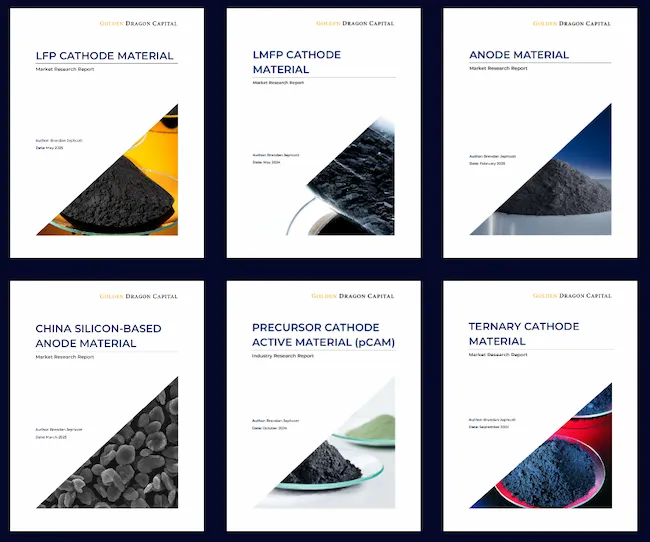
To view GDC market research reports click here
About us
GDNM provides commentary on how energy transition minerals contribute towards the decarbonisation and electrification of the global economy, with a particular focus on the lithium-ion battery and rare earths supply chains.
GDNM founder, Mr Brendan Jephcott is an Australian who has worked in the global mining sector for more than 13 years, of which his experience covers precious metals, nonferrous metals, ferrous metals, base metals, bulk commodities, rare earths, and the lithium-ion battery industry.
For the last 9 years Mr Jephcott has focused on the burgeoning new energy industry, participating in cross-border transactions in buy-side and sell side roles, cultivating a global business network ranging from upstream resource companies, midstream intermediate product producers, and downstream consumers such as gigafactories and auto companies.